

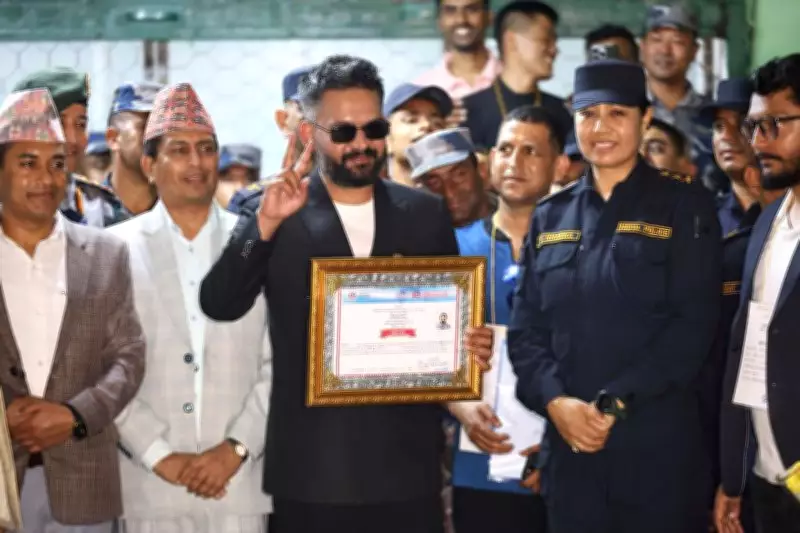
Balendra Shah 'Balen' Poised to Become Nepal's Youngest Prime Minister in Historic Swearing-In Ceremony
In a landmark political development, Balendra Shah, popularly known as 'Balen', is scheduled to be sworn in as Nepal's youngest elected prime minister on Friday. This historic event follows his unanimous election as the leader of the parliamentary party of the Rastriya Swatantra Party (RSP), a move that formally qualifies him for the nation's top executive position.
A New Era in Nepalese Politics
The 35-year-old rapper-turned-politician, who hails from the Madhes region, will not only be the youngest person to hold the prime ministerial office but also the first from his region to achieve this distinction. His rise to power comes on the heels of a decisive electoral victory for the RSP in the March 5 polls, where the party secured a massive 182 seats out of 275 in the House of Representatives.
This overwhelming mandate, under Article 76 (1) of the Constitution, grants the RSP the authority to form a majority government, effectively decimating traditional political parties that have long dominated Nepal's political landscape. The election results reflect a clear public demand for generational change and a corruption-free regime, as highlighted by last year's Gen Z protests.

Path to Power and Cabinet Formation
Shanker Shrestha, secretary of the RSP's central organisation committee, confirmed that Balen has been granted full authority to form the new cabinet under his leadership. The cabinet members are expected to be finalized later in the evening, with sources indicating a streamlined team of 15 to 18 ministers.
The process began with the oath-taking ceremony for newly elected HoR members at the federal parliament building in Singha Durbar, administered by the eldest member, Arjun Narasingha KC. This ceremony marked the official start of government formation, three weeks after the conclusion of voting.
Electoral Triumph and Political Implications
Balen's personal victory was particularly notable, as he defeated four-time prime minister K P Sharma Oli in the Jhapa-5 constituency, a traditional stronghold of the Communist Party of Nepal (Unified Marxist-Leninist). His win by a significant margin underscores the shifting political dynamics in Nepal.
The RSP's electoral tsunami has dramatically reshaped the political arena, with traditional parties suffering heavy losses:
- Nepali Congress secured only 38 seats.
- Communist Party of Nepal-Unified Marxist-Leninist (CPN-UML) won 25 seats.
- Nepali Communist Party managed just 17 seats.
Other parties, such as the Shram Sanskriti Party and Rastriya Prajatantra Party, won seven and five seats respectively, with one result pending due to a court case. The RSP's seat count, just two short of a two-thirds majority, positions it strongly for potential constitutional amendments if needed.
Looking Ahead to the Swearing-In
According to sources at the President's Office, Balen will be sworn in as prime minister during a special ceremony at Sheetal Niwas on Friday. This event will cap a remarkable journey from music to politics, symbolizing a new chapter in Nepal's governance aimed at addressing youth aspirations and combating corruption.






