

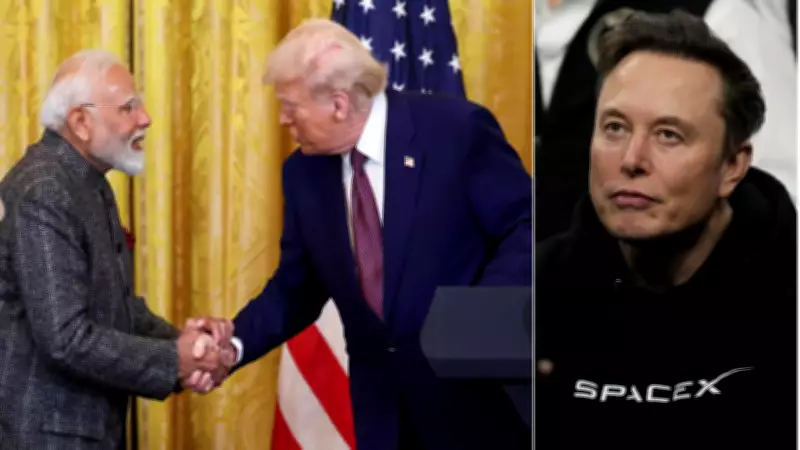
Congress Launches Sharp Attack on PM Modi Over Trump Call With Elon Musk Present
The Congress party on Saturday launched a sharp and pointed attack on Prime Minister Narendra Modi over his recent phone conversation with US President Donald Trump. The opposition's criticism came after reports emerged claiming that Tesla and SpaceX CEO Elon Musk was also present during the high-level diplomatic call.
Questions Over Transparency and Diplomatic Protocol
Raising serious questions over transparency and diplomatic protocol, the opposition party alleged that the Modi government had failed to disclose crucial details about the interaction. Specifically, Congress questioned the reported participation of a private businessman during what should have been a confidential discussion between two national leaders.
The controversy originated from a report by The New York Times, which stated that Elon Musk was part of the conversation between Prime Minister Modi and President Trump. According to the report, the call focused on the evolving West Asia crisis and the urgent need to ensure stability in the volatile region.

Congress Raises Pointed Questions on Social Media
Reacting strongly to the report, Congress took to social media platform X to raise a series of pointed questions about the appropriateness of a private individual's presence during sensitive diplomatic discussions.
"Why was a businessman present when two national leaders were discussing a global crisis? What role did Elon Musk play in this conversation? Was this truly about the West Asia crisis, or was there another 'BUSINESS' agenda?" the party questioned in its post.
The opposition party further demanded to know why Musk's presence had not been officially disclosed by the Indian government. "Why did the Modi government not disclose Musk's presence? Why are we learning about this from another country instead of our own government?" Congress asked pointedly.
Comparing With Other International Interactions
Drawing comparisons with other international interactions, Congress noted that "Trump spoke to leaders of different countries during the war, but no businessman was on any of those calls. Why did this happen only with Modi?"
The party also referenced the White House's description of the conversation as "productive," questioning the nature of this productivity. "The White House described the talks as productive. But productive for whom?" the party asked, implying potential conflicts of interest.
Call for Clarity During Sensitive Geopolitical Situation
Calling for complete transparency, the opposition stated that the country "deserves clear answers," particularly given the seriousness of the situation in West Asia. Congress framed the issue as one of diplomatic propriety, emphasizing that the call came at a time when tensions involving the United States, Israel, and Iran required "diplomatic seriousness, not corporate presence."
Details of the Controversial Call
According to The New York Times report, Elon Musk's participation in the call was confirmed by US officials, making this an unusual instance of a private citizen being involved in high-level diplomatic discussions. The conversation between Prime Minister Modi and President Trump reportedly took place on March 24 and centered on the West Asia crisis, with particular emphasis on ensuring that the strategically vital Strait of Hormuz remains open and secure.
In his official statement following the call, Prime Minister Modi reiterated India's consistent position in favor of de-escalation and dialogue. He emphasized that ensuring safe passage through the Strait of Hormuz is crucial for global economic stability and energy security, reflecting India's significant interests in the region.
India's Broader Diplomatic Engagement
India has been actively engaging with key stakeholders in the region, including both Iran and the United States, to safeguard its strategic and economic interests. The country's diplomatic efforts have focused on maintaining stability while protecting its substantial energy imports and regional investments.

The controversy highlights growing concerns about the intersection of private business interests and state diplomacy, particularly during times of international crisis. As the situation in West Asia continues to evolve, this incident has sparked broader discussions about transparency in diplomatic communications and the appropriate boundaries between government and corporate interactions on the world stage.





