In an unusual and highly symbolic gesture, the top leadership of Bangladesh's armed forces paid a joint visit to the country's ailing former Prime Minister, Khaleda Zia. The rare meeting has sparked widespread discussion in political circles about its implications for the nation's civil-military dynamics.
A High-Profile Visit to a Political Icon
The visit took place on a significant date: Thursday, March 20, 2025. The delegation included the most senior uniformed officials in the country: Chief of Army Staff General Waker-uz-Zaman, Chief of Naval Staff Admiral M Nazmul Hassan, and Chief of Air Staff Air Chief Marshal Hasan Mahmood Khan. They met with Khaleda Zia at her residence in the capital city of Dhaka.
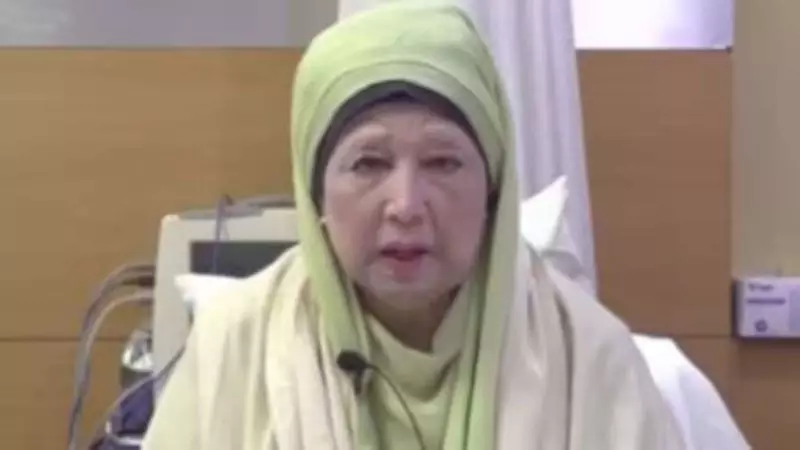
Khaleda Zia, a towering figure in Bangladeshi politics, is the chairperson of the main opposition party, the Bangladesh Nationalist Party (BNP). She served as the Prime Minister of Bangladesh twice, from 1991 to 1996 and again from 2001 to 2006. For years, she has been grappling with serious health issues, including liver cirrhosis, arthritis, and complications from diabetes.

The military chiefs inquired about her health and well-being during the meeting, which was described as a courtesy call. This act of paying respects to the former head of government, who is also the chief political rival of the current administration, is not a routine occurrence and has drawn significant attention.
The Context of Zia's Health and Legal Troubles
The backdrop to this visit is complex. Khaleda Zia's health has been a major concern for her supporters and a point of political contention. In 2018, she was convicted in two corruption cases, which her party and international observers have denounced as politically motivated. She was imprisoned until 2020, when the government, led by Prime Minister Sheikh Hasina of the Awami League, suspended her sentence on humanitarian grounds due to her deteriorating health.
However, her release came with conditions. She is barred from traveling abroad for advanced medical treatment, a restriction her family and the BNP have repeatedly protested, arguing it is essential for her recovery. She has been receiving treatment at Evercare Hospital in Dhaka under the supervision of a medical board formed by the government.
The BNP, which boycotted the last general election in January 2024, has consistently demanded her unconditional release and permission for overseas medical care. The party's activities have been heavily constrained, with many of its leaders imprisoned ahead of the polls.
Interpreting the Significance and Potential Repercussions
The joint visit by the armed forces chiefs is being parsed for its deeper meaning. Analysts suggest several potential interpretations:
- A Purely Humanitarian Gesture: The visit may simply be a mark of respect for a former Prime Minister and commander-in-chief, acknowledging her contributions and expressing concern for her health, separate from political considerations.
- A Signal of Institutional Neutrality: In Bangladesh's often polarized political landscape, the military's visit could be seen as an effort to demonstrate that the armed forces remain a state institution above partisan politics, engaging with all major national figures.
- A Moment of Political Significance: Given the tense standoff between the government and the opposition, the gesture is inevitably viewed through a political lens. It may be perceived as a subtle acknowledgment of Khaleda Zia's enduring stature and the need for national reconciliation.
The visit has undoubtedly provided a morale boost to the BNP and its supporters. Party leaders have welcomed the move, seeing it as a positive development. It comes at a time when the political atmosphere in Bangladesh remains charged, with ongoing debates about democratic space and dialogue.
While the immediate aftermath of the visit is one of heightened political discourse, its long-term impact remains to be seen. It underscores the delicate balance of power and the symbolic weight that such gestures carry in a nation with a history of military involvement in politics. The event highlights the continuing relevance of Khaleda Zia as a central figure in Bangladesh's political narrative, even from her sickbed.