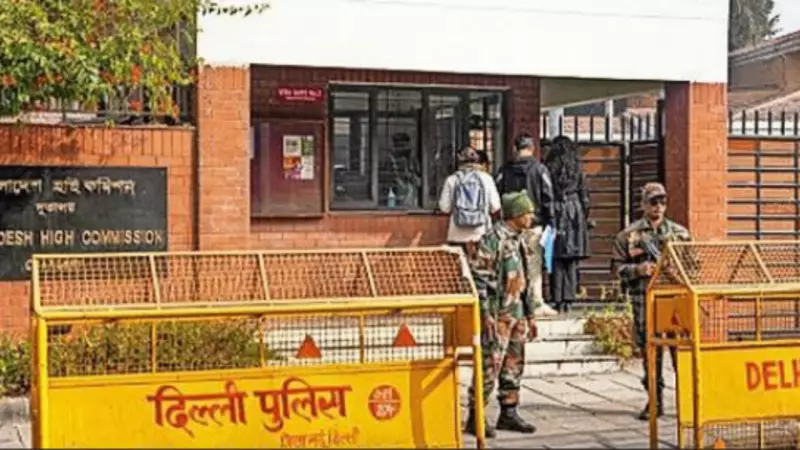
The interim government of Bangladesh, led by Muhammad Yunus, announced a significant step on Thursday, directing three of its key diplomatic missions in India to suspend all visa services indefinitely. The decision, attributed to unspecified security concerns, adds a new layer of tension to the already strained relations between the two neighboring nations.
Security Concerns Prompt Visa Shutdown
Foreign Affairs Adviser Md Touhid Hossain confirmed the move during a press briefing at the Ministry of Foreign Affairs in Dhaka. "We have asked our three missions to keep their visa sections closed for the time being. It's a security issue," Hossain stated. While the government did not elaborate on the precise nature of the security threats, the order is effective immediately.
Although the adviser did not name the specific missions, a diplomatic source identified them as the Bangladesh High Commission in New Delhi, the Deputy High Commission in Kolkata, and the Assistant High Commission in Agartala. It is important to note that Bangladesh maintains other missions in Indian cities like Mumbai and Chennai, whose visa operations were not mentioned in this directive.

India Maintains Operations Amidst Protests
In contrast to Bangladesh's action, India has chosen to keep its diplomatic facilities in Bangladesh fully functional. This includes the Indian High Commission in Dhaka and its five Assistant High Commissions across the country. These offices continue to process visa applications, particularly for Bangladeshi nationals seeking urgent medical treatment in India.
This continuation comes despite facing massive protests near these establishments in recent weeks. The protests were triggered following the shooting of anti-India radical leader Sharif Osman Hadi in Dhaka on December 12. Hadi succumbed to his injuries six days later, on December 18, leading to heightened public demonstrations.
Broader Implications and Defense Talks
The visa section closures are seen as a move that further complicates the diplomatic landscape between Dhaka and New Delhi. The relationship has been under scrutiny, and this decision is perceived as a pointed diplomatic signal.
In a related development that underscores Bangladesh's evolving foreign and defense policy, the press briefing also touched upon potential military procurement. When questioned about Bangladesh's "potential interest" in acquiring the JF-17 Thunder fighter aircraft from Pakistan, Adviser Hossain offered a guarded response.
"I can't talk about this today. Talks are underway. You will know once things are finalised," he said. This statement aligns with a claim made by Pakistan just a day earlier, on Wednesday, which asserted that "detailed discussions were held on the potential procurement of JF-17 Thunder aircraft" during recent talks between the two countries in Islamabad.
The confluence of these events—the visa shutdown in India and advanced defense talks with Pakistan—paints a picture of a shifting geopolitical stance by the interim administration in Dhaka, with significant implications for regional dynamics.