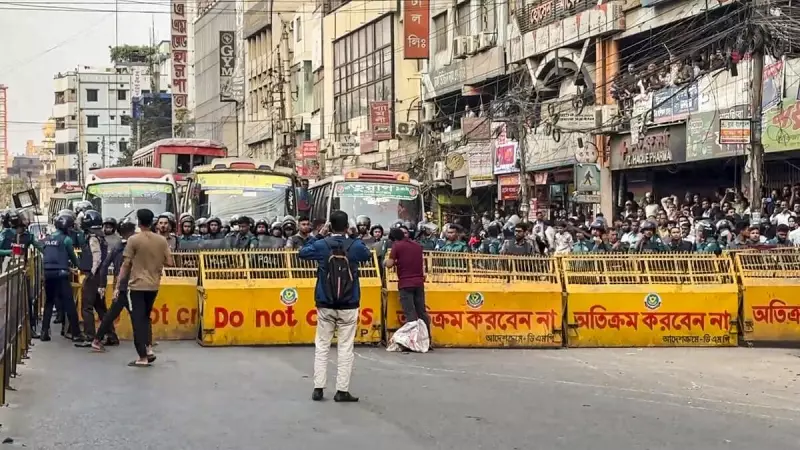
Political instability and a growing vacuum of authority in neighbouring Bangladesh are presenting a significant and multi-faceted challenge to India's national security, particularly for its sensitive northeastern region. The ongoing turmoil, marked by political unrest and social division, is creating conditions ripe for radical mobilisation and uncontrolled migration, directly impacting India's borders.
The Perfect Storm: Authority Vacuum and Radical Mobilisation
Analysts point to a dangerous power vacuum within Bangladesh, where prolonged political strife has weakened state institutions. This environment, as noted by commentator K S Tomar in his recent analysis, is being exploited by extremist elements. The lack of firm governance allows radical groups to recruit, organise, and propagate their ideology with greater impunity. This internal radicalisation within Bangladesh does not remain confined by its borders; it threatens to spill over into Indian territory, especially in states sharing a long and porous boundary.
Direct Implications for India's Northeast
The potential consequences for India's Northeast are severe and interconnected. First, the region faces the risk of a fresh influx of refugees or displaced people fleeing instability, which could alter local demographics and strain resources. Second, and more alarmingly, the radical ideologies gaining ground in Bangladesh could find sympathetic audiences or inspire copycat movements among vulnerable populations across the border. This poses a direct threat to the hard-earned peace and developmental progress in India's northeastern states.

Furthermore, the situation complicates India's regional diplomacy and security calculus. A stable and friendly Bangladesh is crucial for India's "Act East" policy and for curbing cross-border insurgencies. The current crisis undermines that stability, forcing New Delhi to recalibrate its approach to balance humanitarian concerns with stringent border management and counter-radicalisation efforts.
A Call for Strategic Vigilance
The developments underscore the inseparable link between domestic politics in South Asian nations and regional security. For India, the crisis next door is not merely a foreign policy issue but a pressing domestic security concern. It necessitates heightened vigilance along the eastern frontier, enhanced intelligence coordination, and proactive diplomatic engagement to encourage a peaceful political resolution in Dhaka. The ultimate challenge lies in insulating India's Northeast from the twin dangers of radicalisation and unregulated refugee flows emanating from the current Bangladeshi turmoil. The analysis, last updated on 23 December 2025, serves as a timely reminder of the intricate security dynamics at play.