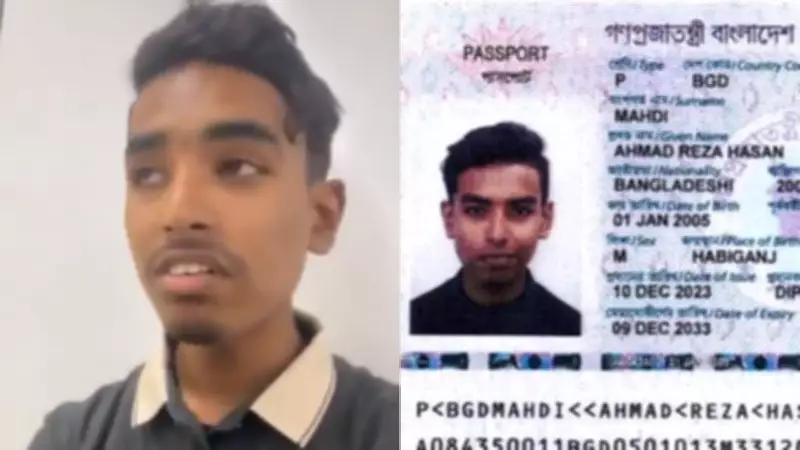
Bangladeshi Activist Accused of Murder Briefly Visited Delhi Before Returning Home
NEW DELHI: Mahdi Hasan, a hardline student activist from Bangladesh who faces charges for the murder of a Hindu police sub-inspector, made a brief visit to Delhi earlier this week. According to official sources, Hasan arrived in the Indian capital on February 17 but returned to Bangladesh voluntarily after his application for a European visa was rejected.
Details of the Delhi Stay and Police Questioning
Immigration records confirm that Hasan departed Bangladesh on February 16 and entered India on February 17, with passport stamps verifying both movements. During his short stay, he checked into a hotel in the Paharganj area of Delhi in the early hours of February 17. The hotel owner reported that Hasan arrived at 2 am and checked out later that same day around 8:30 pm.
"He presented a valid Bangladeshi passport and informed our staff that he was in Delhi to submit documents at the Finnish embassy," the hotel owner stated. "His behavior appeared normal, and we observed no suspicious activities during his stay."

Local police briefly questioned Hasan for approximately 30 minutes on February 17 amid growing social media attention about his presence in the city. However, authorities clarified that he was neither arrested nor detained during this interaction.
Legal Status and International Implications
Indian officials emphasized that Hasan was not considered a wanted suspect within India, and no formal request for his detention or extradition had been received from Bangladeshi authorities. "He was not under any arrest warrant in India, and there was no legal basis to detain him," an official source explained.
The murder case in question involves the killing of Police Sub-Inspector Santosh Chowdhury in Habiganj, Bangladesh, on August 5, 2024. Hasan, a resident of Habiganj, faces serious charges in connection with this incident, which has drawn significant attention in Bangladesh.
His attempted travel to Europe appears to have been thwarted when embassy officials denied his visa application, prompting his return to Bangladesh. This development highlights the complex interplay between international travel regulations, legal jurisdictions, and cross-border criminal investigations.
The brief Delhi visit and subsequent return underscore the challenges authorities face in monitoring individuals involved in serious crimes across international borders, particularly when formal extradition requests or international warrants are not in place.