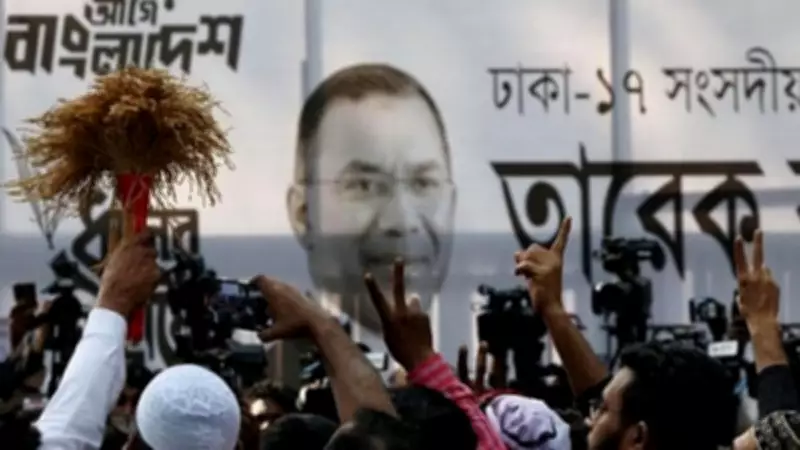
BNP's Political Resurgence in Bangladesh: Implications for India's Strategic Calculus
In a significant development in South Asian politics, the Bangladesh Nationalist Party (BNP) is experiencing a notable resurgence, reshaping the political landscape in Dhaka. This shift presents new challenges and opportunities for India, which has long maintained close ties with the ruling Awami League government under Prime Minister Sheikh Hasina. As the BNP gains momentum, India must recalibrate its diplomatic approach to navigate the evolving dynamics in its eastern neighbor.
Historical Context and Current Political Climate
The BNP, founded by former President Ziaur Rahman, has historically been a major political force in Bangladesh, often alternating power with the Awami League. In recent years, however, the party has faced setbacks, including leadership crises and electoral boycotts. The current resurgence is driven by factors such as growing public discontent over economic issues, governance concerns, and a desire for political pluralism. This revival is not merely a domestic affair; it has profound implications for regional stability and India's strategic interests.
India's relationship with Bangladesh has been largely positive under the Awami League, with cooperation on security, trade, and connectivity projects like the Maitri Setu bridge. However, the BNP's rise introduces uncertainty, as the party has at times adopted a more nationalist stance that could complicate bilateral relations. For instance, historical tensions over issues like water sharing and border management might resurface, requiring India to adopt a more flexible and proactive diplomacy.

Strategic Implications for India
The resurgence of the BNP necessitates a careful reassessment of India's foreign policy in South Asia. Key areas of concern include:
- Security Cooperation: India and Bangladesh have collaborated closely on counter-terrorism and border security. A change in government could affect these efforts, potentially impacting regional stability.
- Economic Ties: Bilateral trade and investment have flourished under the current regime. India must ensure that economic partnerships remain robust, regardless of political shifts in Dhaka.
- Connectivity Projects: Initiatives like the Bangladesh-Bhutan-India-Nepal (BBIN) corridor depend on political continuity. The BNP's stance on such projects will be critical for India's regional connectivity goals.
Moreover, India faces the challenge of balancing its support for democratic processes in Bangladesh with its strategic interests. Engaging with all political stakeholders, including the BNP, could help mitigate risks and foster a more resilient relationship. This approach aligns with India's broader vision of a stable and prosperous neighborhood, as outlined in its 'Neighborhood First' policy.
Regional and Global Dimensions
The BNP's rise also intersects with broader geopolitical trends. China's increasing influence in Bangladesh, through infrastructure investments and economic aid, adds another layer of complexity. India must navigate this competitive landscape by reinforcing its own partnerships and emphasizing shared historical and cultural ties. Additionally, the role of international actors, such as the United States and the European Union, in supporting democratic norms in Bangladesh could influence the political trajectory, indirectly affecting India's calculus.
In conclusion, as the BNP gains ground in Bangladesh, India stands at a crossroads. The need for a nuanced and forward-looking diplomacy is more pressing than ever. By fostering dialogue, enhancing people-to-people contacts, and prioritizing mutual interests, India can adapt to the new realities in Dhaka, ensuring that bilateral relations remain strong and conducive to regional peace and development. The evolving political scenario underscores the importance of agility in foreign policy, as India seeks to uphold its strategic objectives in a changing South Asia.