Modi's Jakarta Visit Marks Strategic Shift
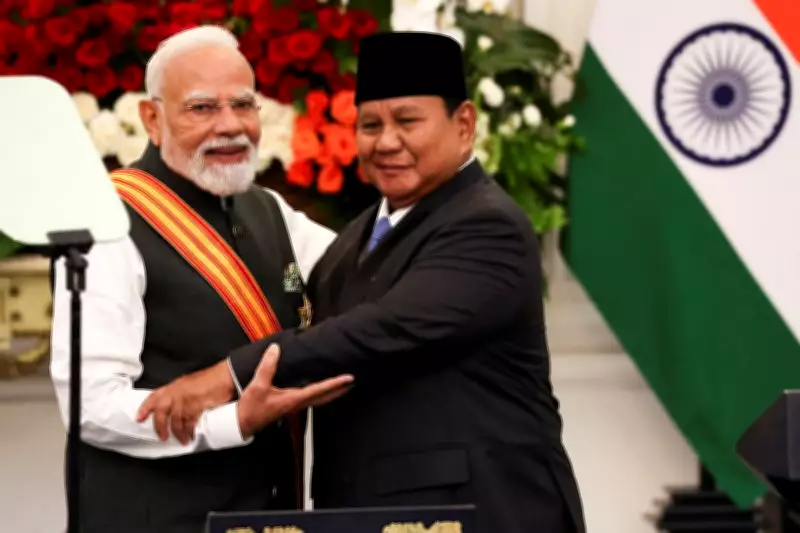
Prime Minister Narendra Modi's recent visit to Jakarta marked a significant shift in India-Indonesia relations, transforming them from former rivals to comprehensive strategic partners. In the late 1980s, Jakarta protested India's plan to revive a World War II landing strip on Great Nicobar Island, just 60 nautical miles from Indonesia. Now, as India builds a deep sea port and defence infrastructure on Great Nicobar, Modi announced the joint development of Indonesia's Sabang Port in Aceh province, the north-western entrance to the Strait of Malacca, aligning with the Great Nicobar project on the Six Degree Channel.
Historic and Civilisational Ties
Bilateral relations are historic and civilisational. During World War II, freedom fighter Biju Patnaik flew arms and equipment for the Indian National Army to Jakarta. Bandung is the birthplace of the Non-Aligned Movement, pioneered by President Sukarno and PM Nehru. For decades, India and Indonesia have sat together at the UN due to alphabetical order and both advocate a free and open Indo-Pacific.
Brahmos Missile Deal: The Highlight
The highlight of Modi's visit was breaking the decade-long jinx on the sale of the Brahmos missile. According to the joint statement on July 7, the $630-million package includes two Brahmos supersonic missile batteries and Astra MK I BVR missiles for Su30 aircraft. So far, only the Philippines has acquired the Brahmos. At the recent Shangri-La Dialogue, Defence Secretary Rajesh Singh said that Indonesia and Vietnam had agreed to acquire the Brahmos weapon system, opening the way for other countries in ASEAN, West Asia, and Europe.

Strategic Geography and Resources
Indonesia is the world's largest archipelagic state, stretching 5,150 km with over 17,000 islands. It controls sea routes through Sunda and Lombok Straits when the Strait of Malacca becomes dysfunctional. It holds the world's largest nickel reserves and other critical minerals like cobalt, bauxite, tin, and rare earths. It must balance the US and China, the latter being the largest investor in its mineral resources industry. China's Nine Dash Line overlaps Indonesia's Exclusive Economic Zone along the Natuna Islands. As Defence Minister, current President Prabowo Subianto managed differences over it by professing neutrality on the South China Sea, even as seven of 11 ASEAN countries have active maritime disputes with Beijing. The US recently reinforced defence relations with Indonesia after the Hormuz blockade.
Defence and Maritime Cooperation
In the joint statement, Modi announced collaboration in defence exchanges, including slots in the National Defence Academy and Defence Services Staff College, disaster relief training, and defence industrial cooperation, among 14 agreements and MoUs. "Our coast guards will now work together for maritime safety and security in the Indian Ocean," with an eye on choke points. An Indonesian Navy liaison officer will be posted at the Information Fusion Centre (Indian Ocean Region) in Gurugram. Similarly, an Indian Naval officer will be deployed at the ASEAN Maritime Centre in the Philippines, focused on protecting the Malacca Strait and South China Sea from major power encroachment.
Economic and Trade Agreements
The agreements also deepened cooperation in port development and maritime trade as part of the blue economy. India has a trade deficit of $20 billion in the $30 billion bilateral trade. The target of $200 billion bilateral trade by 2030 is ambitious.
Strategic Implications for Indo-Pacific
The strategic thought from Modi's Indonesia visit (and visits to Australia and New Zealand) is on re-framing the Indo-Pacific security framework in the context of the US resetting its Indo-Pacific strategy. This includes ideas of a G2, the US desire for 'respectful relations with China', reverting the US Indo-Pacific Command to the pre-2018 nomenclature of the US Pacific Command, and postponement of the QUAD summit 2026 in New Delhi, signalling the diminution of QUAD. A recent study by the Takshila Institute noted that QUAD's hesitation in projecting itself as a security-centric grouping was matched by its members' funding patterns, which contributed more to interoperability than to capability-building. Indonesia is the obvious anchor and lynchpin of any re-designed QUAD.

Personal Rapport and Diaspora Engagement
The gains from Modi's visit are significant. It has enhanced the rapport between Modi and Subianto, who emphasised his 'Indian DNA'. Modi's meeting with the Indian diaspora is a big force multiplier for people-to-people relations. The two leaders will meet in September during the BRICS summit in New Delhi. Australia is the southern pivot of the QUAD as Canberra no longer factors Jakarta as a threat but as ASEAN's largest economy worth investment and trade. For Modi, the big win is the Brahmos and Astra package deal.