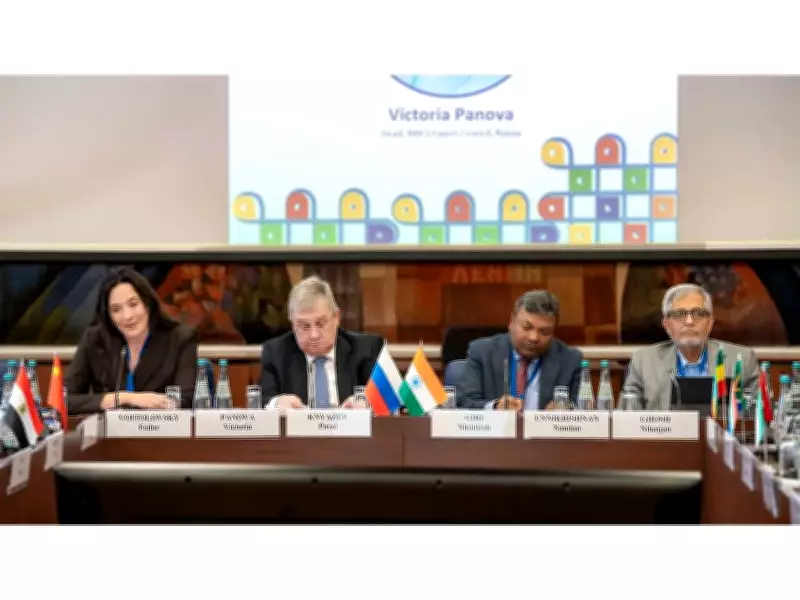
The Observer Research Foundation (ORF), in partnership with the BRICS Expert Council-Russia, organized the BRICS Academic Thematic Conference on "Strengthening BRICS Connectivity: Fostering Cooperation" in Moscow on July 7, 2026. The event was held under India's BRICS Presidency for 2026.
Conference Participants and Opening Remarks
The conference brought together approximately 120 participants from 10 BRICS member and partner countries, including policymakers, diplomats, scholars, and experts. They exchanged perspectives on enhancing BRICS cooperation and connectivity. The opening remarks were delivered by Pavel Knyazev, Ambassador-at-Large of the Russian Ministry of Foreign Affairs and Sous-Sherpa of the Russian Federation for BRICS; Nikhilesh Giri, Deputy Chief of Mission at the Embassy of India in Russia; Victoria Panova, Head of the BRICS Expert Council, Russia; and Nandan Unnikrishnan, Distinguished Fellow at the Observer Research Foundation, India.
Key Themes Highlighted
Speakers underscored BRICS's expanding role as a platform for inclusive multilateralism and practical cooperation, reaffirming principles of sovereign equality, consensus-building, and mutual respect. They emphasized the need to strengthen collaboration among emerging economies and advance global governance reforms to foster a more inclusive, representative, and effective international order.

Session One: Resilient Connectivity
The first session, titled "Crossing Continents: Resilient Connectivity," examined how stronger connectivity can bolster resilience across infrastructure, trade, finance, digital systems, and people-to-people exchanges. Discussions highlighted the importance of diversified transport corridors, trusted digital ecosystems, interoperable financial systems, and inclusive connectivity initiatives to strengthen economic resilience and promote sustainable growth.
Session Two: Securing Critical Supply Chains
The second session, "Corridors of Cooperation: Securing Critical Supply Chains," focused on building resilient supply chains for critical minerals and other strategic sectors that underpin the energy transition and advanced technologies. Participants emphasized diversified sourcing, regional value chains, value addition, sustainable financing, and trusted partnerships to enhance long-term resilience while supporting industrial development across BRICS economies.
Session Three: High Technologies and AI
The final session, "High Technologies and AI: Prospects for BRICS Cooperation," explored opportunities for collaboration in frontier technologies and artificial intelligence. Discussions stressed moving from broad AI principles to practical cooperation through interoperable regulatory frameworks, shared standards, collaborative research, digital public infrastructure, and capacity building to harness AI for inclusive innovation and sustainable development.
Conclusion and Outcomes
The conference concluded with a shared recognition that strengthening cooperation across connectivity, critical supply chains, and emerging technologies will be central to advancing the BRICS agenda. Participants reaffirmed the value of practical, development-oriented partnerships in building resilience, fostering innovation, and contributing to a more inclusive, prosperous, and sustainable future. According to the official press release, all sessions and key outputs will be shared on ORF's official platforms.