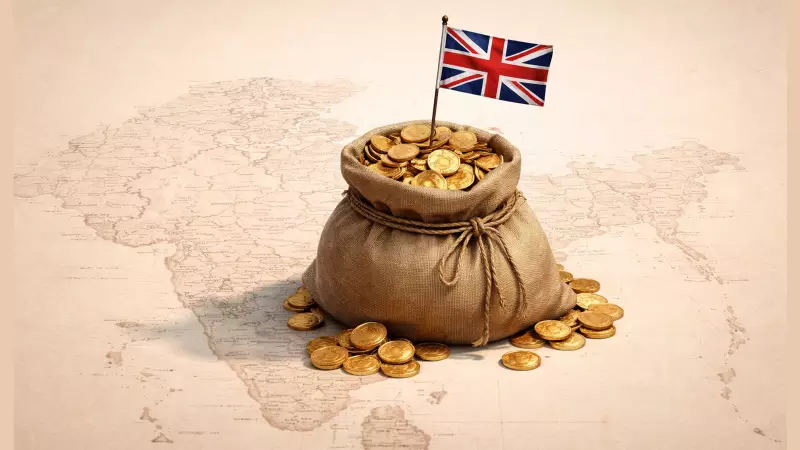
How Britain Extracted $45 Trillion From Colonial India to Build Its Empire
When Dadabhoy Naoroji published his groundbreaking work, 'Poverty and Un-British Rule in India' in 1867, he could not fully grasp the immense scale of Britain's economic extraction from India. He understood the basic principle clearly. Colonial rule systematically transferred wealth from India to Britain. This process impoverished India while enriching the British Empire.
The Unseen Scale of Colonial Extraction
Naoroji identified what he called the 'drain theory.' He argued that Britain was draining India's wealth through various mechanisms. These included heavy taxation, unfair trade practices, and the export of raw materials at low prices. What he could not quantify was the staggering total amount. Modern economic historians now estimate this drain reached approximately $45 trillion in today's value.
This massive wealth transfer did not happen by accident. It was a deliberate policy of the British East India Company and later the British Crown. The colonial administration designed economic systems to benefit Britain at India's expense. They redirected India's resources, labor, and capital to serve imperial interests.

The Mechanisms of Economic Drain
Several key methods facilitated this enormous wealth transfer. First, Britain imposed heavy land revenue taxes on Indian farmers. These taxes often consumed more than half of agricultural produce. Second, they established trade policies that forced India to export raw materials like cotton and indigo at low prices. Britain then sold finished manufactured goods back to India at high prices.
Third, the colonial administration paid British officials and soldiers in India from Indian revenues. These salaries were then largely remitted back to Britain. Fourth, India was forced to maintain a large British army on its soil. Indian taxpayers bore this enormous cost. Finally, Britain used Indian revenues to finance its wars and expansion in other parts of Asia and Africa.
The cumulative effect of these policies was devastating. India's traditional industries collapsed under British competition. The country experienced repeated famines that killed millions. Meanwhile, Britain used Indian wealth to finance its Industrial Revolution. It built railways, factories, and modern infrastructure back home.
Naoroji's Legacy and Modern Understanding
Dadabhoy Naoroji's work remains foundational to understanding colonial economics. His 'drain theory' provided the conceptual framework that later historians have quantified. While he knew the drain was substantial, the $45 trillion figure reveals its truly monumental scale.
This historical analysis helps explain why India, once one of the world's richest regions, became impoverished under colonial rule. It also clarifies how Britain, a relatively small island nation, built and maintained a global empire. The wealth extracted from India provided crucial financial resources for British imperial expansion.
Today, economists continue to study the long-term impacts of this colonial wealth transfer. They examine how it shaped modern economic disparities between nations. The story of Britain's $45 trillion extraction from India remains a powerful example of how colonial economics worked. It shows how empire-building often relied on systematically draining resources from colonized territories.