

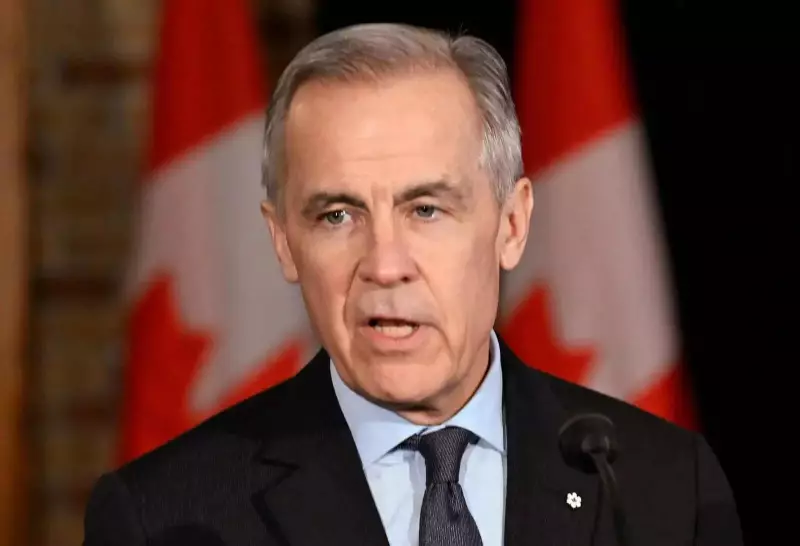
Canada's Prime Minister Mark Carney Set for March Visit to India to Forge Strategic Partnerships
Canadian Prime Minister Mark Carney is anticipated to embark on a significant diplomatic mission to India during the first week of March, as confirmed by India's High Commissioner to Canada, Dinesh Patnaik, in an exclusive interview with Reuters. This high-profile visit aims to solidify bilateral cooperation across multiple sectors, including nuclear energy, critical minerals, artificial intelligence, education, and cultural exchanges.
Timing and Diplomatic Context of the Upcoming Visit
Dinesh Patnaik expressed optimism about the scheduling, stating, "I have a feeling in the first week of March is what we are looking at." While Canadian Energy Minister Tim Hodgson, currently visiting India, noted that the exact timing is still being finalized, he emphasized the importance of the trip, saying, "There are plans for the Prime Minister to visit at some point this year. It will depend on the progress we make."
This visit represents a crucial step in resetting Canada-India relations, which faced strain following former Prime Minister Justin Trudeau's 2023 allegations regarding the killing of Sikh separatist leader Hardeep Singh Nijjar—a claim India has consistently denied. Prime Minister Narendra Modi's attendance at the G7 summit last year at Carney's invitation, along with subsequent ministerial visits, has helped pave the way for this diplomatic re-engagement.

Key Agreements and Economic Partnerships on the Agenda
During his visit, Prime Minister Carney is expected to sign several landmark agreements with the Indian government, covering:
- Nuclear Energy and Uranium Supply: A potential 10-year, C$2.8 billion uranium supply deal, contingent on India adhering to International Energy Agency safeguards.
- Energy and Critical Minerals: Deals involving crude oil, LNG, and critical minerals essential for India's growing economy.
- Technology and Innovation: Partnerships in artificial intelligence and quantum computing.
- Education and Culture: Enhanced cooperation in academic exchanges and cultural programs.
Minister Hodgson highlighted the strategic importance of these agreements, noting, "We need to focus on economies that are large and growing. India squarely falls into that category. India is a growing user of critical minerals that Canada can supply."
Comprehensive Economic Partnership Agreement (CEPA) Negotiations
Formal negotiations for a Comprehensive Economic Partnership Agreement (CEPA) between India and Canada are slated to commence in March, following the revival of stalled trade talks in November 2025. This agreement aims to cover:
- Goods and services trade
- Investment protocols
- Agriculture and agri-food sectors
- Digital trade and mobility
- Sustainable development initiatives
Both nations have expressed confidence that the CEPA will "serve as a powerful economic anchor and help more than double two-way trade to $70 billion by 2030."
Geopolitical Context and Canada's Diversification Strategy
Prime Minister Carney's visit aligns with Canada's broader strategy to diversify its alliances beyond the United States. At the recent World Economic Forum in Davos, Carney received a standing ovation for his declaration that "the old rules-based order is over" and his call for middle powers like Canada to "build coalitions to shape a fairer, more resilient world."
This urgency is further underscored by U.S. President Donald Trump's threat of 100% tariffs on Canadian goods if Canada pursued a trade deal with China. Carney has clarified that Canada has no plans for a free trade agreement with China, respecting its commitments under the United States-Mexico-Canada Agreement.
Recent Diplomatic Engagements and Future Prospects
Carney's recent visit to Beijing in January 2024—the first by a Canadian Prime Minister since 2017—resulted in a joint statement with Chinese President Xi Jinping outlining a new strategic partnership. However, Carney has explicitly stated that Canada will not pursue a free trade deal with China, focusing instead on rectifying existing trade issues.

Looking ahead, India's Commerce Minister Piyush Goyal and Finance Minister Nirmala Sitharaman are likely to visit Canada soon, further strengthening bilateral ties. Additionally, India's National Security Advisor is scheduled to visit Ottawa next month for intelligence sharing and security discussions.
High Commissioner Patnaik emphasized the collaborative spirit, referencing Carney's Davos speech: "Now we are living in a world where the natural rules-based order which gave a certainty to the world is not functioning. (We) should work together to have an agreement that protects us from the vagaries of the international order."
As both nations move forward with renewed vigor, this visit marks a pivotal moment in Canada-India relations, promising enhanced economic cooperation and strategic alignment in an evolving global landscape.





