Canada PM Mark Carney Set for March India Visit to Sign Key Bilateral Agreements
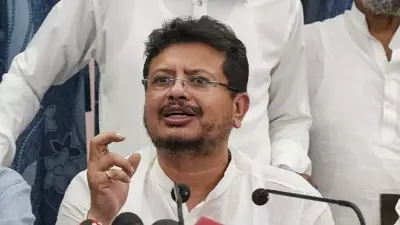
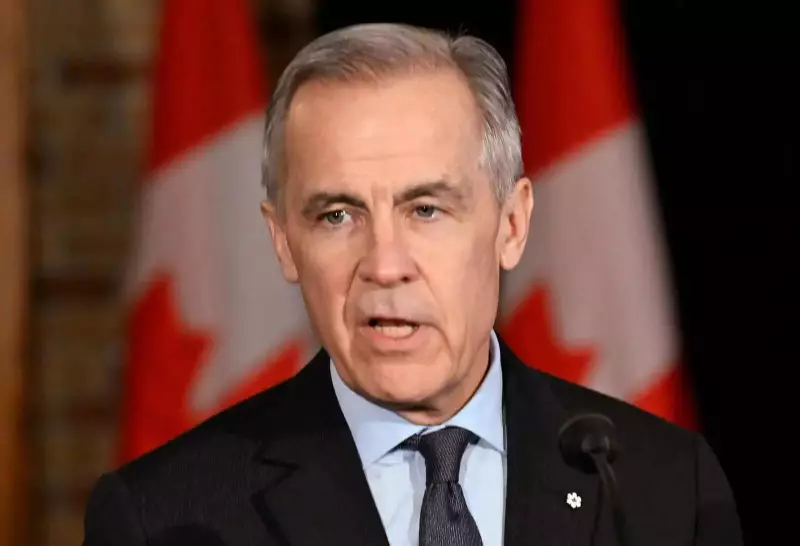
Canadian Prime Minister Mark Carney is anticipated to undertake a significant diplomatic journey to India during the initial week of March, as confirmed by India's High Commissioner to Canada, Dinesh Patnaik, in a recent interview with Reuters. This high-profile visit is poised to culminate in the signing of pivotal bilateral agreements spanning critical sectors such as uranium supply, energy resources, minerals, artificial intelligence, education, and cultural exchange.
Timing and Diplomatic Context of the Upcoming Visit
"I have a feeling in the first week of March is what we are looking at," stated High Commissioner Patnaik, highlighting the anticipated timeline. Concurrently, Canada's Energy Minister, Tim Hodgson, who is presently in India, mentioned that the precise scheduling of Prime Minister Carney's trip is still undergoing finalization. "There are plans for the Prime Minister to visit at some point this year. It will depend on the progress we make," Hodgson remarked to Reuters.
This forthcoming visit is strategically positioned as part of Prime Minister Carney's broader initiative to diversify Canada's international alliances beyond its traditional partnership with the United States. At the recent World Economic Forum in Davos, Carney garnered a rare standing ovation for his declaration that "the old rules-based order is over" and his call for middle powers like Canada to actively construct coalitions aimed at shaping a more equitable and resilient global framework.

Reset in Canada-India Relations Following Diplomatic Strains
The planned visit also signifies a concerted effort to mend and rejuvenate bilateral relations with India, which experienced considerable strain following former Canadian Prime Minister Justin Trudeau's 2023 allegations regarding Indian government involvement in the killing of Sikh separatist leader Hardeep Singh Nijjar—a claim India has consistently denied. In a positive development, Prime Minister Narendra Modi attended the G7 summit last year upon Carney's invitation, and several Canadian ministers have since visited India, paving the way for renewed engagement.
High Commissioner Patnaik addressed the ongoing legal proceedings in Canada concerning four individuals accused in Nijjar's murder, asserting, "If evidence comes out that there were Indians involved, India will take action." Further reinforcing security cooperation, India's National Security Advisor is scheduled to visit Ottawa next month as part of regular intelligence-sharing and security dialogue mechanisms.
Key Agreements and Economic Partnerships on the Agenda
During Prime Minister Carney's visit, a series of substantial agreements are expected to be formalized with the Indian government. These encompass:
- A landmark 10-year uranium supply deal valued at approximately C$2.8 billion, aimed at supporting India's civilian nuclear energy expansion.
- Collaborative frameworks in nuclear energy, oil and gas, environmental sustainability, artificial intelligence, and quantum computing.
- Accords focused on enhancing educational exchanges and cultural cooperation between the two nations.
While Minister Hodgson did not explicitly confirm the uranium deal, he noted, "Canada is happy to sell uranium under the Canada-India nuclear cooperation agreement as long as India is prepared to abide by International Energy Agency safeguards. We know that India is a major nuclear country and it has major plans to grow its civilian use of nuclear energy. So that would be one of the topics I expect that we will discuss with my counterpart."
Launch of Comprehensive Economic Partnership Agreement (CEPA) Negotiations
Formal negotiations for a Comprehensive Economic Partnership Agreement (CEPA) between Canada and India are slated to commence in March, building upon the restart of stalled trade talks in November 2025. This ambitious agreement is projected to cover a wide array of sectors, including:

- Goods and services trade
- Investment protocols
- Agriculture and agri-food products
- Digital trade and mobility
- Sustainable development initiatives
Both nations have expressed confidence that the CEPA will serve as a powerful economic anchor, potentially more than doubling bilateral trade to an impressive $70 billion by the year 2030.
Strategic Energy and Minerals Collaboration
In the interim between Minister Hodgson's current visit and Prime Minister Carney's anticipated trip, both countries are expected to announce additional agreements concerning energy and mining sectors. These include transactions involving critical minerals, crude oil, and liquefied natural gas (LNG). "We need to focus on economies that are large and growing. India squarely falls into that category. India is a growing user of critical minerals that Canada can supply," emphasized Minister Hodgson, underscoring the mutual economic benefits.
Urgency Amid Global Trade Dynamics
There is a palpable sense of urgency driving these diplomatic and economic initiatives, particularly after two years of halted discussions. High Commissioner Patnaik referenced Prime Minister Carney's Davos address, stating, "Now we are living in a world where the natural rules-based order which gave a certainty to the world is not functioning. (We) should work together to have an agreement that protects us from the vagaries of the international order."
This accelerated push occurs against the backdrop of recent threats from U.S. President Donald Trump, who warned of imposing 100% tariffs on Canadian goods if Canada pursued a trade deal with China. In response, Prime Minister Carney clarified that Canada "respects its commitments under the United States-Mexico-Canada Agreement to not pursue free trade agreements with non-market economies," as reported by The Guardian.
Broader Diplomatic Engagements and Future Outlook
Prime Minister Carney, who assumed office as Canada's 24th Prime Minister in March 2025, has been actively engaging with global leaders to fortify international partnerships. His recent visit to Beijing in January marked the first by a Canadian Prime Minister to China since 2017, resulting in a joint statement with President Xi Jinping outlining a new strategic partnership and preliminary measures to reduce trade barriers on Canadian agricultural products.
Looking ahead, India's Commerce Minister Piyush Goyal and Finance Minister Nirmala Sitharaman are likely to visit Canada in the near future, further cementing the revitalized bilateral relationship. Both nations are committed to enhancing diplomatic staffing levels, strengthening people-to-people linkages, and continuing high-level ministerial and business delegation visits, with Prime Minister Carney having accepted Prime Minister Narendra Modi's invitation for an early 2026 visit to India.