Canada's Carney Forges China Partnership, Delivers Tariff Shock to US Under Trump
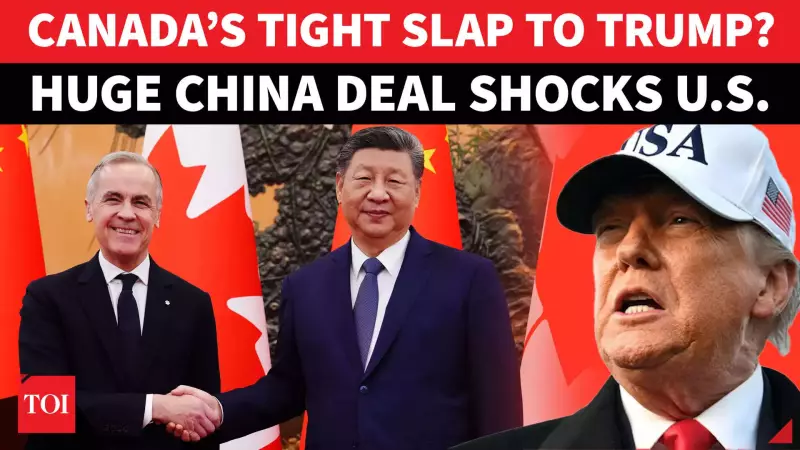
In a bold geopolitical shift, Canadian Prime Minister Mark Carney has announced a new strategic partnership with China. This move follows his recent meeting with President Xi Jinping in Beijing. It marks a dramatic reset in Canada's foreign policy as relations with the United States remain strained under President Donald Trump.
Strategic Partnership Details
The partnership involves easing tariffs and reducing trade barriers between Canada and China. Cooperation is expanding across key sectors like energy, agriculture, and technology. This development is sending shockwaves through Washington, raising questions about Canada's alignment with its closest ally.
Observers are debating whether Canada is drifting away from the United States or simply hedging its bets in a rapidly changing global order. With Trump watching closely, this shift could quietly redraw global power lines. The announcement comes at a time when US-Canada relations face ongoing tensions.

Implications for Global Trade
The new partnership signifies a significant pivot in Canada's trade strategy. By strengthening ties with China, Carney's government aims to diversify economic partnerships. This move may reduce Canada's reliance on the US market, which has been volatile under the Trump administration.
Energy and technology sectors stand to benefit greatly from this cooperation. Canadian companies could gain better access to Chinese markets, while Chinese investments might flow into Canadian infrastructure projects. Agriculture exports from Canada to China are also expected to increase, boosting the Canadian economy.
Reactions and Future Outlook
Washington has expressed concern over this development, viewing it as a potential threat to North American solidarity. The tariff shock to the US adds another layer of complexity to an already fraught relationship. Analysts predict that this could lead to further trade disputes between the two neighbors.
Meanwhile, China welcomes the partnership as a sign of growing international influence. President Xi Jinping's government sees this as an opportunity to strengthen its position amid ongoing tensions with the United States. The global community is closely monitoring how this alliance will impact international diplomacy and trade dynamics.
As the situation unfolds, Canada's move highlights the evolving nature of global alliances. It underscores how nations are adapting to new economic realities and political landscapes. The coming months will reveal whether this partnership yields tangible benefits for Canada or exacerbates existing geopolitical tensions.