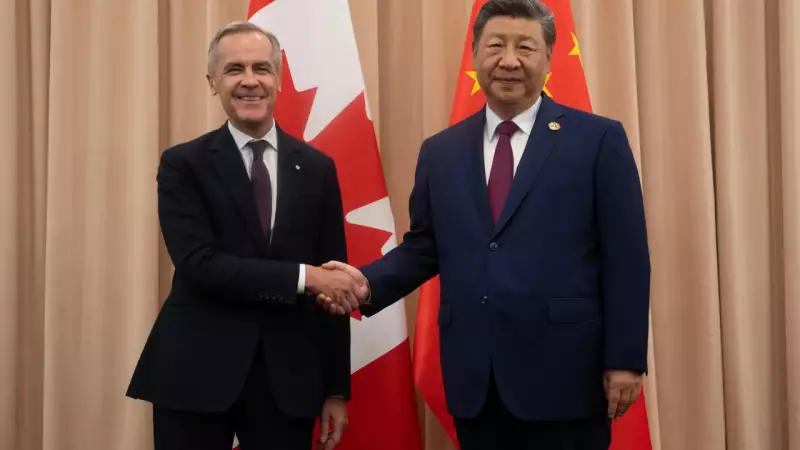
In a significant diplomatic move, Canadian Prime Minister Mark Carney is set to arrive in Beijing on Tuesday for a high-stakes meeting with Chinese President Xi Jinping. This visit, the first by a Canadian leader in nearly seven years, marks a concerted effort to repair a fractured relationship and explore avenues to reduce Canada's heavy economic dependence on the United States.
A Long-Awaited Thaw in Frosty Relations
The trip from Tuesday to Saturday will see Carney hold talks with President Xi and Premier Li Qiang, alongside meetings with other government and business figures. This is Carney's inaugural official visit to China as Prime Minister and the first by a Canadian leader since Justin Trudeau's trip in December 2017. Relations between Ottawa and Beijing have been among the most strained in the Western world, hitting a deep freeze in 2018. The flashpoint was the arrest of Huawei executive Meng Wanzhou in Vancouver on a US warrant, which triggered China's retaliatory detention of two Canadians on espionage charges.
The diplomatic rift quickly escalated into a trade war. Both nations imposed tit-for-tat tariffs on key products. China slapped a painful temporary customs duty of 75.8 percent on Canadian canola imports, a major export crop for Canada. Ottawa responded with measures like a 25 percent tariff on steel imports containing Chinese-melted steel. Accusations of Chinese interference in Canadian elections further poisoned the atmosphere.

The 'Turning Point' and Shared Economic Pressures
The first sign of a potential thaw emerged in late October 2024, when Carney and Xi met on the sidelines of the APEC summit. Carney hailed that conversation as a "turning point" for bilateral relations, where he directly raised sensitive issues like election interference. Xi noted that relations had shown a recovery toward positive development and expressed willingness to work with Canada to get ties "back on the right track."
This push for reconciliation is driven by compelling economic logic for both sides. For Canada, the mercurial and aggressive trade policies of former US President Donald Trump have exposed the risks of over-reliance on a single partner. Canada was hit hard by Trump's global tariffs on steel, aluminium, vehicles, and lumber. Carney has explicitly stated a goal to double Canada's non-US exports by 2035. With US-Canada trade valued at over $900 billion in 2024, diversification is a monumental but urgent task.
What's on the Agenda for Beijing Talks?
Carney's office stated the visit aims to elevate engagement on trade, energy, agriculture, and international security. The leaders are expected to discuss longstanding irritants, including market access for Canadian canola, seafood, and agri-food products. China remains Canada's second-largest trade partner, with two-way merchandise trade totalling C$118.7 billion ($85.5 billion) in 2024.
Both nations share a common experience as targets of Trump-era tariffs, creating a unique incentive to dial down their own bilateral trade tensions. While challenges remain, including Canada's participation in G7 initiatives to counter China's dominance in critical minerals, this visit represents a pragmatic pivot. It underscores Ottawa's search for greater economic autonomy and Beijing's interest in stabilising relations with a key G7 nation.