

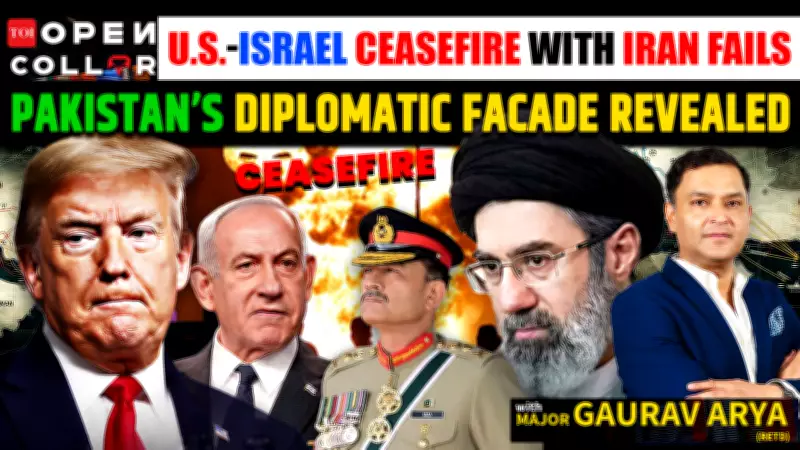
U.S.-Israel-Iran Ceasefire Collapses Amidst Diplomatic Turmoil
In a dramatic turn of events, the much-touted ceasefire between the United States, Israel, and Iran has reportedly collapsed on the ground, sparking renewed tensions in the volatile Middle East region. This development comes as shocking details emerge about the fragility of the agreement and the political maneuvering surrounding it.
Pakistan's Controversial Diplomatic Claims Exposed
Major Gaurav Arya, in his explosive analysis, has exposed Pakistan's attempts to claim global diplomatic credit for the ceasefire that never truly materialized. According to his revelations, Pakistan circulated a leaked '10-point' proposal document that purported to outline the ceasefire terms, but this has been characterized as part of a broader narrative manipulation effort.
The so-called diplomatic victory claimed by Pakistan appears to be built on shaky foundations, with evidence suggesting that the ceasefire was never fully implemented or respected by the involved parties. This exposure raises serious questions about international diplomacy and truth in conflict reporting.

Leaked Documents and Fake Narratives
Central to this controversy are the leaked proposals that Pakistan allegedly promoted as evidence of its diplomatic success. These documents, which have not been officially verified, reportedly contained terms that were never agreed upon by all parties involved in the conflict.
The circulation of these unverified documents has created confusion in diplomatic circles and undermined genuine peace efforts in the region. Analysts suggest this represents a concerning trend of information warfare in modern international relations.
Broader Regional Implications
The collapse of this ceasefire agreement has significant implications for Middle East stability:
- Renewed military tensions between Israel and Iran
- Potential escalation of proxy conflicts across the region
- Diminished trust in international mediation efforts
- Increased volatility in global energy markets
This development occurs against a backdrop of ongoing conflicts involving multiple regional powers, including Saudi Arabia and various Gulf states, with the strategic Strait of Hormuz remaining a critical flashpoint.
Historical Context and Future Prospects
The current situation echoes previous failed ceasefire attempts in the region and highlights the complex web of alliances and animosities that characterize Middle Eastern geopolitics. The exposure of Pakistan's diplomatic claims adds another layer of complexity to an already tense situation.
As the international community grapples with these revelations, questions remain about how genuine peace can be achieved in a region where multiple powers have competing interests and where diplomatic efforts are sometimes overshadowed by political posturing and narrative manipulation.






