

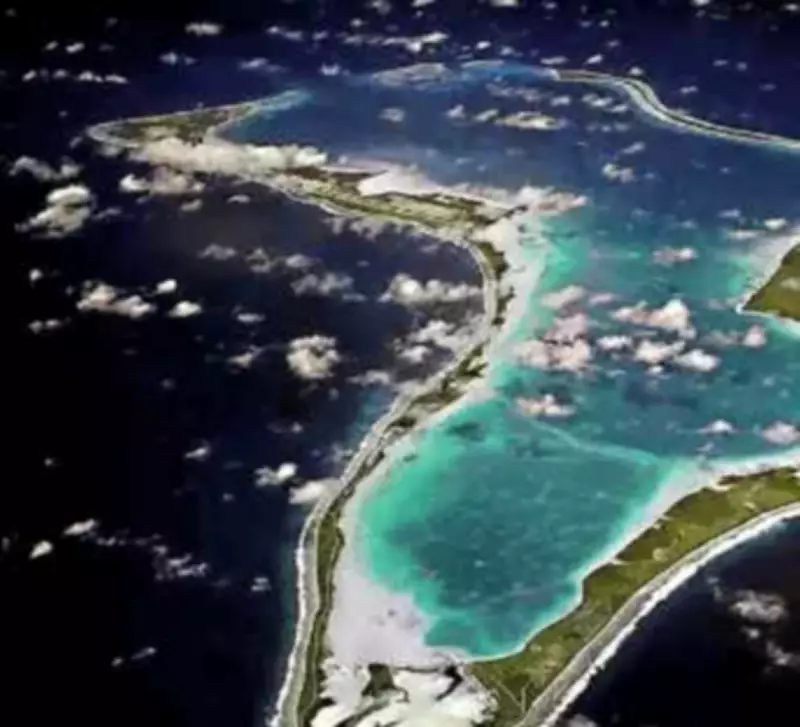
The Peaceful Origins of Chagos: A Lost Paradise
Until the early 1960s, the Chagos Archipelago existed as a tranquil haven within the Indian Ocean. Forming part of the same volcanic island chain as the Maldives and Lakshadweep, this remote territory lies approximately 1,700 kilometers from India's southern coastline—a distance comparable to that between Chennai and Delhi. The islands remained untouched by modern tourism, devoid of jet-skis, fighter jets, or explosive weaponry.
The azure waters of the Indian Ocean gently caressed the shores of more than sixty-five islands, creating an idyllic environment. Communities of coconut farmers, tracing their ancestry to African and southern Indian origins, inhabited seven atolls within Chagos. Following periods of French colonial administration and association with Mauritius, these Chagossians had pledged allegiance to British rule.
Their daily lives reflected a unique cultural blend: they communicated in Creole while proudly displaying the Union Jack, extracted oil from copra, attended church services, engaged in fishing activities, enjoyed companionship with their dogs, and found simple pleasure in observing spectacular sunsets.

The Brutal Displacement and Military Transformation
This peaceful existence shattered when armed British vessels unexpectedly arrived. As confused farmers and terrified children looked on, authorities systematically exterminated household pets using poisonous gas. The Chagossian population was forcibly crammed into ship holds and abandoned on the shores of Mauritius and Seychelles.
This occurred during a historical period when Mahatma Gandhi's principles had inspired independence movements across British colonies, including Mauritius. However, Chagos—legally part of Mauritius—underwent rapid "cleansing" and recolonization as the British Indian Ocean Territory through questionable diplomatic arrangements.
Declassified documents reveal disturbing attitudes within the British Foreign Office, where officials mockingly referred to the displaced islanders as "some few Tarzans and Man Fridays." The United Kingdom subsequently leased Diego Garcia, the archipelago's largest island, to the United States for ninety-nine years, receiving Pershing missiles in what many describe as a morally questionable exchange.
Decades of Legal Struggle and Eventual Victory
While approximately two thousand Chagossians endured poverty, substance abuse, and psychological distress in the urban slums of Port Louis and Port Victoria, the United States transformed Diego Garcia's naturally deep harbor into a formidable military installation. This base served crucial surveillance functions against the Soviet Union during the Cold War and later monitored threats including the Taliban, Saddam Hussein's Iraq, Al Qaeda, and ISIS.
Armed primarily with Gandhian principles of non-violence and supported by dedicated legal professionals, Chagossian refugee groups pursued justice through judicial systems for over thirty years. They achieved successive courtroom victories, even when the UK Foreign Office persuaded the Queen to overturn unfavorable rulings in Britain's Supreme Court.
The persistent campaign reached the International Court of Justice in Den Haag, where Chagossians again prevailed. In 2024, Britain formally acknowledged Mauritian sovereignty over Chagos, including recognition of native Chagossians' right to return. This agreement contained a significant provision: Diego Garcia would remain a joint UK-US military facility under extended lease terms.
Trump's Explosive Intervention and Geopolitical Implications
Initial satisfaction among all parties—the United States, United Kingdom, Mauritius, and Chagossian representatives—was disrupted when former US President Donald Trump issued startling statements on Truth Social. Following controversial actions in Venezuela and regarding Greenland, Trump denounced Britain's planned transfer of Diego Garcia to Mauritius as "an act of GREAT STUPIDITY," suggesting it demonstrated vulnerability to Chinese and Russian interests.

Olivier Bancoult, leader of the Chagos Refugees Group, responded calmly, emphasizing that native Chagossians—numbering about 850—primarily seek to inhabit other islands like Peros Banhos and Salomon while accepting continued US presence on Diego Garcia. Mauritian advocate Sivakumaren Mardemootoo, a longtime champion of Chagossian rights, noted that sovereignty transfer is legally settled, with Port Louis recognizing Bancoult's group as legitimate representatives.
Mardemootoo interpreted Trump's remarks through a real estate developer's perspective, suggesting potential commercial partnerships between Mauritius and the United States could benefit Chagos development beyond military considerations.
Strategic Dimensions: China, Iran, and Indian Ocean Dynamics
The geopolitical landscape adds complexity to Chagos' future. China maintains substantial economic influence, with over sixteen percent of Mauritian imports originating there. Although Mauritius hasn't formally joined China's Belt and Road Initiative, its geographical position and comprehensive free trade agreement with Beijing establish it as a significant conduit for China-Africa commerce.
Since 2024, discussions have emerged regarding Chinese investment potential in Chagos tourism and hospitality sectors, with whispered suggestions about strategic surveillance opportunities. Security analysts like Gen Ata Hasnain identify China as a "background driver" in Trump's statements, noting the Indian Ocean's elevated strategic importance to US interests.
Indian security expert Gen Shokin Chauhan highlights Diego Garcia's central positioning for monitoring multiple critical regions: Iran's Chabahar port at the Persian Gulf entrance, China's expanding naval presence in Pakistan's Gwadar and Djibouti, and vital shipping corridors like the Straits of Hormuz and Malacca. Unlike bases in locations like Cyprus, Diego Garcia operates with multilateral consent and enables long-range bomber deployments without political complications.
Chauhan emphasizes Iran's significance due to energy resources and proxy networks like Hezbollah and Hamas, while suggesting US presence in the Indian Ocean indirectly benefits India by keeping Chinese expansionism occupied.
India's Cautious Position and Future Considerations
India maintains measured diplomacy regarding Indo-Pacific alliances, pursuing rapprochement with China on contentious matters while offering calibrated support for Chagos sovereignty transfer to Mauritius. Current Indo-US relations experience strain, raising questions about New Delhi's response should America reinforce its Chagos presence.
Chauhan argues that strategic realities transcend temporary diplomatic fluctuations: China remains India's persistent competitor supporting Pakistan, making US engagement in the Indian Ocean a stabilizing factor from India's perspective. He concludes that no strategic thinker would voluntarily relinquish Diego Garcia's advantages.
The Chagos narrative continues evolving, intertwining historical justice, legal triumphs, and great-power competition in one of the world's most strategically significant maritime regions.





