

China Rejects Allegations of Military Technology Transfer to Iran
In a significant diplomatic statement on Thursday, China categorically denied reports that its corporations had supplied satellite imagery and semiconductor chip manufacturing equipment to the Iranian military during the recent US-Israeli military engagement with Iran. Simultaneously, Beijing officials emphasized that China has undertaken "own efforts" to advocate for a ceasefire and de-escalation in the region.
Defense Ministry's Firm Rejection of Technology Transfer Claims
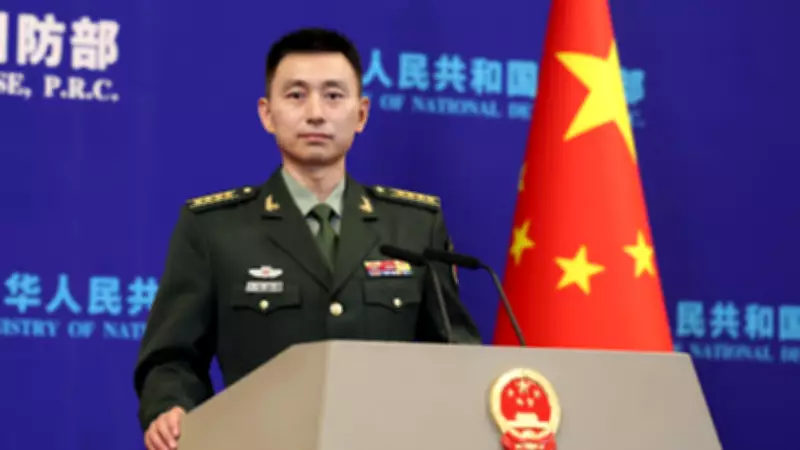
Defence ministry spokesperson Zhang Xiaogang explicitly dismissed allegations that Semiconductor Manufacturing International Corporation (SMIC), a major Chinese chipmaker, had provided chip manufacturing equipment to Iranian military forces. He also refuted claims that a Chinese commercial satellite company had released imagery of US military installations across the Middle East.
"China firmly opposes the dissemination of speculative and insinuating disinformation targeting China by relevant parties," Zhang declared during the briefing. He characterized such reports as baseless attempts to tarnish China's international reputation.

Response to US Accusations and China's Diplomatic Stance
The spokesperson additionally rejected remarks from US officials who indicated awareness of actions by China and Russia to assist Iran, with warnings of potential responses if necessary. Zhang articulated China's position as transparent and principled regarding the Iran conflict.
"China's position on the Iran issue is above-board and straightforward. We have always upheld an objective and impartial stance," he stated, adding that China has consistently worked to promote peace negotiations and "never added fuel to the fire."
In a pointed remark, Zhang questioned: "Who is saying one thing and doing another, and who is creating wars and conflicts around the world? The international community sees this very clearly." These comments were reported by PTI, citing the state-run China Daily newspaper.
Foreign Ministry Outlines Ceasefire Diplomacy
Separately, during a regular briefing on Wednesday, Chinese foreign ministry spokesperson Mao Ning detailed Beijing's diplomatic outreach efforts while carefully avoiding direct confirmation of reports regarding China's involvement in persuading Iran to accept a truce.
"China has consistently advocated for a ceasefire and to resolve the conflict through political and diplomatic means, and to achieve long-term stability in the Gulf and Middle East region," Mao emphasized.
She further noted: "China made its own efforts in this regard," highlighting Beijing's proactive role in conflict resolution without specifying exact diplomatic maneuvers.
Context of Recent Diplomatic Developments
Mao's statements followed shortly after Iran and the United States agreed to a two-week pause in hostilities, with subsequent negotiations expected to focus on establishing a more enduring peace arrangement. This development represents a significant de-escalation in regional tensions.
Last week, China and Pakistan jointly proposed a comprehensive five-point peace initiative that called for:
- An immediate ceasefire between conflicting parties
- Protection of vital shipping routes through the Strait of Hormuz
- Enhanced diplomatic dialogue mechanisms
- Regional stability measures
- International cooperation for conflict resolution
The Strait of Hormuz represents a critical global energy corridor through which approximately one-fifth of the world's oil shipments pass, making its security a matter of international economic significance. Bloomberg reported that the China-Pakistan initiative specifically emphasized safeguarding this strategic waterway.
Broader Implications for International Relations
China's dual messaging—denying military technology transfers while asserting diplomatic peacemaking efforts—reflects Beijing's delicate balancing act in Middle Eastern geopolitics. The statements come amid increasing scrutiny of China's international partnerships and technological exports.

The semiconductor equipment allegations carry particular weight given global concerns about technology proliferation and military applications. SMIC, as China's largest semiconductor manufacturer, occupies a strategically important position in the global technology supply chain.
China's diplomatic positioning as a neutral peace broker contrasts with accusations from Western nations about its regional engagements. The country's economic interests in Middle Eastern energy resources and trade routes provide significant motivation for stability in the region.
As ceasefire negotiations progress, China's role as both a denier of military support and a proponent of diplomatic solutions will likely continue to shape international perceptions of Beijing's foreign policy objectives in conflict zones worldwide.





