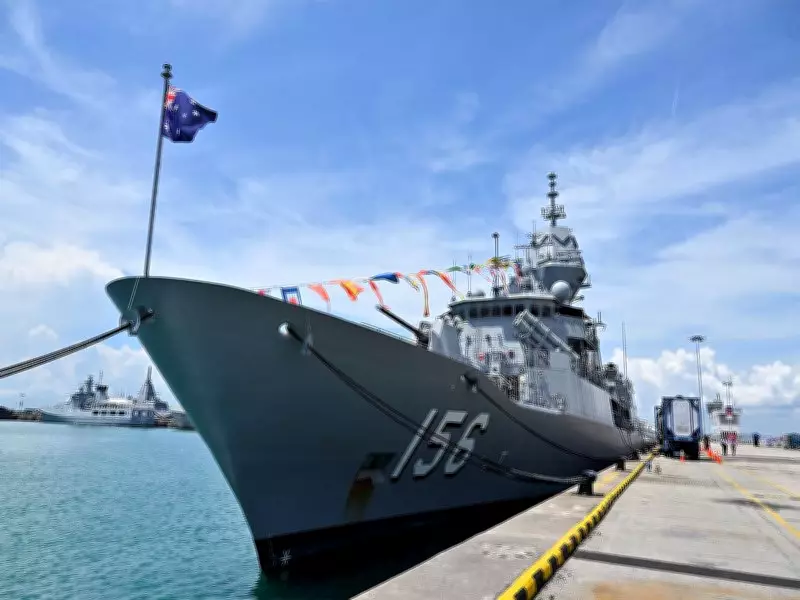
China Monitors Australian Warship's Passage Through Taiwan Strait
In a recent development highlighting ongoing regional tensions, China's military has confirmed that it closely tracked and monitored an Australian warship as it transited the Taiwan Strait. This action underscores China's firm stance on territorial sovereignty and its commitment to maintaining vigilance in the strategically vital waterway.
Details of the Incident
The Australian warship, whose specific class and name were not disclosed in initial reports, conducted a routine transit through the Taiwan Strait. According to Chinese military sources, the vessel was under continuous surveillance by Chinese naval and air forces throughout its passage. The monitoring involved advanced tracking systems and patrols to ensure compliance with international norms and China's domestic laws regarding the strait.
China's Response and Official Statements

Chinese authorities have reiterated that the Taiwan Strait is an integral part of China's territorial waters, and any foreign military activities in the area are subject to strict scrutiny. In a statement, a spokesperson for the Chinese Ministry of National Defense emphasized that the military's actions were lawful and necessary to safeguard national security and regional stability. The spokesperson further warned against any actions that could be perceived as challenging China's sovereignty over Taiwan and adjacent waters.
Regional and International Context
The transit of the Australian warship occurs against a backdrop of heightened military activity in the Indo-Pacific region. Australia, as a key ally of the United States, often participates in freedom of navigation operations (FONOPs) to assert the right of passage through international waters, including the Taiwan Strait. These operations are frequently met with opposition from China, which views them as provocative and infringing on its territorial claims.
Implications for Bilateral Relations
This incident could potentially strain diplomatic relations between China and Australia, which have been tense in recent years due to trade disputes and geopolitical rivalries. While Australia maintains that such transits are routine and in accordance with international law, China's persistent monitoring signals its determination to enforce its claims. Observers note that similar incidents involving other nations, such as the United States, have led to diplomatic protests and increased military posturing in the region.
Historical and Legal Perspectives
The Taiwan Strait has long been a flashpoint in international relations, with China asserting sovereignty over Taiwan and considering the strait part of its internal waters. However, many countries, including Australia and the United States, regard it as an international waterway where freedom of navigation applies under the United Nations Convention on the Law of the Sea (UNCLOS). This legal ambiguity often leads to confrontations, as seen in this latest event.
Key Points to Note:
- China's military employed tracking and monitoring measures during the Australian warship's transit.
- The incident reflects broader tensions in the Indo-Pacific region over maritime sovereignty.
- Australia's actions are part of routine FONOPs, while China views them as challenges to its territorial integrity.
- Diplomatic fallout may impact China-Australia relations, already under strain from other issues.
In summary, the monitoring of the Australian warship by China serves as a reminder of the delicate balance in the Taiwan Strait, where national interests and international law frequently collide. As both nations navigate these complex waters, the potential for escalation remains a concern for regional stability.