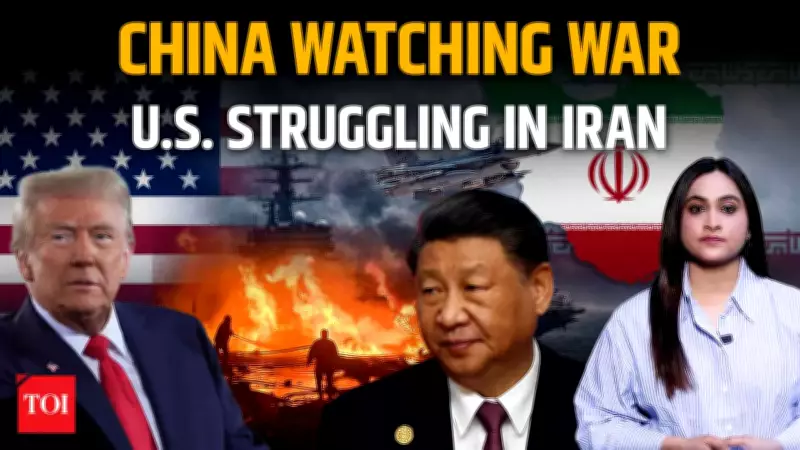
China Observes U.S.-Iran Conflict as Blueprint for Future Military Actions
The ongoing military engagement between the United States and Iran is unfolding as more than a regional power struggle. It serves as a critical laboratory for contemporary warfare, where advanced technology meets geopolitical endurance. Despite deploying superior firepower and cutting-edge systems, the United States finds itself mired in a conflict with ambiguous objectives and no definitive conclusion in sight.
Conversely, Iran demonstrates how a nation can leverage strategic geography, particularly control over the Strait of Hormuz, to maintain influence and complicate adversary operations. This dynamic underscores a pivotal shift in how conflicts are prosecuted and resolved in the 21st century.
Beijing's Strategic Calculations and Taiwan Implications
From the halls of Beijing's military command, every development in the U.S.-Iran theater is being meticulously dissected. Chinese analysts are not passive observers; they are actively extracting operational insights to refine their own defense doctrines. The conflict provides a real-time assessment of:

- Asymmetric Warfare Tactics: How Iran counters U.S. technological dominance.
- Logistical and Supply Chain Vulnerabilities: The challenges of sustaining military operations against resilient opposition.
- Missile Defense and Drone Warfare Efficacy: The evolving role of unmanned systems and countermeasures.
These lessons are directly applicable to China's long-standing strategic priority: Taiwan. The island's status remains a core national interest for Beijing, and any potential scenario involving reunification, by force if necessary, would require a meticulously planned military campaign.
Military Reforms and Future Confrontations
In response to these observations, China is reportedly accelerating internal military reforms. These adjustments span organizational restructuring, technological adoption, and strategic planning. The goal is to create a force capable of executing a swift, decisive operation that avoids the protracted stalemate characterizing the U.S.-Iran engagement.
Furthermore, China is likely reevaluating its missile defense architectures and hardening critical supply chains against potential disruption. The ability to secure maritime routes and withstand economic pressure during a conflict is now a paramount concern, informed by the ongoing struggle in the Middle East.
The global community watches as China translates these battlefield observations into concrete capabilities. The next major international confrontation may not be in the deserts of the Middle East but in the waters and skies around Taiwan, shaped by the hard lessons of today's wars.