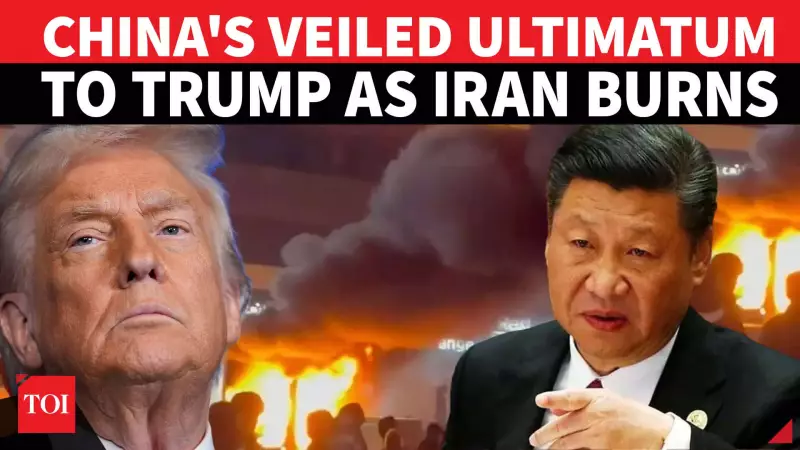
Iran has entered a critical phase of nationwide turmoil, with massive protests continuing for a thirteenth consecutive night despite a severe government crackdown. The situation has now drawn a sharp geopolitical response from China, directly challenging former US President Donald Trump's recent threats against Iran's Supreme Leader.
Nationwide Unrest Defies Internet Blackout
For a second night in a row, millions of Iranian citizens took to the streets across major cities including Tehran, Tabriz, Esfahan, and Mazandaran. They braved a comprehensive nationwide internet shutdown imposed by authorities to suppress the flow of information. The protests, reportedly sparked by calls from exiled crown prince Reza Pahlavi, have met with forceful resistance from security forces.
Gunfire was widely reported as clashes intensified. The human cost is rising sharply, with at least 51 people killed and more than 2,200 individuals arrested according to available reports. The scale of the demonstrations suggests a deep-seated public anger that the internet blackout has failed to contain.

China's Stark Warning to Trump
Amid the domestic chaos, a significant international development has emerged. Chinese state media, Xinhua, circulated a statement attributed to China's Foreign Ministry. The communiqué delivered a clear message: Beijing will not stand idly by if Iran's sovereignty is violated.
The statement, which has not been independently verified, explicitly warned against external threats, a direct reference to Donald Trump's recent ultimatums aimed at Supreme Leader Ali Khamenei. More provocatively, it declared China's readiness to extend support to Tehran across financial, intelligence, and military sectors. The timing of this announcement, as Iran's government battles for control, has sent alarm bells ringing in global diplomatic circles.
Symbolic Shift and a Potential Turning Point
Beyond the physical confrontations, a powerful symbolic battle is unfolding online. Across social media platforms, despite restrictions, a notable shift is visible. The historic lion and sun flag of pre-revolutionary Iran is increasingly replacing the official emblem of the Islamic Republic. This visual rebellion points to the profound nature of the current uprising, deepening fears within the establishment that these protests could signify a fundamental challenge to the regime's identity and legitimacy.
The convergence of intense domestic dissent and high-stakes international posturing creates a highly volatile scenario. With China positioning itself as Tehran's protector against Western pressure, and the Iranian populace demonstrating unprecedented defiance, the events of the past 13 days may well be a prelude to a major geopolitical realignment in the Middle East.