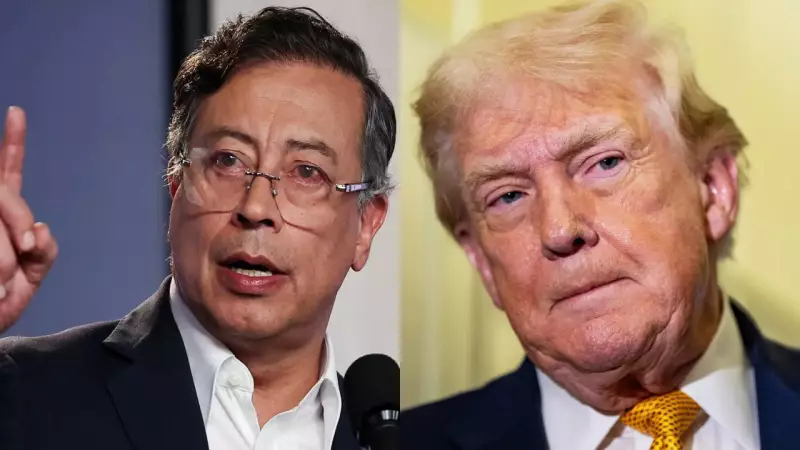
In a dramatic escalation of diplomatic hostilities, Colombian President Gustavo Petro issued a direct and public challenge to United States President Donald Trump on Monday, daring him to "Come get me. I'm waiting for you here." This bold statement marks a new low in the already strained relations between the two nations, primarily over allegations of Colombia's role in the cocaine trade fueling the US market.
A War of Words Escalates
The fiery exchange was triggered by recent comments from President Trump, who described Colombia's leadership as "sick" and alleged that the country's drug production is a primary source of cocaine entering the United States. When questioned about potential US action against Colombia, Trump reportedly responded that the idea "sounds good to me." He further criticized Petro personally, claiming Colombia is "run by a sick man who likes making cocaine and selling it to the United States."
Petro's defiant retort left little room for misinterpretation. "Come get me. I'm waiting for you here. Don't threaten me — I'll wait for you right here if you want to," the Colombian leader stated. He firmly rejected any notion of US military intervention on Colombian soil, warning specifically against invasions, missile strikes, or targeted assassinations. "I don't accept invasions, missiles, or assassinations — only intelligence," Petro clarified, offering an alternative of dialogue based on facts.

Roots of the Conflict: Drugs, Strikes, and Sanctions
The current crisis did not emerge overnight. The relationship has been deteriorating for months. In December, the two leaders engaged in a verbal spat over Colombia's alleged cocaine exports. Earlier, the Trump administration sanctioned Petro and members of his family over alleged connections to the illicit drug trade—accusations Petro vehemently denies. He countered by pointing out that his administration "ordered the largest seizure of cocaine in world history."
Petro also condemned a US military strike in September that resulted in the death of a Colombian fisherman, and he criticized a recent US operation targeting Venezuelan leader Nicolás Maduro, which Trump hailed as "successful." Linking these events, Petro warned that any similar US military action in Colombia would have severe, unintended consequences. "If you bomb even one of these groups without sufficient intelligence, you will kill many children," he cautioned, adding that bombing peasants could cause "thousands of guerrillas will return in the mountains."
Regional Stability and Official Responses
The Colombian Ministry of Foreign Affairs sought to temper the president's strong language with a more diplomatic official stance. The ministry emphasized Colombia's commitment to maintaining international relations based on "dialogue, cooperation and mutual respect" and stated unequivocally that it "considers threats or the use of force in relations between States unacceptable."
From Washington, White House spokesperson Anna Kelly referenced the administration's strategic posture, stating it is "reasserting and enforcing the Monroe Doctrine to restore American preeminence in the Western Hemisphere, control migration, and stop drug trafficking." This doctrine, historically used to justify US influence in the Americas, underscores the geopolitical stakes of the confrontation.
Petro also turned his criticism inward, accusing domestic political opponents of poisoning the relationship. He urged Washington to "Stop getting lied to by Colombian political mafias who condemned us to 700,000 deaths and made us the world's most unequal country." This highlights how the international dispute is deeply intertwined with Colombia's own complex history of conflict and inequality.
As the war of words continues, the situation poses a significant risk to bilateral cooperation on security and trade. With both leaders taking uncompromising positions, the path to de-escalation appears challenging, leaving observers watching closely for the next move in this high-stakes diplomatic standoff.