Cuban Leader Firmly Rejects US Dialogue After Trump's Warning
Cuban President Miguel Diaz-Canel made a clear statement on Monday. He declared that his government is not engaging in talks with the United States administration. This announcement came just one day after former President Donald Trump issued a threatening message to the Caribbean island nation.
Trump had posted a suggestion on social media platform X. He urged Cuba to "make a deal, BEFORE IT IS TOO LATE." The former US leader did not specify what kind of agreement he had in mind.
Diaz-Canel's Response on Social Media
President Diaz-Canel responded with a series of brief posts on X. He emphasized that any progress in US-Cuba relations must be grounded in international law. The Cuban leader stated these relations should move forward "rather than hostility, threats, and economic coercion."

"We have always been willing to hold a serious and responsible dialogue with the various US governments, including the current one," Diaz-Canel wrote. He outlined specific conditions for such talks. These include sovereign equality, mutual respect, principles of International Law, and mutual benefit. The president stressed there must be no interference in internal affairs and full respect for Cuba's independence.
Cuban Foreign Minister Bruno Rodriguez promptly reposted these statements on his own X account. This showed unified government support for the president's position.
Critical Oil Lifeline Severed After Venezuela Attack
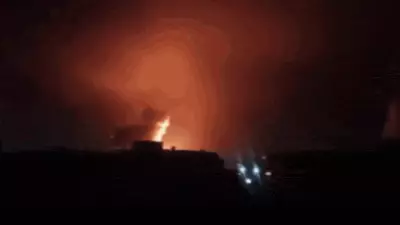
The diplomatic tension follows a major development in regional energy supplies. On Sunday, Trump declared that Cuba would no longer benefit from Venezuelan oil and money. This statement came after a US military operation against Venezuela on January 3.
That operation resulted in significant casualties. It killed thirty-two Cuban officers and led to the arrest of Venezuelan President Nicolas Maduro.
Before this attack, Cuba depended heavily on Venezuelan oil shipments. Energy expert Jorge Pinon from the University of Texas at Austin tracks these shipments closely. He reported that Cuba was receiving approximately thirty-five thousand barrels per day from Venezuela.
The island nation also obtained additional supplies from other sources. These included about five thousand five hundred barrels daily from Mexico and roughly seven thousand five hundred from Russia.
Mexico's Stance on Continued Oil Support
Mexican President Claudia Sheinbaum addressed the situation on Monday. She once again declined to provide specific data about current oil shipments to Cuba. The president also avoided confirming whether Mexico would increase supplies once Venezuelan shipments end.
Sheinbaum insisted that Mexican aid to Cuba "has been ongoing for a long time; it's not new." She expressed confidence about her country's fuel supply situation. "There is enough oil," she stated, despite acknowledging that production from state-owned Petroleos Mexicanos continues to decline steadily.
The Mexican leader reiterated her government's willingness to facilitate dialogue. She said Mexico would help if both the United States and Cuba agree to talks.
Deepening Crisis on the Island Nation
Even with previous oil shipments from Venezuela, Cuba has faced severe energy challenges. Widespread blackouts have persisted across the country. These result from both fuel shortages and a crumbling electrical grid infrastructure.
Experts express serious concerns about the current situation. They worry that a complete lack of petroleum would worsen Cuba's multiple crises. These problems stem from economic paralysis during the Covid-19 pandemic. They have been exacerbated by a radical increase in US sanctions following the first Trump administration.
The communist government has quantified the impact of these sanctions. Officials state that US measures cost Cuba more than seven point five billion dollars between March 2024 and February 2025. This represents a staggering sum for an island nation. At its peak in the previous decade, Cuba's tourism revenue reached only about three billion dollars annually.

The economic crisis has triggered significant migration. A large wave of Cubans has left primarily for the United States. Historically, Cubans enjoyed special immigration privileges as exiles in America. However, those privileges were curtailed before Trump closed US borders.
Expert Analysis of the Diplomatic Stalemate
Andy S. Gomez offered his perspective on the situation. The retired dean of the School of International Studies at the University of Miami described US-Cuba relations as "very sad and concerning."
He interpreted Diaz-Canel's latest comments as a tactical move. "I see this as a way to try and buy a little bit of time for the inner circle to decide what steps it's going to take," Gomez explained. He does not believe Cuba will reach out to US officials immediately.
The expert referenced previous diplomatic opportunities. "They had every opportunity when President Obama opened up US diplomatic relations, and yet they didn't even bring Cuban coffee to the table," Gomez remarked. "Of course, these are desperate times for Cuba."
Another analyst presented a different viewpoint. Michael Galant serves as senior research and outreach associate at the Center for Economic and Policy Research in Washington, D.C. He believes Cuba might actually be willing to negotiate under current circumstances.
"Cuba has been interested in finding ways to ease sanctions," Galant stated. "It's not that Cuba is uncooperative." He suggested potential discussion topics could include migration and security issues.
However, Galant noted that Trump appears in no hurry to resolve matters. "Trump is hoping to deepen the economic crisis on the island, and there are few costs to Trump to try and wait that out," he observed. The analyst does not expect dramatic action soon. "I don't think it's likely that there will be any dramatic action in the coming days because there is no rush to come to the table."
Daily Life Amidst Rising Tensions
President Diaz-Canel made one clarification in his social media posts. He noted that "there are no talks with the US government, except for technical contacts in the area of migration."
Despite heightened tensions, daily life continues for many Cubans. Some citizens express more concern than others about the developing situation.
Oreidy Guzman works as a thirty-two-year-old food delivery person. He shared his thoughts on the matter. "I don't want anything bad to happen to Cubans," Guzman said. "But if something has to happen, the people deserve change."
Meilyn Gomez is a thirty-seven-year-old homemaker with a different perspective. She does not believe the United States would actually invade Cuba. However, she prepares for any possible outcome under Trump's administration. "He'll find entertainment anywhere," Gomez remarked about the former US president.
The current situation dominates conversations among Cubans both on the island and abroad. Ruben Benitez, a fifty-seven-year-old bartender, captured this sentiment. "Cuban people talk and talk," he said. "But to be honest, eleven, eight or nine million will take to the streets to defend what little we have left."
The diplomatic standoff continues as Cuba faces its most severe economic challenges in decades. The island nation grapples with energy shortages, economic sanctions, and uncertain international relations simultaneously.