Cuba has issued a sharp rebuke to former US President Donald Trump's threats to cut off its oil supplies, with its top diplomat accusing the United States of behaving in a 'criminal' manner and violating international norms. The diplomatic flare-up underscores the renewed tensions between the long-time adversaries.
Cuba's Firm Stance on Energy Sovereignty
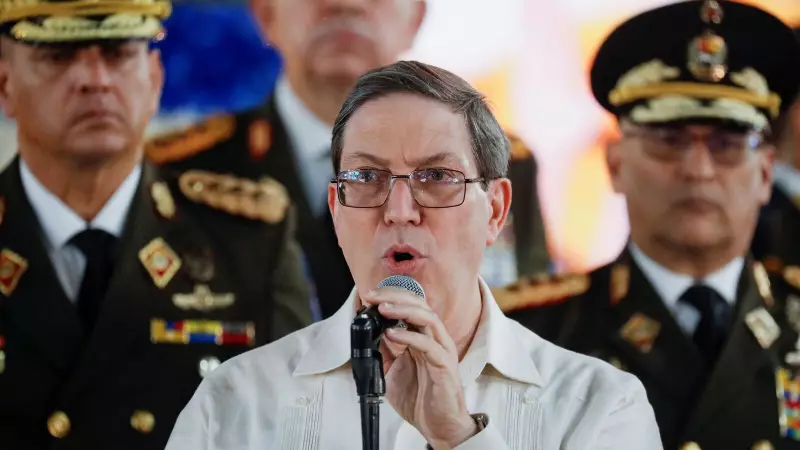
On Sunday, Cuban Foreign Minister Bruno Rodriguez Padilla firmly asserted his nation's sovereign right to purchase oil from any country willing to sell it, free from American interference. This declaration came as a direct response to a social media post by Donald Trump, who vowed to halt all oil and monetary flows to the Caribbean island nation.
Rodriguez, in statements reported by Reuters, made it clear that Cuba's government will not yield to US blackmail or military coercion. He framed the US actions as not just an attack on Cuba but as a broader menace, stating they constitute a threat to international peace and stability.

Trump's Social Media Ultimatum
The controversy was ignited by a post Trump made on his platform, Truth Social. In it, he referenced Cuba's historical reliance on Venezuelan oil, claiming that arrangement was now over. "Cuba lived, for many years, on large amounts of OIL and MONEY from Venezuela," Trump wrote.
He further alleged that Cuba provided security services to Venezuelan leaders in return, but stated, "BUT NOT ANYMORE!" Trump claimed that most of those involved were dead after a recent "U.S.A. attack" and declared that Venezuela now has American protection. He concluded with a stark warning: "THERE WILL BE NO MORE OIL OR MONEY GOING TO CUBA - ZERO! I strongly suggest they make a deal, BEFORE IT IS TOO LATE."
Implications for Regional Diplomacy and Global Order
This exchange signals a potential return to the hostile rhetoric and punitive policies that characterised the Trump administration's earlier approach to Cuba, reversing a period of cautious thaw. Rodriguez's characterization of US behaviour as 'criminal' elevates the diplomatic dispute, framing it as a matter of legal and ethical principle rather than mere political disagreement.
The Cuban minister's defence of his country's right to engage in free trade for essential commodities like oil touches on core principles of international law. This standoff is likely to resonate in global forums, where similar US sanctions have been questioned. For Cuba, securing alternative energy partnerships becomes an immediate and critical priority in the face of such threats.
The situation remains fluid, and further developments are anticipated as both sides solidify their positions. The international community's reaction to this escalating war of words will be closely watched, particularly by nations that have historically opposed unilateral sanctions.