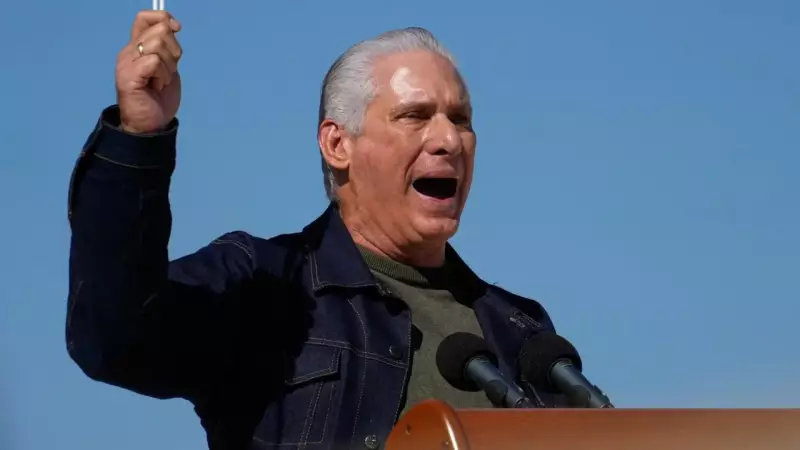
In a sharp and defiant retort, Cuban President Miguel Díaz-Canel has firmly rejected recent threats from former US President Donald Trump to cut off oil supplies to the island nation. The Cuban leader asserted his country's sovereignty and placed the blame for Cuba's severe economic hardships squarely on decades of American sanctions.
A Fiery Exchange on Social Media
The diplomatic clash unfolded on the social media platform X. It began when Donald Trump issued a stark warning to Havana, stating there would be "NO MORE OIL OR MONEY GOING TO CUBA - ZERO!". He strongly suggested that Cuban authorities should "strike a deal" with the United States without any further delay.
President Díaz-Canel's response was swift and uncompromising. He declared that Cuba is a "free, independent, and sovereign nation" where no external power can dictate actions. He highlighted the prolonged conflict, stating the US has been aggressing against Cuba for 66 years. However, he emphasized that Cuba does not threaten but prepares to defend itself.

Blaming the US for Economic Strangulation
In his detailed post, Díaz-Canel directly addressed those who blame Cuba's socialist revolution for the nation's current economic struggles. He stated such critics should "hold their tongues out of shame," as they are well aware the problems stem from American policy.
"These are the fruits of the draconian measures of extreme strangulation that the United States has been imposing on us for six decades and now threatens to surpass," he wrote. The Cuban president accused the US of having no moral authority to criticise Cuba, pointing fingers at a nation that he claims "turn[s] everything into a business, even human lives."
Sovereignty and a Prepared Defence
The core of Díaz-Canel's message was a reaffirmation of Cuba's right to self-determination. He interpreted the aggressive rhetoric from the US as rage over "this people’s sovereign decision to choose its political model."
Striking a patriotic and resolute tone, he concluded that Cuba is "ready to defend the Homeland to the last drop of blood." This statement underscores the Cuban government's position of preparing for defence rather than initiating aggression, framing the US as the perpetual antagonist in a conflict spanning over half a century.
This exchange marks a significant escalation in rhetoric, reviving longstanding tensions between the two nations. It highlights how the issue of US sanctions, often referred to as the embargo, remains the central point of contention, with Cuba consistently citing it as the primary cause of its economic difficulties.