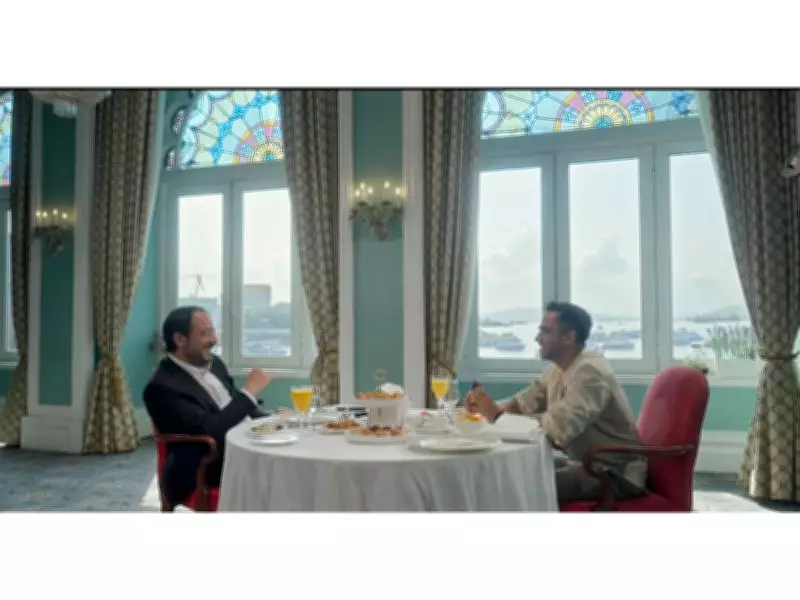
In a candid conversation on the podcast People by WTF, Cyprus President Nikos Christodoulides argued that the world's post-World War II institutions require an upgrade rather than a replacement to reflect contemporary realities. Speaking with host Nikhil Kamath, Christodoulides emphasized that the United Nations Security Council still mirrors the power structure of 1945, failing to account for today's major economies and democracies like India and Brazil.
Geopolitical Positioning and Personal Discipline
Christodoulides, a historian by training, described Cyprus's geography as its defining feature—situated at the crossroads of Europe, the Middle East, the Gulf, and Africa. This location, he said, shaped his decision to study in the United States and his view of India as a natural partner. When asked what it would take to run a country like a CEO runs a company, he pointed to two non-negotiable commitments: equal access to education and healthcare for all citizens, regardless of income or location. He measures success not by election wins but by these metrics.
His path to the presidency—serving as government spokesperson, then Foreign Minister, before being elected in 2023—taught him a specific discipline: understand what the other side needs before raising your own demands. This approach, he said, is rooted in his diplomatic career rather than a party machine.

Institutions Built for a Bygone Era
The core of the discussion centered on the inadequacy of current global governance structures. Christodoulides noted that the UN Security Council still reflects the great powers of the mid-20th century, while India, now the world's largest democracy and fourth-largest economy, and Brazil, a key regional player, lack permanent seats. "The institutions currently governing global affairs were built for a set of realities that no longer exist," he told Kamath.
He extended this critique to emerging technologies. If artificial intelligence displaces a large share of the workforce, Christodoulides warned, governments may need to nationalize dominant tech companies or introduce universal basic income. Otherwise, he said, people might "walk into these companies with bricks."
Thucydides Trap and a New Regional Architecture
Kamath raised the Thucydides Trap, referencing a recent exchange between Donald Trump and Xi Jinping about structural causes of war between rising and incumbent powers. Christodoulides did not dispute the premise but argued that the framework of competition determines whether rivalry escalates into conflict. He pointed to India as a rare major power committed to multilateralism without unilateral action.
Rather than attempting global reform immediately, Christodoulides proposed a regional approach modeled on the 1975 Organization for Security and Co-operation in Europe. He suggested a new architecture linking India, the Gulf, the Middle East, and Europe built on a "positive agenda" to attract participation rather than isolate any country. He cited the EU-India Free Trade Agreement, concluded in January 2026 and described as the largest either side has ever signed, as evidence that such a model works when incentives align.
Redefining Political Leadership
Kamath introduced the episode by saying the conversation left him "with more questions than answers" and that Christodoulides "made me redefine my idea of what a politician can be." He described the Cypriot leader as a historian who became president, not a politician who knows history. On holding power, Christodoulides said simply: "You need to decide without thinking the next elections, but thinking the next generations."
The episode is available on YouTube. People by WTF is a global podcast platform hosted by Nikhil Kamath, featuring in-depth conversations with leaders across business, policy, technology, culture, and academia. Past guests include Elon Musk, Prime Minister Narendra Modi, Bill Gates, Rishi Sunak, Akshata Murty, Martin Escobari, and Ranbir Kapoor.