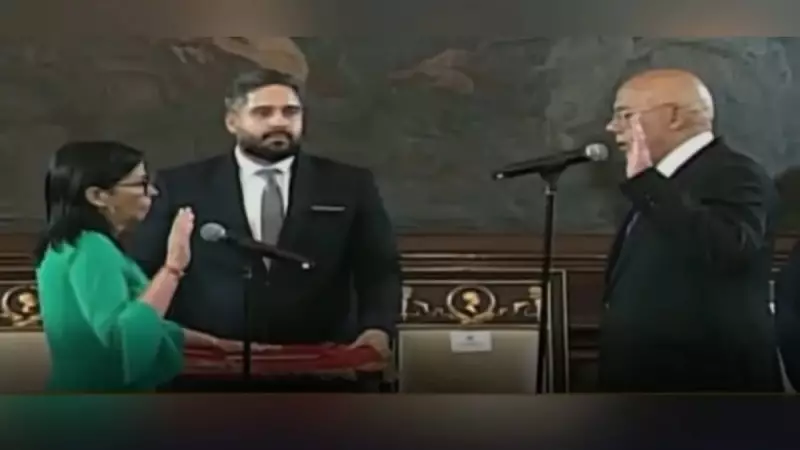
In a dramatic political shift, Venezuela's Vice President Delcy Rodriguez was sworn in as the nation's interim president on Monday, January 6, 2026. This transition follows the unexpected announcement by long-standing leader Nicolas Maduro that he would step down from the presidency.
A Solemn Transition of Power
The swearing-in ceremony, held at the Miraflores Palace in Caracas, was marked by a somber tone. Delcy Rodriguez, a staunch ally of Maduro and a powerful figure in his government, addressed the nation with visible emotion. She stated she was taking on the role "with sorrow" due to the circumstances of Maduro's departure. Rodriguez emphasized her commitment to continue the political project of the Bolivarian Revolution initiated by the late Hugo Chavez.
Nicolas Maduro, who has led Venezuela since 2013, did not provide extensive details for his sudden decision to leave office. His announcement sent shockwaves through the country, which has been grappling with a severe economic crisis, hyperinflation, and mass migration for nearly a decade under his rule.

Who is Delcy Rodriguez?
Delcy Rodriguez is no stranger to Venezuelan power corridors. Before serving as Vice President, she held several key positions, including Minister of Foreign Affairs and President of the pro-government Constituent Assembly. Her brother, Jorge Rodriguez, is also a prominent political figure, currently serving as the president of the National Assembly. Her leadership style is seen as firm and ideologically aligned with Maduro's socialist government.
Analysts suggest her appointment as interim president aims to ensure continuity within the ruling United Socialist Party of Venezuela (PSUV). The move is likely designed to maintain stability within the party's ranks and present a unified front during a period of significant uncertainty.
Reactions and the Road Ahead
The international reaction to this development has been mixed. Traditional allies like Russia and Cuba have expressed support for the constitutional transition. Meanwhile, the United States and several Latin American nations, which have previously recognized opposition leader Juan Guaido as the legitimate interim president, are cautiously observing the situation.
The immediate challenge for Rodriguez will be navigating Venezuela's deep economic woes and addressing the humanitarian crisis. The country remains heavily sanctioned by the US and other Western powers. It is unclear whether this change in leadership, albeit within the same political circle, will lead to any shift in policy or open new avenues for diplomatic engagement and economic relief.
Furthermore, the constitutional process for a permanent successor remains a critical question. The Venezuelan constitution outlines procedures for presidential succession, and all eyes will be on how the PSUV manages this transition in the coming weeks and months. Whether this leads to early elections or consolidates Rodriguez's power is a key point of speculation for regional observers.
For the people of Venezuela, this political change at the top occurs against a backdrop of enduring daily struggles. The interim presidency of Delcy Rodriguez begins at a pivotal moment, with the nation waiting to see if this transition brings any tangible change to their lives or simply represents a reshuffling of the existing political order.