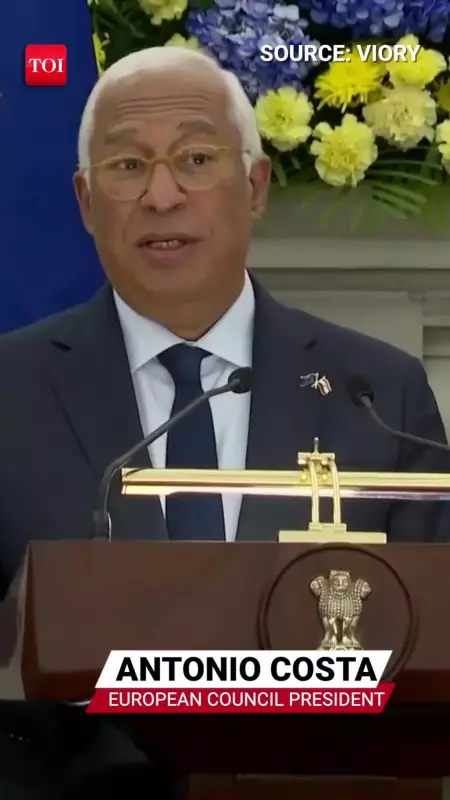
The signing of a historic free trade agreement between India and the European Union took an unexpectedly personal turn as European Council President António Luís Santos da Costa revealed his deep Indian connections. In a moment that captured global attention, Costa proudly displayed his Overseas Citizen of India (OCI) card to attendees, emphasizing his ancestral roots in Goa.
A Diplomatic Milestone With Personal Significance
As diplomats and officials gathered to formalize the long-negotiated trade pact, Costa's gesture transformed the event from a purely political achievement into a celebration of cultural heritage. The European Council president's declaration, "I'm from Goa," resonated through the room, highlighting how international relations can bridge personal histories with global diplomacy.
The Strategic Importance of the India-EU Free Trade Agreement
This comprehensive trade deal represents years of careful negotiation between two of the world's largest economic blocs. The agreement promises to boost bilateral trade, reduce tariffs, and create new opportunities for businesses across multiple sectors. Experts believe this partnership will strengthen economic ties while fostering greater cultural exchange between Europe and South Asia.

Understanding António Costa's Goan Heritage
Costa's family history traces back to Goa, India's smallest state known for its unique blend of Portuguese and Indian cultures. His possession of an OCI card demonstrates his maintained connection to India, allowing him certain privileges similar to those of Non-Resident Indians. This revelation adds a fascinating dimension to his leadership role in European politics.
Broader Implications for India-Europe Relations
The personal connection displayed by Costa symbolizes the deepening relationship between India and European nations. As global economic dynamics shift, such personal bonds between leaders can facilitate smoother diplomatic negotiations and mutual understanding. The timing of this revelation—immediately following the signing of a major trade agreement—underscores how cultural identity can complement formal diplomatic achievements.
Observers note that Costa's gesture may inspire other global leaders of Indian origin to more openly celebrate their heritage while pursuing international diplomacy. The incident demonstrates how personal narratives can enrich political discourse and create more meaningful connections between nations with shared historical ties.