

Europe's Strong Diplomatic Message to Trump Following Historic Security Pact with India
In a significant development that underscores shifting global alliances, the European Union has delivered a pointed message to former US President Donald Trump following the signing of a major security framework agreement with India. The diplomatic communication comes at a time of heightened tensions in transatlantic relations and represents a clear signal of Europe's evolving strategic posture.
Kaja Kallas Issues Warning on Security Outsourcing
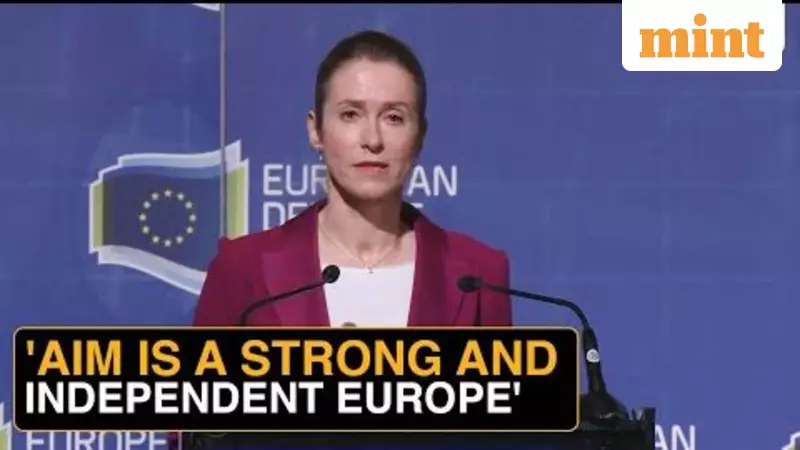
EU High Representative for Foreign Affairs and Security Policy Kaja Kallas has issued a stern warning against what she describes as the dangerous practice of outsourcing security to external powers. Her comments follow recent tariff threats by Trump targeting Greenland and what many analysts describe as the near-collapse of traditional transatlantic security arrangements.
The timing of this diplomatic communication is particularly noteworthy, coming immediately after European leaders finalized what some are calling the "mother of all deals" with India—a comprehensive security framework that specifically addresses Arctic security concerns. While this agreement has reportedly defused immediate regional tensions, many operational details remain pending and subject to further negotiation.

Structural Shifts in US-Europe Relations
Kallas emphasized that the changes occurring between the United States and Europe are fundamentally structural rather than temporary in nature. This assessment suggests that European leaders view the current tensions as representing a permanent realignment rather than a passing diplomatic dispute that can be easily resolved through traditional channels.
The EU's top diplomat specifically referenced what she termed "coercive power politics" as a driving factor behind Europe's need to reassess its security dependencies. This language indicates growing European concern about transactional approaches to international security that prioritize unilateral advantage over collective defense principles.
Major Push for European Defence Independence
At the heart of Kallas's message lies a major call for stronger European defence independence. The statement represents perhaps the most explicit articulation to date of Europe's intention to develop autonomous security capabilities that reduce reliance on American military support and strategic direction.
This push for greater strategic autonomy comes amid:
- Ongoing concerns about the sustainability of NATO commitments
- Growing European investment in defence research and development
- Increased coordination among EU member states on security matters
- Expanding partnerships with non-traditional allies like India
The Arctic security framework with India represents a concrete manifestation of this strategic reorientation. By establishing formal security cooperation mechanisms with the world's largest democracy, European leaders are signaling their intention to diversify security partnerships beyond traditional transatlantic frameworks.
Implications for Global Security Architecture
This development carries significant implications for the future of global security architecture. The combination of a strengthened EU-India security partnership and Europe's explicit call for reduced dependence on American security guarantees suggests we may be witnessing the early stages of a multipolar security system in which traditional alliances are being reconfigured.
European officials appear to be positioning the bloc as an independent security actor capable of forming strategic partnerships based on shared interests rather than historical alliances. This represents a substantial departure from post-World War II security arrangements that have largely centered on American leadership and protection.
As details of the EU-India security framework continue to emerge and European defence integration accelerates, the international community will be watching closely to see how these structural shifts reshape global power dynamics in the coming years.






