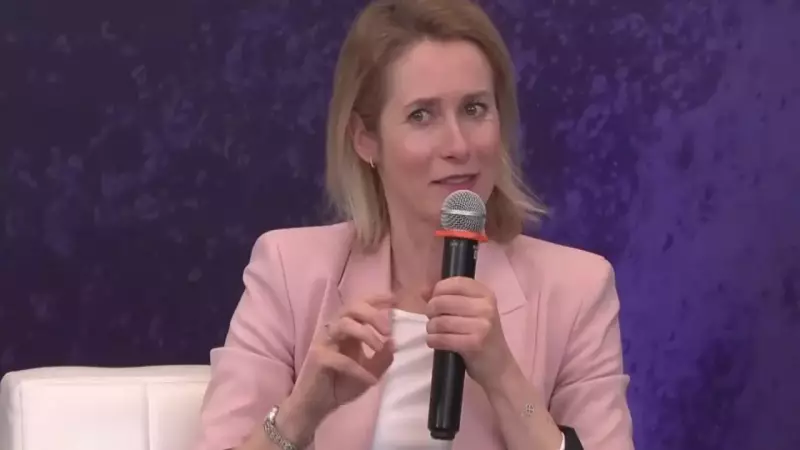
European Union High Representative for Foreign Affairs and Security Policy and Vice-President of the European Commission Kaja Kallas on Tuesday warmly welcomed the newly concluded free trade agreement between India and the European Union, describing it as a historic milestone with far-reaching implications. Speaking at the "Europe, India and a Changing World Order" conference in New Delhi, Kallas emphasized that India and Europe possess immense potential to significantly deepen their strategic cooperation across multiple critical sectors, extending well beyond trade to encompass security, defence, and foreign policy.
A Landmark Agreement in Uncertain Times
India and the European Union have successfully concluded protracted negotiations on a landmark free trade agreement (FTA), a development leaders from both sides have hailed as genuinely historic. European Union officials have particularly underscored the agreement's profound importance during an era characterized by shifting global power dynamics and escalating geopolitical uncertainty. Kallas acknowledged that while the negotiations required considerable time and patience, Europe remains steadfastly committed to honoring and implementing the agreement in full.
Predictability and Trust as Core Values
Elaborating on the European Union's strategic approach to cultivating long-term international partnerships, Kallas identified predictability as an increasingly vital value in today's volatile global landscape. "When I travel around the world, I observe a growing number of countries expressing a desire to build robust partnerships with Europe precisely because we are predictable," she stated. "This quality is transforming into a significant asset. We may invest substantial time in negotiating agreements, but once finalized, we adhere to them rigorously. We implement them faithfully, and this reliability has become an attribute of considerable value."

Further stressing the indispensable role of trust in international relations, she added, "When we ultimately reach an agreement, we genuinely keep our promises and uphold our commitments. I believe this principle is of extreme importance for fostering stable and productive relationships between nations."
Expanding the Horizon Beyond Trade
Kallas articulated that the newly minted FTA effectively opens the door for substantially wider engagement between India and the EU, transcending purely economic dimensions. "We possess the capacity to collaborate extensively across diverse fields," she explained. "We have systematically mapped various domains for potential cooperation, including security, defence, foreign policy coordination, maritime security, and cybersecurity." She noted that negotiations in several of these strategic areas are either already in progress or in the advanced planning stages, signaling a comprehensive partnership in the making.
Geopolitical Imperatives Driving Cooperation
The EU foreign policy chief highlighted the critical geopolitical context surrounding the agreement's finalization, pointing to a strong, mutual interest in fortifying cooperation as certain global powers actively attempt to reshape the established international order. "The sentiment in the room reflects a genuine, sincere interest in constructing robust trade relations, alongside addressing other pressing issues within the broader geopolitical panorama," Kallas remarked. "This is because we witness superpowers endeavoring to rewrite the multilateral framework, potentially creating divisions."
Reflecting on her personal background from a smaller nation, she offered a nuanced perspective: "Originating from a small country, I can candidly state that such a divisive restructuring is not in the interest of small and medium-sized countries. India, of course, is not a small nation. Nevertheless, I firmly believe there exists ample room for enhanced cooperation within Europe and between the European Union and India, particularly concerning foreign policy alignment."

Addressing Security Concerns and Defence Priorities
Kallas also addressed Europe's pressing security concerns, especially in light of ongoing tensions with Russia, indicating that the EU is actively seeking to bolster its collective defence capabilities. "We currently face an existential threat emanating from Russia," she said. "Our member states are consequently increasing their defence expenditures, which naturally leads to considerations regarding procurement sources and strategic partnerships for capability integration."
She clarified that while Europe would prioritize and support its own defence industrial base, strategic partnerships with capable nations like India could yield significant mutual benefits. "Should the European industry encounter challenges in delivery, we can explore procurement from external partners," Kallas noted. "I believe the competitive impetus from a major economy like India is also advantageous for our industries, motivating them to innovate and develop effective solutions."
A Strategic Partnership for Shared Security
Earlier, a joint statement issued by European Commission President Ursula von der Leyen, European Council President Antonio Costa, and Prime Minister Narendra Modi illuminated the broader strategic significance of the reinvigorated partnership. "We are not only strengthening our respective economies; we are also delivering enhanced security for our citizens in an increasingly insecure world," the leaders declared, simultaneously announcing the launch of the inaugural India-EU security and defence partnership.
Terming it a "landmark departure," the leaders affirmed that this partnership would substantially deepen collaborative efforts on maritime security, cyber and hybrid threats, space security, and counterterrorism. The framework will also include negotiations on a pivotal Security of Information Agreement to facilitate closer intelligence sharing.
Kallas reiterated this strategic message in a post on the social media platform X, following the signing of the new EU-India Security and Defence Partnership with External Affairs Minister S. Jaishankar. "When two major democracies act in concert, we forge stronger shared security," she wrote. She added that the pact would formally launch an annual security and defence dialogue and intensify cooperation specifically on maritime security, cybersecurity issues, and counterterrorism initiatives.
"As the global order undergoes significant transformation, the EU remains committed to deepening its diplomatic and economic ties worldwide. Strong, reliable partnerships effectively multiply our collective strength and resilience," Kallas concluded, encapsulating the forward-looking vision of the renewed India-EU relationship.