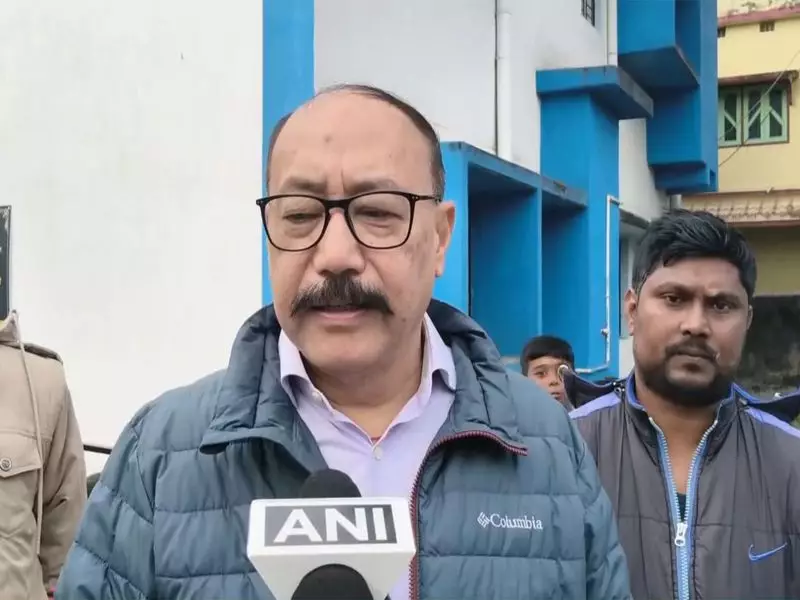
In a significant commentary on the evolving dynamics of global power, former Foreign Secretary of India Harsh Vardhan Shringla has shed light on the United States' current foreign policy approach. He indicated that the US now expects capable nations within a region to take the lead in responding to local crises and challenges.
Decoding the US Stance on Regional Responsibilities
Shringla, who served as India's top diplomat, made these observations during an interactive session at the Indian Council of World Affairs (ICWA). He was discussing the broader theme of 'India’s G20 Presidency and Emerging World Order'. The veteran diplomat pointed out a noticeable shift in Washington's strategy.
The core of the US position, as interpreted by Shringla, is that if a situation arises in a particular region, the states within that region are empowered to respond. This marks a move away from a doctrine of unilateral American intervention and towards a model that encourages regional ownership of security and diplomatic issues.

Implications for India and the Indo-Pacific
This policy perspective has direct and profound implications for a major regional power like India. Shringla's analysis suggests that the United States views India as a key partner capable of managing and responding to developments in the broader Indo-Pacific region. This aligns with Washington's continued emphasis on the Quadrilateral Security Dialogue (Quad), which includes India, the US, Japan, and Australia.
The former Foreign Secretary connected this US stance to the outcomes of India's G20 Presidency. He argued that the consensus achieved on the G20 New Delhi Leaders' Declaration, especially regarding the Ukraine conflict, demonstrated India's diplomatic heft. It proved India's ability to navigate complex global fractures and bring major powers to the table—a skill highly relevant to the US expectation of regional leadership.
"We were able to get a consensus on the G20 declaration... This was a major achievement," Shringla stated, highlighting how such successes bolster India's profile as a responsible and effective regional actor.
A New Framework for Global Diplomacy
Shringla's insights point to an emerging framework for 21st-century diplomacy. The model envisions:
- Regional primacy: Nations closest to a crisis are the first responders.
- Strategic partnerships: Global powers like the US will support and enable capable regional partners.
- Multilateral diplomacy: Forums like the G20 become crucial platforms for managing disagreements and fostering collaboration on global issues.
This approach, while placing greater responsibility on countries like India, also offers them a larger role in shaping the geopolitical landscape of their immediate neighbourhood and beyond. It moves beyond the older paradigms of pure non-alignment or reliance on superpowers, urging middle powers to step up.
The commentary from a diplomat of Shringla's experience provides a valuable lens through which to view recent US engagements worldwide. It underscores a pragmatic shift in American foreign policy, one that acknowledges logistical and political limits while seeking to cultivate and rely on a network of strong, democratic regional allies. For India, this represents both a vote of confidence and a call to action to further solidify its diplomatic and strategic capabilities.