

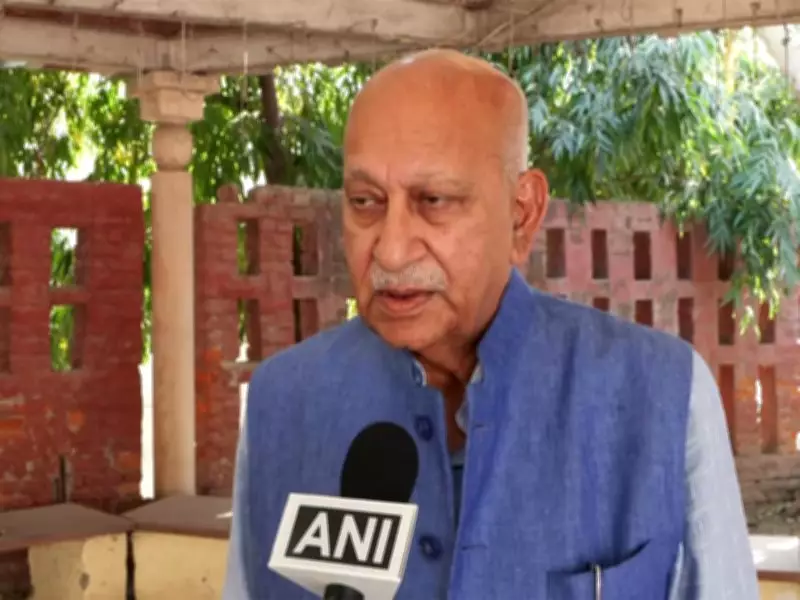
Former Indian Minister M.J. Akbar Condemns Pakistan's Leadership as 'Autocrats' and 'Uniformed Dictators'
In a sharp critique of Pakistan's political landscape, former Minister of State for External Affairs M.J. Akbar has accused the neighboring nation of being governed by what he terms "autocrats" and "dictators in uniform." This statement underscores long-standing concerns about military influence and democratic deficits in Pakistan, reflecting broader geopolitical tensions in South Asia.
Historical Context of Military Rule in Pakistan
Akbar's remarks draw attention to Pakistan's turbulent history, where military coups have repeatedly disrupted civilian governance. Since its independence in 1947, Pakistan has experienced several periods of direct military rule, including regimes led by figures such as Ayub Khan, Zia-ul-Haq, and Pervez Musharraf. These eras have often been marked by authoritarian practices, suppression of political dissent, and strained relations with India.
The current political climate in Pakistan continues to face scrutiny, with allegations of military interference in civilian affairs persisting. Akbar's comments highlight how this perceived dominance by "uniformed dictators" has contributed to regional instability and hindered democratic progress.

Implications for India-Pakistan Relations
Akbar's criticism comes at a time of ongoing diplomatic challenges between India and Pakistan. Issues such as cross-border terrorism, territorial disputes over Kashmir, and economic tensions have long plagued bilateral ties. By labeling Pakistan's rulers as "autocrats," Akbar emphasizes a narrative that questions the legitimacy and stability of its governance, potentially impacting future dialogue and cooperation efforts.
This perspective aligns with India's broader foreign policy stance, which often calls for democratic norms and transparency in international relations. However, such statements may also exacerbate existing animosities, complicating peace initiatives in the region.
Global Reactions and Regional Stability
The international community has frequently expressed concerns about Pakistan's governance structures. Organizations like the United Nations and various human rights groups have documented issues related to military influence and democratic erosion. Akbar's remarks resonate with these global observations, suggesting that Pakistan's internal dynamics have far-reaching consequences for South Asian security and global diplomacy.
- Military coups have historically undermined Pakistan's democratic institutions.
- Allegations of authoritarian practices persist in contemporary Pakistani politics.
- Regional stability is affected by governance issues in Pakistan.
In conclusion, M.J. Akbar's condemnation of Pakistan as a state run by "autocrats" and "dictators in uniform" sheds light on enduring governance challenges. As both nations navigate complex geopolitical landscapes, fostering dialogue based on mutual respect and democratic principles remains crucial for lasting peace and cooperation in South Asia.






