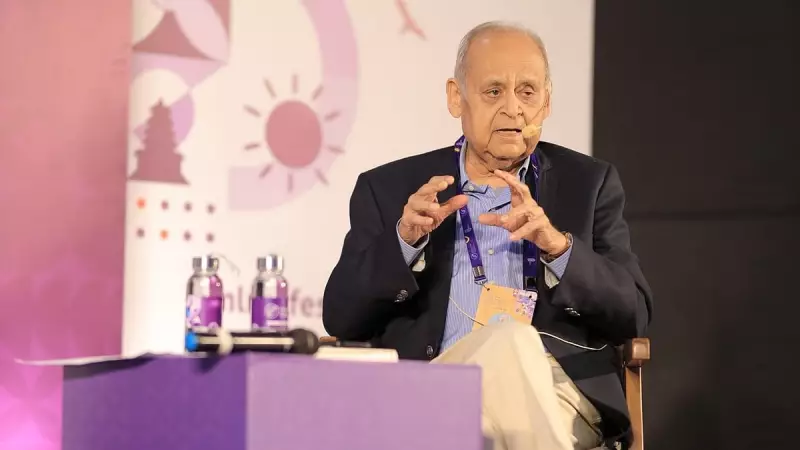
In a significant statement on India-Pakistan relations, former chief of India's external intelligence agency, Research and Analysis Wing (RAW), Vikram Sood, has asserted that achieving lasting peace with Pakistan is currently an unattainable goal. He emphasized that this would remain the case unless there is a fundamental and verifiable change in Islamabad's entrenched state policies.
A Candid Assessment at Mangaluru Lit Fest
Sood delivered this stark assessment during a session focused on global power dynamics at the Mangaluru Literature Festival. The event took place on January 10, 2026. The seasoned former spymaster argued that given Pakistan's long-standing and deeply rooted policies, which have often manifested as repeated hostilities towards India, there is little tangible benefit for New Delhi in pursuing compromise or negotiations under the present circumstances.
The Core Argument: Entrenched Hostility and Strategic Patience
Elaborating on his viewpoint, Sood's analysis suggests that Pakistan's establishment, particularly its powerful military and intelligence apparatus, continues to view relations with India through a prism of conflict. This includes the persistent use of cross-border terrorism as a state policy. From this perspective, any diplomatic outreach or peace initiative is likely to be futile, or even counterproductive, as long as these core adversarial policies remain unchanged in Islamabad.

The former intelligence head's comments underscore a school of thought in Indian strategic circles that advocates for strategic patience and resilience. This approach prioritizes strengthening India's own economic and military capabilities while isolating Pakistan internationally on issues of terrorism, rather than engaging in dialogue cycles that have historically yielded few results.
Implications for India's Foreign Policy
Sood's remarks, coming from a figure with deep expertise in security matters, highlight the significant challenges facing any future diplomatic engagement between the two nuclear-armed neighbours. They reinforce the official Indian position that talks and terror cannot coexist. The statement implies that the onus for creating conditions conducive to peace rests squarely with Pakistan, requiring it to demonstrate a credible and sustained shift away from its current posture.
For India, the takeaway is a reinforcement of a hard-nosed, realism-driven foreign policy line. It suggests that New Delhi should manage the relationship with a focus on deterrence and diplomatic pressure, without expectations of a breakthrough, until concrete actions are witnessed from across the border. The ball, as per this assessment, is firmly in Pakistan's court to initiate the fundamental change Sood referenced.