In a stark warning that connects geopolitical crises across continents, former US National Security Advisor John Bolton has asserted that the potential capture of Venezuelan President Nicolas Maduro would resonate powerfully in Tehran, capturing the attention of Iran's Supreme Leader Ayatollah Ali Khamenei more than any other event.
A Direct Warning to Iran's Leadership
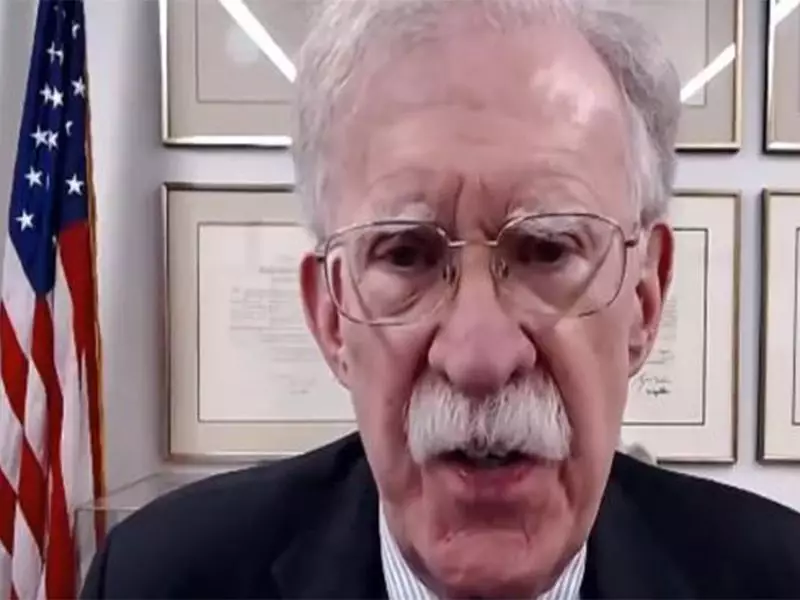
John Bolton, known for his hawkish foreign policy stance, made these remarks during an interview with The Tribune. He emphasized that the act of apprehending Maduro would serve as a potent signal to authoritarian regimes worldwide, but particularly to the leadership in Iran. The core of Bolton's argument is that such an action would demonstrate a tangible consequence for defying international warrants and norms.
The International Criminal Court (ICC) issued an arrest warrant for Nicolas Maduro in 2023, alleging crimes against humanity related to his government's crackdown on anti-government protests in 2017. Venezuela, like Iran, does not recognize the ICC's jurisdiction. Bolton suggests that successfully executing this warrant would shatter the perceived impunity of leaders who believe they are beyond the reach of international law.

Linking Caracas and Tehran
Bolton explicitly drew a parallel between the two nations' leaders. He stated that seeing Maduro face justice would make Iran's Ayatollahs "nervous" because it would underscore that their own positions could be vulnerable. Both regimes are subject to severe US sanctions and are often cited by Washington as state sponsors of instability. The former NSA's comments highlight a strategic viewpoint where pressure on one adversarial state can have a deterrent effect on another.
The relationship between Venezuela and Iran has deepened significantly over years, especially in energy cooperation and evading US sanctions. This alliance makes the fate of one leader a matter of close interest to the other. Bolton's analysis implies that a successful move against Maduro could weaken this axis of cooperation by demonstrating the West's resolve and capability.
Broader Implications for Global Politics
Bolton's statement is not merely an observation but a prescription for a more aggressive US foreign policy. He advocates for the use of all national instruments of power to enforce the ICC's warrant against Maduro, viewing it as a critical test case. The underlying message is that upholding international legal orders against rogue states requires decisive action, not just diplomatic statements.
This perspective has significant implications. It suggests a foreign policy approach where legal mechanisms are leveraged as tools of geopolitical strategy. The potential capture of a sitting head of state is an extraordinarily high-stakes maneuver that would undoubtedly trigger major diplomatic and possibly military repercussions. Bolton, however, frames it as a necessary step to restore credibility to international institutions and deter other leaders from committing similar atrocities.
The warning comes amid ongoing tensions between the West and both Venezuela and Iran. For India, which maintains diplomatic and economic ties with all parties involved, such escalatory rhetoric presents a complex diplomatic landscape. New Delhi has traditionally advocated for dialogue and peaceful resolution of conflicts, making the prospect of forced regime change a challenging scenario.
In conclusion, John Bolton's comments serve as a stark reminder of the interconnected nature of modern global standoffs. By linking the fates of Maduro and Iran's Ayatollahs, he presents a vision where enforcing justice in one hemisphere sends an unmistakable warning to another, potentially reshaping the calculations of adversarial regimes worldwide.