

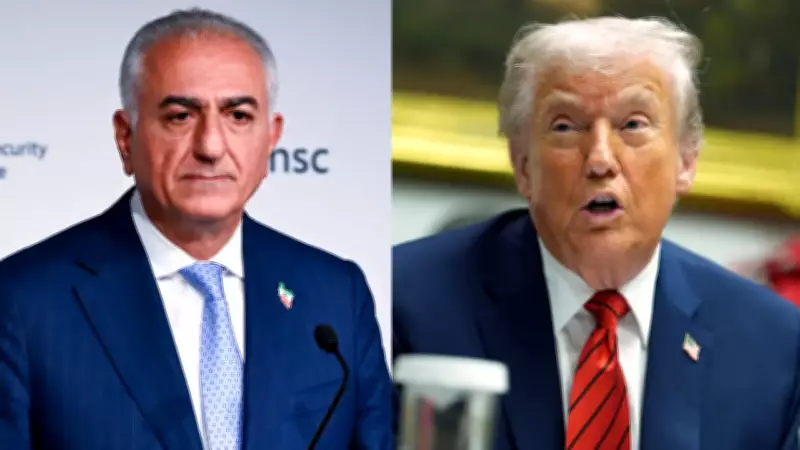
Exiled Iranian Prince Reza Pahlavi Calls on Trump to Help End Islamic Republic
Reza Pahlavi, the exiled son of Iran's last shah, made a direct appeal to US President Donald Trump on Saturday, urging him to assist the Iranian people in their struggle against the current regime. Speaking at the prestigious Munich Security Conference, Pahlavi declared it was "time to end the Islamic republic", emphasizing that this sentiment reflects the demands of his compatriots who have suffered through bloodshed and oppression.
Direct Appeal to US Leadership
In his address, Pahlavi specifically targeted President Trump, telling reporters, "To President Trump... The Iranian people heard you say help is on the way, and they have faith in you. Help them." This appeal comes after Trump's Friday statement that a change of government in Iran would be the "best thing that could happen", accompanied by the deployment of a second aircraft carrier to the Middle East to increase military pressure on Tehran.
Background of Political Tensions
The political climate has been particularly tense since January, when nationwide protests in Iran peaked, followed by what human rights groups describe as a harsh crackdown resulting in thousands of deaths. Trump had previously warned of potential military action in support of these protests, which Pahlavi had encouraged Iranians to join from his exile.

Iranian officials have countered these claims, asserting that the unrest was hijacked by "terrorists" backed by adversaries including the United States and Israel. Notably, many protest chants have called for the restoration of the monarchy, with Pahlavi, now 65, expressing his readiness to guide a democratic transition despite never having distanced himself from his father's autocratic rule.
Challenges Within the Opposition
Iran's opposition movement remains fragmented, and Pahlavi has faced criticism for his positions, particularly his support for Israel. A widely publicized 2023 visit to Israel undermined efforts to unite various opposition groups, highlighting the complex dynamics within the Iranian diaspora and opposition circles.
Pahlavi, who has lived outside Iran since before the 1979 Islamic revolution that overthrew the monarchy, summarized the current sentiment by stating, "This is the demand echoing from the bloodshed of my compatriots who are not asking us to fix the regime but to help them bury it." His remarks, quoted by AFP, underscore the deepening crisis and international dimensions of Iran's political future.






