Finland's President Delivers Reality Check: 'The Future Is India, Global South Will Decide New World Order'
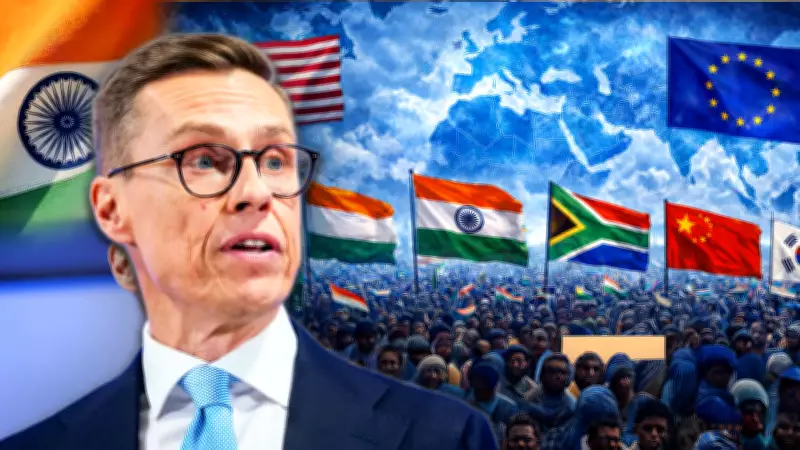
In a powerful and unequivocal endorsement of India's escalating global stature, Finland President Alexander Stubb has declared that the future of the world is increasingly intertwined with India's destiny. Speaking during his official visit to India and following his participation in the prestigious Raisina Dialogue, President Stubb highlighted India's formidable population, robust economic growth, and adept strategic diplomacy as the primary engines driving a fundamental transformation in the international power structure.
A Shift in Global Power Dynamics
After holding comprehensive discussions with Prime Minister Narendra Modi, the Finnish leader delivered a stark assessment, stating that the era of Western dominance in global decision-making is undergoing a rapid and irreversible change. He articulated a clear vision where the nations of the Global South are poised to assume a decisive and influential role in sculpting the future international system. Within this emerging framework, President Stubb positioned India as the central and most authoritative voice, leading the charge for a more equitable global governance model.
Call for Urgent Institutional Reforms
President Stubb did not merely diagnose the shift; he prescribed concrete actions. He issued a compelling call for sweeping reforms within established global institutions, with a particular focus on the United Nations. A cornerstone of his proposal is the grant of a permanent seat for India in the UN Security Council. According to his argument, the current architecture of global governance, largely designed in the aftermath of World War II, is obsolete. He stressed that these institutions must urgently evolve to accurately mirror the geopolitical and economic realities of the 21st century, where nations like India command significant influence.

This statement from a European leader serves as a significant geopolitical marker, reinforcing the growing consensus that the international order must adapt. It underscores India's transition from a regional power to a global stakeholder whose policies, economy, and diplomatic engagements will critically shape international norms, trade agreements, and security paradigms for decades to come. The endorsement from Finland adds considerable weight to the ongoing discourse on multilateral reform and the rightful place of the Global South at the helm of world affairs.