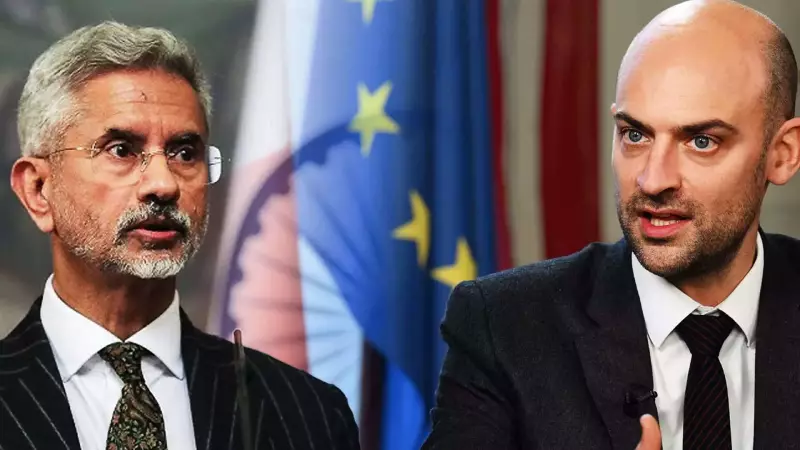
In a significant diplomatic statement, France has indicated that the era of fixed global alliances is coming to an end. The remarks came during a joint appearance with India's External Affairs Minister, Dr. S. Jaishankar, highlighting a pivotal moment in international relations.
France Calls for Interest-Based Partnerships
French Foreign Minister Jean-Noel Barrot explicitly rejected the idea of a unified "Collective West" pitted against a "Global South." He argued that nations today are driven more by mutual interests and pragmatic cooperation than by outdated ideological blocs. This perspective challenges long-held assumptions about global groupings and suggests a more fluid, multi-polar world is emerging.
Jaishankar's Subtle Warning to Europe
Responding to the French minister's comments, EAM S Jaishankar offered a nuanced but pointed observation. He referenced the "challenging circumstances" currently facing Europe and cautioned that broader geopolitical developments have the potential to fundamentally reshape the international order. His comments, made on January 08, 2026, serve as a reminder that established powers must adapt to new realities.

Strategic Timing: EU-India Deal and India's Ascendancy
The timing of this exchange is critically important. It occurs against the backdrop of a nearing-completion EU-India trade deal, a major economic agreement that could redefine ties between the two regions. Simultaneously, India is solidifying its position as an indispensable power broker in a world increasingly marked by fragmentation and realignment.
As Europe undertakes a thorough reassessment of its foreign policy and seeks new, reliable partners, India's strategic autonomy and growing diplomatic influence have become factors that cannot be overlooked. The dialogue between Barrot and Jaishankar underscores a shared recognition that the old rules of global engagement are being rewritten, with nations like India poised to play a central role in the new configuration.