French Prime Minister Defeats No-Confidence Challenges
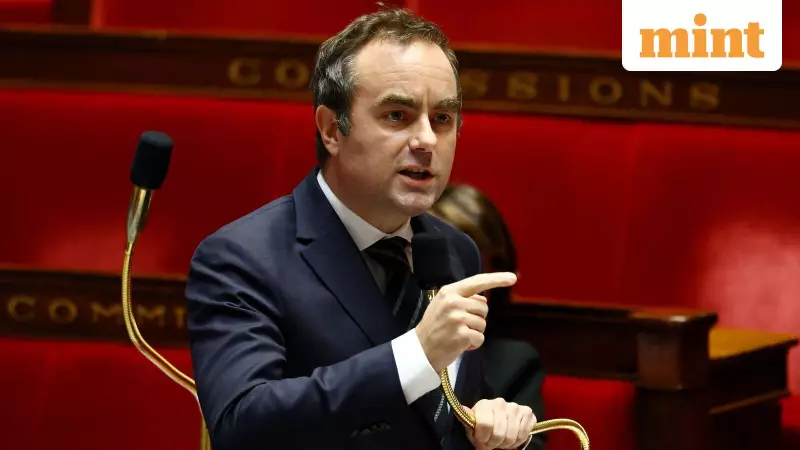
French Prime Minister Sebastien Lecornu successfully weathered two no-confidence motions in parliament on Wednesday. This political victory clears the path for his government to tackle a looming budget confrontation in the coming days.
Opposition Motions Target EU Trade Deal
The no-confidence motions came from opposite ends of the political spectrum. The far-right National Rally (RN) and the hard-left France Unbowed (LFI) party filed these challenges. They aimed to protest the European Union's trade agreement with the Mercosur bloc.
Despite opposition from France, EU member states approved the signing of this long-debated deal last week. The agreement involves Argentina, Brazil, Paraguay, and Uruguay. Both RN and LFI accused the French government of failing to block the pact effectively.

Mathilde Panot, the chief LFI lawmaker, delivered a sharp critique in parliament. She told the government, "Inside the country, you are a government of vassals serving the rich. Outside, you are humiliating our nation before the European Commission and the U.S. empire." Her comments came just before the no-confidence votes.
Motions Fail Due to Lack of Support
The Socialist Party refused to back the no-confidence motions. The conservative The Republicans also stated they would not vote to censure the government over the Mercosur issue. This lack of broader support proved decisive.
Both motions ultimately failed. The LFI motion received only 256 votes in favor. This fell 32 votes short of the number needed to pass. The far-right motion fared even worse, securing just 142 votes in favor.
Prime Minister Lecornu criticized the opposition's timing. He argued that the no-confidence votes delayed crucial debates on France's 2026 budget. He urged political leaders to focus on these pressing financial matters instead.
"You are acting like snipers lying in wait, firing into the executive’s back at the very moment when we must confront international disruptions," Lecornu told lawmakers.
Budget Showdown Looms Large
Attention now shifts to the contentious 2026 budget. Government sources indicate one possible approach. Lecornu might invoke Article 49.3 of the Constitution. This would allow him to push through the finance bill without a parliamentary vote.
Such a move would follow negotiations with all political groups except RN and LFI. However, using this constitutional tool would almost certainly trigger more no-confidence motions. Lawmakers express eagerness to end weeks of budget wrangling. Some sources suggest they may accept a budget even if it keeps France's deficit near 5%.
President Emmanuel Macron wants the budget adopted in January. His entourage says he remains "neutral" on the method to achieve this goal. Government spokeswoman Maud Bregeon emphasized on Tuesday that "nothing is excluded" to pass the budget.
Fragile Political Landscape Persists
France's political situation has remained fragile since 2022. That year, President Macron lost his parliamentary majority. His problems deepened in mid-2024. He unexpectedly called early legislative elections, which resulted in a hung parliament.
The current parliament splits into three distinct ideological blocs. These include Macron's centre-right alliance, the left, and the far-right RN. This division complicates governance and sets the stage for continued political battles.
The defeat of the no-confidence motions provides temporary relief for Lecornu's government. Yet the upcoming budget negotiations promise to test France's political stability once again.