

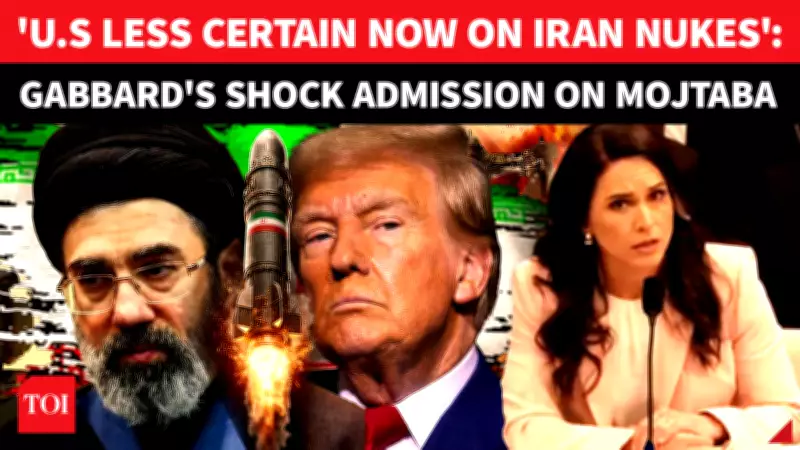
US Intelligence Chief Expresses Heightened Uncertainty Over Iran's Leadership
In a significant development during a tense House Intelligence Committee hearing, Director of National Intelligence Tulsi Gabbard has openly acknowledged that the United States is facing increased uncertainty regarding Iran's leadership and strategic intentions. This admission marks a notable shift from assessments made just weeks prior, highlighting a rapidly evolving intelligence landscape in the volatile Middle East region.
Gabbard's Testimony Reveals Growing Intelligence Gaps
Under pointed questioning from Representative Jason Crow, Gabbard confirmed that American intelligence agencies are grappling with substantial information gaps, particularly concerning Iran's newly appointed supreme leader, Mojtaba Khamenei. The intelligence director emphasized that this uncertainty has become a primary concern for US national security analysts and policymakers alike.
The core of the uncertainty revolves around Mojtaba Khamenei's current status and visibility. Reports indicate he was injured in recent Israeli military strikes and has not been seen publicly since, raising serious questions about his health, operational control, and the stability of Iran's leadership structure following the death of his predecessor, the senior Ayatollah Khamenei.

Implications for Regional Security and US Policy
This intelligence vacuum poses critical challenges for US foreign policy and regional security assessments. Key questions being debated include:
- Does this leadership uncertainty make Iran more dangerous and unpredictable on the international stage?
- How might internal power struggles within Iran affect its foreign policy decisions?
- What are the implications for ongoing tensions in the Gulf region and broader Middle East conflicts?
The hearing revealed that US intelligence agencies are actively working to fill these knowledge gaps, but the current situation presents significant challenges for predicting Iran's next moves. The lack of clear information about Mojtaba Khamenei's condition and control over Iran's military and political apparatus complicates risk assessment and strategic planning.
Broader Context of Regional Tensions
This intelligence assessment comes amid escalating regional tensions, including recent Iranian threats against Israel and US allies, attacks on energy infrastructure, and ongoing proxy conflicts. The uncertainty at the highest levels of Iranian leadership adds another layer of complexity to an already volatile situation that has seen multiple nations on high alert.
The House Intelligence Committee hearing served as a platform for lawmakers to express concerns about how this intelligence gap might affect US security interests and regional stability. Gabbard's testimony underscores the fluid nature of geopolitical intelligence and the challenges of maintaining accurate assessments during periods of rapid leadership transition and conflict.






