The renewal of the pivotal Ganga Water Sharing Treaty (GWT) between India and Bangladesh, set to expire in December 2026, is emerging as a critical test of hydro-diplomacy, entangled in a web of political complexities and pressing environmental challenges. Despite an in-principle agreement to renew the pact, the path forward is fraught with obstacles stemming from bilateral political strain and the increasingly stressed Ganga river basin.
The Treaty Framework and Impending Deadline
Signed in 1996 for a duration of 30 years, the GWT governs the sharing of the Ganga's waters at the Farakka Barrage during the crucial dry season from January 1 to May 31. The treaty employs a dynamic formula based on 10-day cycles and 40-year historical flow data (1949-1988), not a fixed allocation. It stipulates that if the total flow is 75,000 cusecs or more, India can draw up to 40,000 cusecs, with the remainder going to Bangladesh. For flows between 70,000 and 75,000 cusecs, India receives 40,000 cusecs while Bangladesh is guaranteed a minimum of 35,000. Below 70,000 cusecs, the waters are shared equally.
A critical clause, Article 2 (III), mandates immediate emergency consultations if the flow drops below 50,000 cusecs in any 10-day period, requiring adjustments based on equity and fair play. The treaty allows for renewal "on the basis of mutual consent," a provision both nations are now navigating.

Mounting Political and Physical Challenges
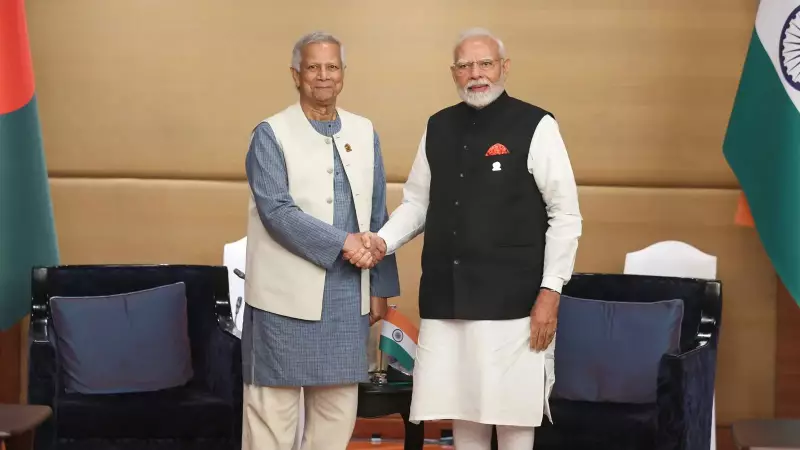
The political landscape has shifted significantly since the treaty's signing, which was facilitated under a New Delhi-friendly Sheikh Hasina government. Following Hasina's ouster in 2024 and her subsequent exile in India, bilateral relations have been under severe strain. Diplomatic standoffs, concerns over minority safety voiced by New Delhi, and the spread of anti-India sentiment in Bangladesh have created a tense backdrop for negotiations.
Bangladesh's interim government is reportedly displeased with India sheltering Sheikh Hasina. The outcome of Bangladesh's February 2026 elections could further alter the political dynamic. Domestically in India, the stance of the West Bengal government remains a significant factor, as seen with the stalled Teesta River pact. Discord between the Union and West Bengal governments on GWT renewal adds another layer of complexity.
The Scarcity Factor: A River Under Stress
Compounding the political hurdles are stark physical realities. Multiple studies confirm the Ganga River Basin is under severe stress. In Indian states like Uttar Pradesh, Bihar, and West Bengal, per capita water availability has dwindled to between 500 and 1000 cubic meters, indicating scarcity.
In Bangladesh, the river, known as the Padma, is experiencing abnormally declining water levels. This has led to the emergence of sandbanks, hampered navigability, impacted irrigation, and threatened livelihoods. Reports indicate the Padma now maintains a normal flow for only three to four months a year, and over 25 of its tributaries have dried up due to insufficient flow from the main river. Media reports suggest Bangladesh seeks a guaranteed release of 40,000 cusecs between February and May to meet its needs.
The fate of this crucial water-sharing arrangement, therefore, hinges on a delicate balance. Success will require navigating the turbulent waters of bilateral politics while collaboratively addressing the shared existential threat of a diminishing river, making the renewal process a defining moment for regional cooperation.