George Yeo Urges India to Show Strength in Global Diplomacy
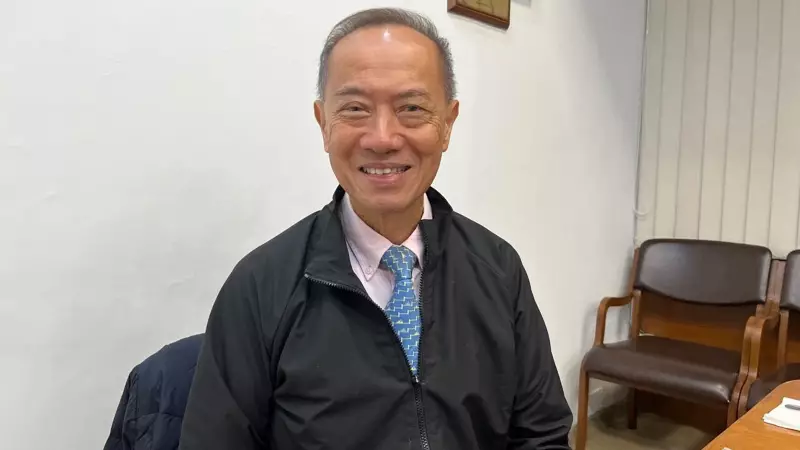
George Yong-Boon Yeo, the former Foreign Minister of Singapore and a Padma Bhushan awardee, recently shared his insights on India's role in a rapidly changing world. Speaking in New Delhi during the Dr C.D. Deshmukh Memorial Lecture at the India International Centre, Yeo emphasized the importance of firmness in international relations.
Dealing with Bullies in Global Politics
Yeo described former US President Donald Trump as a bully in global diplomacy. He stated that Trump respects strength above all else. If a country shows weakness, Trump will exploit it to the maximum. Yeo advised that nations must demonstrate stiffness and strength to earn his respect, even if it means paying a price.
"It's better to pay the price than to show weakness," Yeo said. "Otherwise, your life becomes completely subordinate to his will." He recommended a strategy of being firm but flexible when dealing with such figures.

India's Position in a Multipolar World
The world is accelerating into multi-polarity, according to Yeo. Trump's actions have fast-forwarded this process by recognizing that the US is overextended and needs to cut back on global commitments. In this context, India cannot afford to look weak. Rolling over would damage India's prestige and reputation globally.
India must diversify its international relationships as an immediate response. Yeo pointed to the obvious need to repair relations with China, noting that the US is already doing the same. There's no sense in India standing alone when others are mending ties.
"In a multipolar world, India is its own pole," Yeo emphasized. "It can be friends with everybody and sit on every table. India is not in a bad position at all."
Challenges in the Neighborhood
Yeo identified India's main problem as being in its own neighborhood. India has issues with some neighbors that need careful management and stabilization. The key solution lies in economics.
If India continues its economic growth for another 10-20 years, it will become a very large economy. All neighboring countries will want to participate in and benefit from that larger economy. This economic strength will allow India to conduct its foreign policy more calmly and effectively.
India's Capacity to Become a Global Pole
Yeo expressed confidence in India's ability to become a significant pole in the multipolar world. India has a large population with considerable brain power. Its economy is poised to become the third or second largest in the world by mid-century.
However, Yeo cautioned against expansionist tendencies. While India naturally wants to dominate its region, it cannot impose a Monroe doctrine on South Asia. The religious divisions that led to the partition of the subcontinent present significant challenges.
"If India is too forceful, it will draw external powers into the subcontinent," Yeo warned. "That cannot be in India's interest."
He pointed to ASEAN's success as a model, where Indonesia has exercised leadership through restraint. India should aim for a similar position in South Asia—leading through measured restraint rather than forceful domination.
Managing the China Relationship
Regarding India's relationship with China, Yeo noted the historical asymmetry between the two nations. The 1962 war left a deep wound in India that feels recent, while in China it's remembered as just a border skirmish.
This asymmetry affects responses to border incidents like Galwan Valley. For India, such events trigger what Yeo described as "an old allergy coming back causing a neuralgic response."
Yeo observed that India's reaction to border tensions led to a strategic pivot toward the US against China. However, with the US threatening tariffs on both India and China, it's not surprising that the two Asian giants are now mending relations.
Demarcating the border will take time since it was never properly done between the British Raj and Qing China. Yeo suggested that if Russia could calmly delineate its longer border despite past conflicts, India and China can do the same.

Navigating Global Conflicts
On the subject of Iran, Yeo questioned Western media coverage of the protests. He noted that huge demonstrations in support of the Iranian government go unreported while opposition protests receive attention.
"It is obvious that many Iranians are unhappy," Yeo acknowledged. "But it's also obvious that the Americans and Israelis are fomenting trouble in Iran."
Yeo emphasized that this conflict is not India's fight. While countries must make statements about principles, they shouldn't get too involved. He advised against India becoming entangled in such conflicts.
The Future of US Politics
Looking ahead, Yeo predicted that Trump's current obsession must be the midterm elections. If he loses control of either house of Congress, the second half of his term could become a lame-duck administration.
After the midterms, attention will shift to potential successors on both Republican and Democratic sides. While some of Trump's policies may be reversed, many cannot be undone. The Transatlantic Alliance cannot return to what it was, and the US cannot easily disentangle itself from Venezuela.
Yeo concluded that the greatest uncertainty in the world today is domestic politics in the United States. As the multi-polar world crystallizes faster due to Trump's actions, countries like India must navigate this uncertainty with strength, flexibility, and strategic diversification of relationships.