German Chancellor Friedrich Merz arrives in India on Monday, January 12, 2026, marking a significant diplomatic milestone. This visit represents his first bilateral trip outside the NATO alliance and the European Union space, a move hailed as a powerful signal of Berlin's commitment to strengthening ties with New Delhi.
A Visit of Strategic Significance
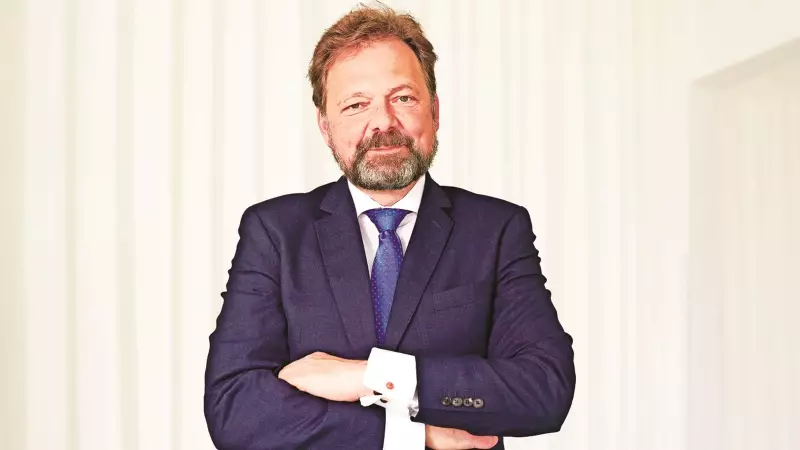
In an exclusive interview with The Indian Express on Saturday, German Ambassador to India Philipp Ackermann underscored the importance of the Chancellor's itinerary. "This is a very strong signal that the first time he travels outside of Europe and the United States is to India," Ackermann stated. He emphasized that while Chancellor Merz attended the G20 in South Africa, this dedicated bilateral visit is a first, highlighting India's elevated stature in German foreign policy.
The Chancellor's delegation is notably substantial, including the CEOs of 25 leading German companies, spanning large enterprises and medium-sized firms. The visit will see Merz meet Prime Minister Narendra Modi in Ahmedabad, a gesture interpreted as a warm welcome to the PM's hometown. The itinerary also includes a visit to the Sabarmati Ashram. Subsequently, the Chancellor will proceed to Bengaluru on January 13 to tour the Indian Institute of Science and the campus of the German multinational, Bosch.

Trade, Migration, and Defence on the Agenda
Ambassador Ackermann identified business and migration as two key areas of successful collaboration. Bilateral trade in goods and services has reached an impressive $50 billion mark, with over 2,000 German companies operating in India and 750 Indian companies invested in Germany. "The trade is relatively balanced," Ackermann noted, highlighting the two-way street of the economic partnership.
On migration, the existing partnership is described as a "success story." Ackermann revealed a striking statistic: Indian workers in Germany earn on average 20% more than their German counterparts. This, he argued, is fantastic proof of how well the legal migration framework functions. Germany continues to seek skilled professionals in sectors like caregiving, nursing, and craftsmanship.
While a potential submarine deal will not be finalized during this visit, negotiations are ongoing. The talks will, however, initiate a process for a roadmap for broader defence cooperation between the two nations.
Global Issues and Future Prospects
The Chancellor's visit follows closely on the heels of Russian President Vladimir Putin's trip to India. Ackermann indicated that Merz, fresh from peace talks on Ukraine in Paris, will share his impressions with PM Modi on the dynamics of those negotiations.
Regarding the India-EU Free Trade Agreement (FTA), the Ambassador expressed optimism. With an EU-India summit expected later in January, Germany is a "huge supporter" of the pact. Ackermann hopes for a conclusion by January 26-27, acknowledging that the final stages of negotiation are always the toughest.
On education, Ackermann praised Indian students in Germany for being "extremely dedicated, ambitious, and hardworking." He cautioned prospective students to be wary of educational agents offering limited university options or misrepresenting hybrid courses that may not qualify for a student visa.
This high-profile visit, set against the backdrop of a rapidly evolving global order, is poised to elevate the already robust strategic partnership between India and Germany, setting a new course for collaboration in trade, technology, and security.