Germany Rewrites Its Asian Playbook with India First Visit
German Chancellor Friedrich Merz just changed the rules of engagement in Asia. His decision to make India his first Asian destination since taking office sends a powerful message. For decades, Berlin treated China as its primary Asian partner. Now, Merz has flipped that script completely.
A Historic Visit with Symbolic Weight
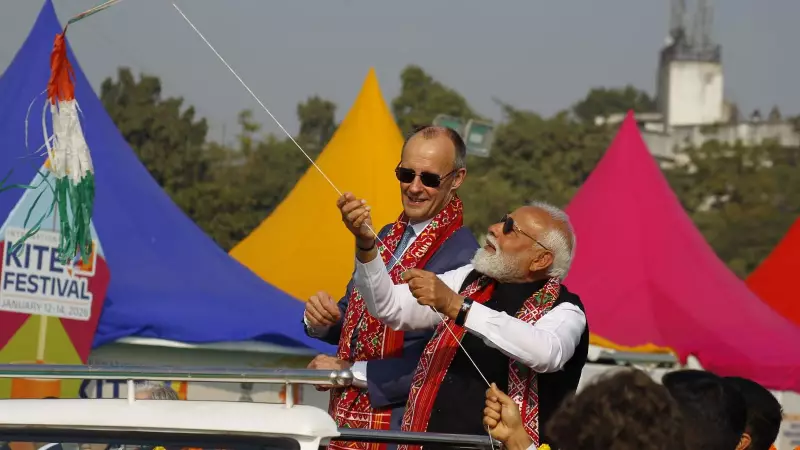
When Friedrich Merz stood alongside Prime Minister Narendra Modi on the Sabarmati Riverfront in Ahmedabad, the imagery spoke volumes. The two leaders flew a kite featuring Lord Hanuman together. This was not just cultural diplomacy. It represented Germany's deliberate choice to elevate India in its foreign policy priorities.
Merz became Chancellor in May 2025. His January 12 visit to India marked his inaugural trip to Asia in that role. Previous German leaders consistently placed Beijing at the top of their Asian hierarchy. Gerhard Schröder and Angela Merkel both followed this pattern. Even Olaf Scholz attempted a balanced approach by visiting Tokyo first.

From Talk to Tangible Action
The India-Germany relationship has long underperformed its potential. As the world's largest democracy and Europe's largest economy, their partnership should have been stronger. Instead, it often remained at the discussion stage without concrete implementation.
This visit changed that dynamic fundamentally. Beneath the symbolic kite-flying lay substantive agreements that promise real cooperation. The two nations announced twenty-seven actionable outcomes. These cover multiple sectors and demonstrate serious commitment.
Berlin has shifted its approach significantly. Germany is moving from a traditional buyer-seller mentality to a genuine co-developer mindset. This transformation became evident through several key announcements.
Defense and Industrial Cooperation Takes Center Stage
The defense sector witnessed groundbreaking developments. Both countries announced a "Bilateral Defence Industrial Cooperation" framework. This represents a major departure from previous arrangements.
- Germany will no longer just sell defense equipment to India
- The two nations will co-develop and co-produce military technology
- High-stakes submarine deals are now under discussion
- Critical minerals cooperation has gained momentum
- Semiconductor ecosystem partnership is moving forward
Prime Minister Modi publicly thanked Chancellor Merz for simplifying defense trade processes. This acknowledgment highlights Germany's willingness to adjust its notoriously rigid regulatory systems. Such flexibility indicates Berlin's serious commitment to this partnership.
Green Energy and Sustainable Development
The energy transition forms another crucial pillar of this strengthened relationship. Germany announced fresh funding worth €1.24 billion for the Green and Sustainable Development Partnership. This substantial investment will support multiple initiatives.
- PM e-Bus Sewa program receives significant backing
- Renewable energy projects gain German support
- Green hydrogen development gets a major boost
- Climate-resilient urban infrastructure receives funding
These investments demonstrate Germany's confidence in India's green transition. They also reflect shared environmental priorities between the two nations.
Strengthening Human Connections
The human bridge between India and Germany grows stronger through new agreements. Both countries announced several people-focused initiatives.
Germany will recruit healthcare professionals from India. Skilling programs in renewable energy sectors will receive support. Perhaps most significantly for Indian travelers, Germany announced a visa-free transit regime.
These measures will facilitate easier movement between the two countries. They recognize the importance of people-to-people connections in building lasting partnerships.
The Strategic Context Behind the Shift
Germany's pivot toward India did not happen in a vacuum. Multiple factors have influenced Berlin's changing calculations.

In August, German Foreign Minister Johann Wadephul denounced China's increasingly aggressive behavior. He specifically mentioned activities in the Taiwan Strait and the East and South China Seas. Wadephul declared that fundamental principles of European cooperation were at stake.
The "Wadephul Incident" in October further strained Germany-China relations. Beijing gave the German minister's planned visit a cold shoulder. Wadephul abruptly cancelled the trip in response.
Germany has learned hard lessons from its energy dependence on Russia. The country now approaches partnerships with greater caution. China's unpredictable behavior has made Berlin wary. India's democratic stability presents an attractive alternative.
Mutual Benefits and Strategic Gains
This strengthened partnership offers significant advantages to both nations. Germany gains a de-risked manufacturing base and partner. India provides a skilled workforce that Germany needs. Berlin also secures a predictable partner in an increasingly volatile world.
India gains a high-technology partner to fuel its economic ascent. Germany brings expertise in multiple advanced sectors. New Delhi also benefits from having Europe emerge as a logical "third pole" in global affairs. This becomes particularly valuable as traditional partnerships face challenges.
The timing of this partnership matters greatly. Both countries face a fragmenting global order. As the world's third and fourth largest economies, their cooperation can provide stability. They have decided to move beyond rhetoric to concrete collaboration.
Looking Ahead: Implementation is Key
The kites have landed on the Sabarmati riverfront, but the momentum must continue. The success of this visit will not be measured by agreements signed. Real progress will depend on implementation speed and effectiveness.
For too long, India and Germany were partners on paper but strangers in practice. They are now institutionalizing a shared future. The focus shifts to upcoming engagements, including the India-EU summit. Potential finalization of a free trade agreement gains new importance.
The wind is finally in the sails for Indo-German cooperation. Both leaders must now ensure they maintain this momentum. They cannot afford to let the string snap on this promising partnership. The world watches as two major economies build bridges that could reshape Asian geopolitics.