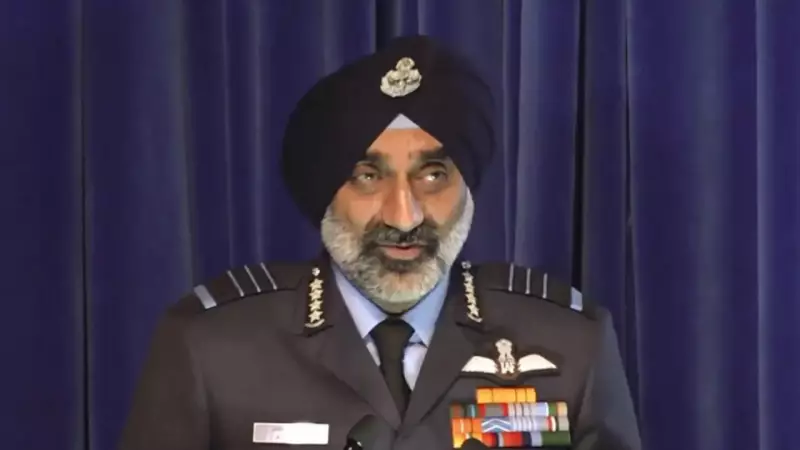
IAF Chief AP Singh Emphasizes Decisive Role of Air Power in Modern Warfare
Air Chief Marshal AP Singh, the Chief of the Indian Air Force, delivered a powerful address on Wednesday, underscoring the central and indispensable role of air power in contemporary military engagements. Speaking at the 22nd Subroto Mukerjee Seminar in New Delhi, he articulated how aerial capabilities have repeatedly proven to be the most effective instrument in achieving swift and decisive strategic outcomes.
Demonstrated Effectiveness in Recent Conflicts
The Air Chief pointed to both global and domestic scenarios to illustrate his argument. "What is happening around the world and what has happened in India… which part of military power has come in handy… which has delivered what was required to be delivered… I think I don’t have to name it – it is the air power," Singh stated emphatically. He highlighted specific instances where air power was crucial:
- Humanitarian Operations: Evacuating citizens from conflict zones, such as the successful mission in Sudan.
- Combat Missions: Striking terrorist infrastructure and targeting perpetrators to neutralize threats.
- Strategic Signaling: The capability to attack multiple bases in Pakistan within hours, delivering a clear message and compelling a response.
"Whether it is getting people out of conflict zones, like we did it in Sudan or whether it is giving a blow to the terrorist infrastructure and their perpetrators or whether it is attacking multiple bases in Pakistan in a matter of a few hours to send a signal that enough is enough and bring them to their knees, it was air power that did the trick and that has to be remembered," he elaborated.

Call for Sustained Investment and Focus
Singh stressed that for India to emerge as "a force to reckon with" on the global stage, continuous attention and substantial investment in air power capabilities are imperative. This is particularly vital in today's rapidly evolving security landscape, characterized by:
- The potential for swift escalation in conflicts.
- The increasing necessity for rapid and precise military responses.
- The growing importance of speed, reach, and accuracy in warfare.
His remarks arrive amidst ongoing deliberations within the defence establishment regarding force modernization and the shifting paradigms of military engagement. The discussion highlights how traditional warfare concepts are being redefined, with air power at the forefront of this transformation.
Broader Implications for National Security
The Air Chief's statements reinforce a critical perspective on national security strategy. He implicitly argued that a strong economy alone is insufficient without robust military capabilities, with air power being a cornerstone. The ability to project power, conduct humanitarian missions, and execute precise strikes underscores the multifaceted utility of a modern air force.
This focus on aerial supremacy is not just about combat readiness but also about strategic deterrence and diplomatic leverage. As geopolitical tensions fluctuate, the Indian Air Force's role in safeguarding national interests and responding to emergent threats becomes increasingly paramount.