

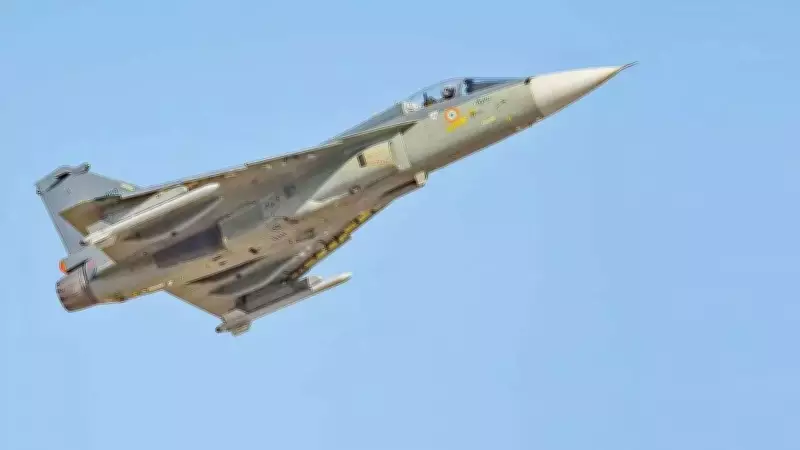
The Indian Air Force is set to conduct a crucial review of the Light Combat Aircraft Mark 1A project in May, before making a final decision on accepting deliveries of the fighter jets. This assessment could potentially push back the induction timeline further, according to defence sources who spoke to ANI.
Project Review and Delivery Timeline
The Air Force has placed orders for 180 LCA Mark 1A aircraft in two separate tranches. While the project underwent a detailed review in December last year, the force plans another comprehensive assessment in May. This timing is significant as most aircraft projects are expected to reach key milestones by April 2026. Defence sources emphasized that "the delivery timeline would be decided only after that" comprehensive review.
Delays and Operational Requirements
Originally, deliveries of the aircraft were expected to commence last year, but multiple factors have contributed to the delay. The Air Force has insisted on receiving the jets in a fully operational configuration, which has extended the timeline. Additionally, supply chain issues related to the engines have further complicated the delivery schedule.

HAL's Readiness and Production Status
Hindustan Aeronautics Limited has stated that it is ready with five LCA Mark 1A fighter jets, with major systems including radar, electronic warfare suites, and weapons already integrated. HAL officials have maintained that the aircraft are in a condition suitable for acceptance.
The company conducted the first flight of the first Tejas Mk1A prototype from its Nashik facility on October 17. Nashik has been developed as the third production line under the Tejas programme, complementing the two existing lines in Bengaluru.
Current Production Figures
According to HAL, 15 aircraft are currently in a ready configuration, and the company expects to have around 20 aircraft ready by the end of the year. The deliveries were meant to begin nearly a year ago, but engine-related supply disruptions have continued to slow the process.
Broader Context and Future Projects
Separately, HAL is also awaiting clarity on its role in the fifth-generation Advanced Medium Combat Aircraft programme, with the defence ministry yet to take a final decision on the issue.
India has been actively pushing to strengthen its indigenous aerospace capabilities. Prime Minister Narendra Modi previously flew a sortie in a single-engine LCA to signal strong support for the programme. HAL is concurrently working on several other major projects, including:
- The LCA Mark 2
- The CATS Warrior programme
- Multiple helicopter platforms
LCA Mark 1A: Key Features and Importance
The LCA Mark 1A represents an upgraded version of India's Light Combat Aircraft Tejas, specifically developed to meet the operational requirements of the Indian Air Force. Designed as a lightweight, single-engine, multi-role fighter, it serves air defence, ground attack, and maritime strike missions.
Why the Mark 1A Was Developed
The original Tejas Mark 1 faced limitations in maintenance, availability, and combat systems. The Mark 1A was conceived to address these challenges by:
- Improving combat capability
- Reducing maintenance time and costs
- Increasing indigenous content
- Speeding up production and induction
Key Specifications and Capabilities
The aircraft features several advanced systems and capabilities:
- Role: Multi-role light fighter
- Engine: GE F404-IN20 turbofan
- Maximum speed: Mach 1.6
- Combat radius: Around 500 km
- Service ceiling: About 50,000 feet
- Aerial refuelling: Probe-and-drogue system
- Crew: Single-seat
Major Upgrades in LCA Mark 1A
The Mark 1A incorporates significant enhancements over previous versions:

- Advanced Radar: Fitted with an Active Electronically Scanned Array radar for better target detection, simultaneous air-to-air and air-to-ground engagement, and improved electronic warfare performance.
- Electronic Warfare Suite: Carries an indigenous system that detects enemy radar emissions, provides jamming and self-protection, and enhances survivability in contested airspace.
- Reduced Maintenance: Features Line Replaceable Units for faster repairs, improved diagnostics, and lower turnaround time between sorties.
- Weapons and Payload: Can carry a wide range of air-to-air and air-to-ground weapons, including Beyond Visual Range missiles, close combat missiles, precision-guided bombs, laser-guided munitions, anti-ship missiles, and a 23 mm internal cannon.
Indigenous Content and Strategic Importance
The LCA Mark 1A boasts significantly higher indigenous content compared to earlier versions. Key systems such as the mission computer, flight control systems, electronic warfare components, and software and avionics are developed within the country. This increase aligns with India's broader push for defence self-reliance and reduced dependence on foreign suppliers.
Within the Air Force's fighter fleet, the LCA Mark 1A is intended to replace ageing MiG-21 variants, strengthen overall squadron numbers, and complement heavier platforms such as the Su-30MKI and Rafale. The aircraft serves as a transitional solution that will bridge the gap until more advanced platforms, including the LCA Mark 2 and the Advanced Medium Combat Aircraft, enter service.
Looking ahead, HAL continues to work on multiple next-generation programmes alongside the Mark 1A. The LCA Mark 1A remains central to India's near-term air combat capability and to its long-term goal of building a robust indigenous aerospace ecosystem.





