India Permits Iranian Warships to Dock at Ports Amid Escalating Regional Tensions
In a significant diplomatic development, External Affairs Minister Dr. S Jaishankar announced on Monday that India has granted Iran's formal request to allow three of its naval vessels to dock at Indian ports. This decision comes against the backdrop of heightened tensions in the Middle East and the Indian Ocean region following recent military confrontations.
Formal Request and Swift Approval
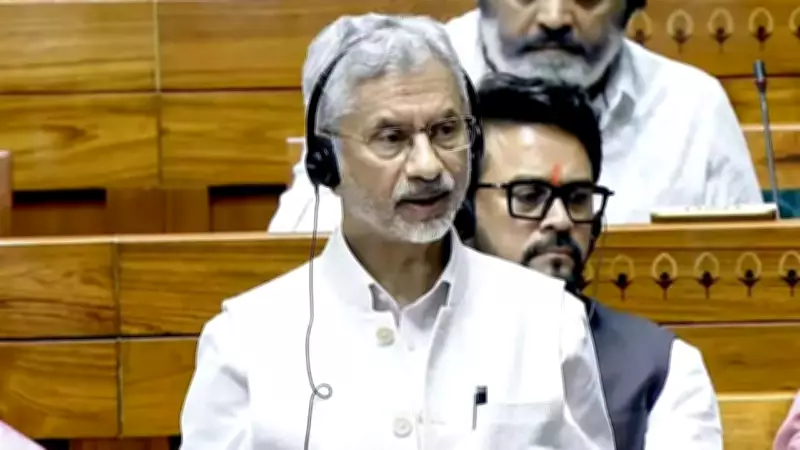
Jaishankar detailed in Parliament that the Iranian government submitted a formal request on February 28, seeking permission for three ships operating in the region to access Indian ports. The Indian government responded promptly, granting approval the very next day on March 1. This marks the first time a senior Indian minister has publicly acknowledged such a request from Iran regarding multiple vessels.
"The Iranian side has requested permission on February 28 for three ships in the region to dock at our ports. This was accorded on March 1," Jaishankar stated unequivocally.

IRIS LAVAN Docks in Kochi
One of the authorized vessels, the Iranian warship IRIS LAVAN, successfully docked at the port of Kochi on March 4. The minister confirmed that the crew is currently accommodated in Indian naval facilities, highlighting the operational aspects of this permission.
"IRIS LAVAN actually docked on March 4 in Kochi. The crew is currently in Indian naval facilities," he elaborated during his parliamentary address.
Humanitarian Gesture and Diplomatic Appreciation
Jaishankar emphasized that India viewed this action as a humanitarian and diplomatic necessity. He revealed that Iran's Foreign Minister has formally expressed gratitude for this gesture, underscoring its significance in bilateral relations.
"We believe that this was the right thing to do and the Iranian foreign minister has expressed his country's thanks for this humane gesture," Jaishankar affirmed, reinforcing India's principled stance.
Background: Rising Tensions in the Indian Ocean
This development occurs amidst escalating maritime tensions. On March 4, the Iranian frigate IRIS Dena was sunk by a US submarine off the coast of Sri Lanka, raising serious concerns about the conflict in West Asia spilling over into the Indian Ocean. The warship was returning from participation in the Milan multilateral naval exercise and the International Fleet Review hosted by India. Tragically, at least 87 Iranian sailors lost their lives in this attack.
In a related move, Sri Lanka also permitted another Iranian warship, IRINS Bushehr, to dock at its eastern port of Trincomalee after the vessel cited engine failure and sought entry into Sri Lankan waters.
India's Energy Security Concerns
Jaishankar dedicated a substantial portion of his statement to addressing India's critical energy security interests, which are directly impacted by the volatile situation in West Asia. He acknowledged that global energy supplies have faced disruptions due to the escalating conflict.
"In view of the implications of this conflict for our energy security, I also seek to address that particular concern. The government remains committed to ensuring that fully, taking into account the availability, costs and risks of the energy markets," the minister asserted.
He further stressed that the welfare of Indian consumers remains the paramount priority, and Indian diplomacy is actively supporting the efforts of domestic energy enterprises to navigate this turbulent environment.
Call for Diplomacy and Regional Stakes
Reiterating India's consistent position, Jaishankar called for dialogue and diplomacy to de-escalate tensions in the Middle East. He outlined that Prime Minister Narendra Modi is personally monitoring the developments, with relevant ministries coordinating to formulate effective responses.
The External Affairs Minister highlighted that the ongoing conflict is of "particular concern" for India for several compelling reasons:

- Over ten million Indians live and work in Gulf nations, making their safety a top priority.
- The region is indispensable to India's energy security, serving as a primary source of oil and gas imports.
- Maintaining stability is crucial for regional trade and economic interests.
Jaishankar also noted the current challenges in high-level contacts with Iran but confirmed the appreciation conveyed by Iran's Foreign Minister for India's decision regarding the warship docking.
This series of events underscores India's delicate balancing act in navigating complex international relations while safeguarding its national interests, energy needs, and the well-being of its diaspora amidst a rapidly evolving geopolitical landscape.