

India's Defence Acquisition Council Approves Major Military Proposals Worth Rs 2.38 Lakh Crore
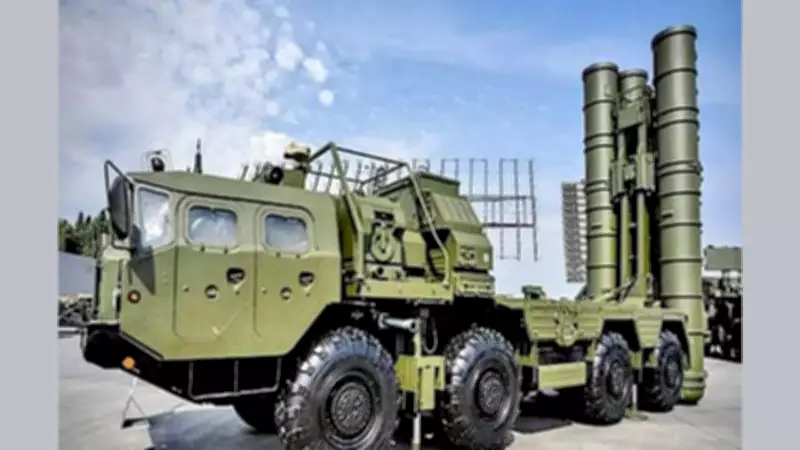
In a significant boost to India's defence capabilities, the Defence Acquisition Council (DAC), chaired by Defence Minister Rajnath Singh, on Friday granted approvals to multiple proposals totaling approximately Rs 2.38 lakh crore. This comprehensive acquisition plan includes additional units of the Russian-made S-400 long-range surface-to-air missile system and 155mm Dhanush howitzer gun systems, marking a pivotal moment in the nation's military modernization efforts.
Record-Breaking Defence Approvals and Procurement Figures
Rajnath Singh emphasized the historic scale of these decisions in a post on X, stating, "The decisions taken in the Defence Acquisition Council will help in further strengthening India's defence preparedness." He highlighted that during the financial year 2025-26, the DAC has accorded Acceptance of Necessity (AoN) for 55 proposals amounting to Rs 6.73 lakh crore. Furthermore, capital procurement contracts for 503 proposals worth Rs 2.28 lakh crore have been signed in the current fiscal year, representing the highest number in any financial year to date.
Key Approvals for Air Defence and Artillery Systems
The approval for additional S-400 'Sudarshan' systems comes at a crucial time, as Indian Air Force (IAF) teams are currently in Russia to receive the fourth squadron under an earlier contract for five such systems. The S-400 has proven its effectiveness by neutralizing Pakistani missiles during last year's conflict in May and achieving the world's longest-range kill of an enemy aircraft. The fourth system is expected to arrive by May, with the fifth squadron anticipated by December.

For the Army, the DAC has sanctioned several critical systems:
- Air Defence Tracked Systems: Likely to include Russian Pantsir-S1 systems for protecting S-400 assets from low-flying threats and drones.
- Armoured Piercing Tank Ammunition: Designed to enhance the lethality of anti-tank ammunition.
- High-Capacity Radio Relay: To provide reliable and fail-proof communication.
- Runway Independent Aerial Surveillance System: Offering surveillance capabilities to Army units.
- 155mm Dhanush Gun Systems: Indigenous howitzers based on Bofors design, already deployed along borders with Pakistan and China, improving artillery range and accuracy.
A defence ministry statement noted, "The air defence tracked system will provide real-time air defence control and reporting capability, while the high-capacity radio relay will ensure robust communication." The Dhanush howitzers, with 114 guns previously ordered, will enable engagement of targets at longer ranges across varied terrains.
Modernization of Air Force and Coast Guard Capabilities
The DAC also approved proposals for the Indian Air Force, including remotely piloted strike aircraft and the overhaul of Su-30 aero engine aggregates to extend the service life of these mainstay combat aircraft. The remotely piloted strike aircraft will facilitate offensive counter-air operations and provide stealth intelligence, surveillance, and reconnaissance capabilities.
For the Indian Coast Guard, the council accorded AoN for heavy-duty air cushion vehicles. These versatile vehicles will be utilized for multipurpose maritime coastal roles, such as high-speed patrolling, reconnaissance, and search and rescue operations, enhancing coastal security and operational efficiency.
Strategic Transport Aircraft Procurement
Another major approval involves the procurement of medium transport aircraft, with reports indicating a requirement for approximately 60 units to replace the IAF's ageing AN32 and IL-76 fleets. This acquisition aims to meet the strategic, tactical, and operational airlift needs of the military. Key contenders for this mega contract include Brazilian firm Embraer, American company Lockheed Martin, and Russian manufacturer Ilyushin, highlighting global interest in India's defence market.
These approvals underscore India's commitment to bolstering its defence infrastructure amid evolving regional security challenges, ensuring readiness and technological advancement across all branches of the armed forces.






