India Rejects Justification for Terrorism at UN
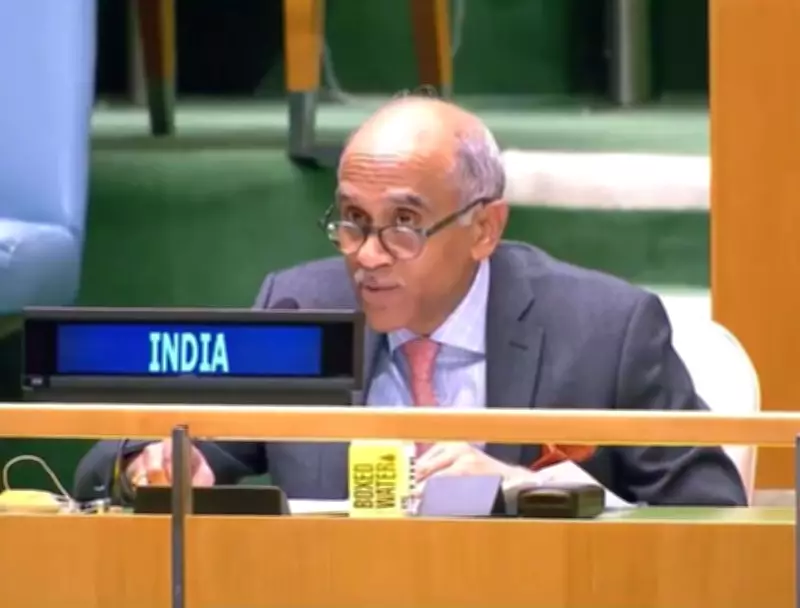
India’s Permanent Representative to the United Nations, Ambassador Harish Parvathaneni, delivered a strong message on Wednesday, declaring that “a terrorist is a terrorist” and urging the international community to work collectively to eliminate “murderous ideology” without seeking any grievance to justify terrorism. Speaking at the UN General Assembly during the adoption of the Ninth Review of the United Nations Global Counter-Terrorism Strategy (GCTS), Parvathaneni emphasized that there can be no justification for terrorism, regardless of any political cause, grievance, or strategic calculation.
India’s Experience Shapes Firm Stance
“India has been a victim of cross-border terrorism for decades. Our people have paid the price of terrorism in lives lost, families scarred and societies shattered. This experience has shaped India's approach: there can be no justification for terrorism,” Parvathaneni said. He stressed that terrorism in all its forms and manifestations must be condemned unequivocally.
Call to End Double Standards
The Indian envoy called on the international community to reject double standards in counter-terrorism. He underlined the obligation to hold perpetrators, organizers, financiers, and sponsors of terrorism accountable and bring them to justice. “A terrorist is a terrorist!! We must work hand in hand to root out the murderous ideology without finding any grievance to justify terrorism,” he asserted.

Counter-Terrorism Must Not Be Politicized
India cautioned that counter-terrorism should not be “hollowed out by false equivalences or politicised narratives.” Parvathaneni acknowledged the need to address conditions conducive to the spread of terrorism but warned against confusing context with justification. “We must uphold human rights and the rule of law, but we must also recognise that the first human right is the right to life, and terrorism is the most direct assault on this human right,” he added.
Focus on Terror Financing and New Technologies
India stressed that countering terror financing must remain central to collective efforts. “The international community must improve financial intelligence sharing, strengthen implementation of Financial Action Task Force standards, and ensure that no jurisdiction remains a safe conduit for terror financing,” Parvathaneni said. He also expressed disappointment that negotiations on the GCTS review failed to reach an acceptable landing point on denying terrorists access to new and emerging technologies.
Push for Comprehensive Convention on International Terrorism
India reiterated its long-standing call for the adoption of the Comprehensive Convention on International Terrorism (CCIT), noting that the absence of a universally agreed legal framework continues to hobble collective action. Parvathaneni highlighted that nearly three decades of delay have hindered efforts to combat terrorism. “The time has come to demonstrate political will to conclude the CCIT,” he urged, emphasizing that such a legal instrument is essential to close normative gaps, strengthen prosecution and extradition, and deny terrorists safe havens, funds, and arms.
India’s Contributions and Criticism of UN Inaction
India underscored its consistent contributions to global counter-terrorism efforts, including hosting the Delhi Declaration on countering the use of new and emerging technologies for terrorist purposes and the No Money for Terror Conferences. Parvathaneni criticized the lack of mention of the Delhi Declaration in the 2023 GCTS review, calling it “unfortunate” and reflective of how the Assembly is “held hostage to petty bean counting.”
Universal Lens Against All Phobias
India also reiterated its condemnation of all acts motivated by prejudice directed against any faith, ethnicity, nationality, geography, or race. Parvathaneni stressed that while condemning Islamophobia, Christianphobia, and antisemitism, the UN must acknowledge that such phobias extend to other faiths as well. “As this is the United Nations, a multilateral forum of universal membership, our lens too should be universal,” he said.

Political Will Needed for Success
Concluding his address, Parvathaneni warned of the perils of lacking international cooperation. “Only if we have the political will to counter it in all its manifestations; Only if there are no double standards; Only if there is no distinction between good or bad terrorists; Only if there is transparency and objectivity in the way sanctions regimes function… could the menace of terrorism be successfully combatted by us together,” he stated.