In a significant diplomatic escalation, India and Bangladesh engaged in a reciprocal summoning of each other's senior envoys on Tuesday, December 23, 2025. The move underscores rising bilateral tensions triggered by violent protests outside diplomatic missions and the recent killings of individuals on both sides of the border.
Diplomatic Tit-for-Tat Over Mission Security
The day began with Dhaka summoning Indian High Commissioner Pranay Verma. The Bangladesh Foreign Ministry conveyed its "deep concern" regarding what it described as "violent protests" by "extremist elements" outside its diplomatic posts in India. These protests were related to the lynching of a 27-year-old Hindu youth, Dipu Chandra Das, in Mymensingh, Bangladesh, on December 18.
In a matching response later in the day, Indian authorities called in Bangladesh's envoy, Riaz Hamidullah, to South Block. While India's Ministry of External Affairs did not issue an official statement, sources confirmed the meeting where India's concerns were likely raised.

Bangladesh, in its official statement, specifically referenced incidents outside the Bangladesh High Commission in New Delhi on December 20 and acts of vandalism at its visa centre in Siliguri on December 22. It urged India to take immediate steps to ensure the safety of its diplomatic personnel and establishments.
Protests and Visa Service Disruptions
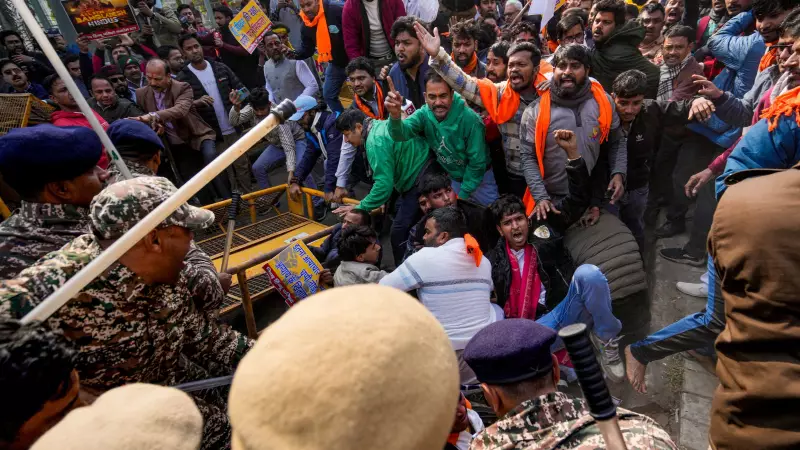
The diplomatic friction was visibly manifested on the streets of New Delhi. Hundreds of protesters associated with the Vishva Hindu Parishad (VHP) and Bajrang Dal breached police barricades during a demonstration near the Bangladesh High Commission in Chanakyapuri. They were protesting the killing of Dipu Chandra Das, who was lynched by a mob over alleged blasphemy.
This unrest has led to a direct impact on consular services. On Monday, the Bangladesh High Commission temporarily suspended visa and consular operations in New Delhi and Agartala, citing "unavoidable circumstances." This followed India's decision on Sunday to suspend its visa operations in Chittagong, Bangladesh, as unrest spread there following the killing of another individual.
Context: Killings Fueling Cross-Border Tensions
The current strain is rooted in two separate violent incidents. In Bangladesh, the lynching of Dipu Chandra Das has sparked outrage. In response, Bangladesh's Education Adviser, Professor C R Abrar, visited Das's family in Mymensingh on Tuesday, condemning the act as "heinous" and assuring a thorough investigation. Twelve persons have been arrested in connection with the case so far.
Simultaneously, Bangladesh is grappling with internal unrest following the killing of youth leader Sharif Osman Hadi. Hadi was shot by masked attackers in Dhaka last week and later died of his injuries in Singapore. His death has triggered widespread protests across Bangladesh.
India and Bangladesh have also contradicted each other on the nature of the protests in Delhi. While Indian authorities denied any security breach at the High Commission, Bangladesh said it "entirely rejected" that assertion and called for a thorough investigation.
This episode marks the latest in a series of diplomatic exchanges between the two neighbours, with envoys being summoned multiple times in the past two weeks over issues including the safety of minorities. The reciprocal visa suspensions and strong diplomatic demarches indicate a testing phase for the historically close bilateral relationship.