

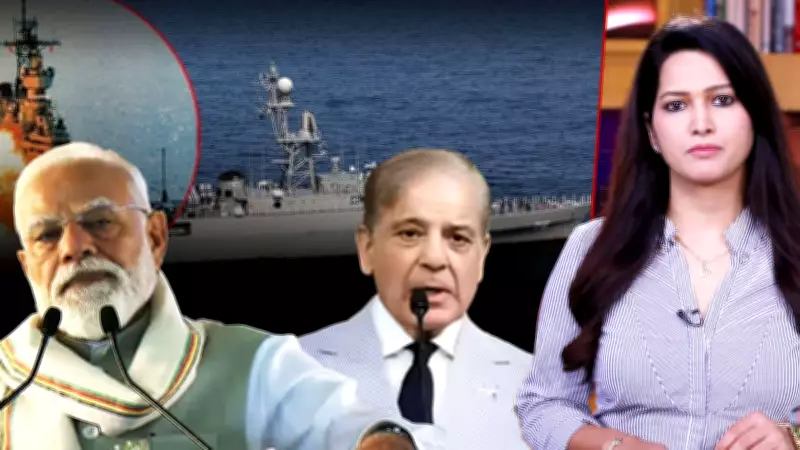
India Exposes Pakistan's Coordinated Digital Attack After Iran Naval Incident
In a significant breakthrough in information warfare defense, Indian security and fact-checking agencies have successfully dismantled a sophisticated fake narrative that attempted to falsely implicate India in the United States' military strike on the Iranian naval vessel IRIS Dena. The operation, which came to light in March 2026, revealed a meticulously coordinated digital campaign originating from networks allegedly based in Pakistan.
The False Narrative and Its Rapid Spread
Social media platforms were suddenly inundated with claims and posts asserting that India had provided direct assistance to the United States in targeting the Iranian warship. This false narrative was designed to create international tension and damage India's diplomatic standing, particularly with Iran and other regional powers.
The investigation uncovered clear patterns of structured amplification:

- Synchronized posting across multiple platforms and accounts
- Repetition of identical messaging with minor variations
- Emotionally charged content specifically crafted to drive engagement and sharing
- Strategic timing to maximize visibility during peak news cycles
How the Campaign Was Amplified
What made this disinformation campaign particularly effective was its ability to co-opt legitimate ideological groups and social media influencers who unknowingly amplified the false claims. These groups, operating across various political and social spectrums, shared the content believing it to be genuine news, thereby lending unwarranted credibility to the fabricated narrative.
This unwitting amplification transformed what began as a localized false claim into a trending global topic, demonstrating how modern digital warfare can exploit organic social media dynamics to achieve strategic objectives.
India's Rapid Response and Investigation Findings
Indian cybersecurity agencies, working in collaboration with independent fact-checking organizations, moved swiftly to trace the origins of the campaign. Their investigation revealed:
- The digital footprints led back to coordinated networks operating from Pakistan
- Evidence of advanced propaganda techniques including deepfake technology
- A broader pattern of similar disinformation campaigns targeting India
- Clear indicators of state-sponsored or state-tolerated information operations
The agencies were able to document the entire amplification chain, providing irrefutable evidence of the campaign's artificial nature and coordinated origins.
The Broader Implications for Digital Warfare
This episode underscores a growing global threat: sophisticated digital warfare aimed not at physical infrastructure but at shaping international perception and influencing global opinion. The campaign against India represents a new frontier in geopolitical conflict where narratives can be weaponized to achieve strategic objectives without traditional military engagement.
Key takeaways from this incident include:
- The increasing sophistication of state-sponsored disinformation campaigns
- The vulnerability of social media ecosystems to coordinated manipulation
- The critical importance of rapid response mechanisms for democratic nations
- The evolving nature of international conflict in the digital age
As digital platforms continue to dominate information dissemination, such incidents highlight the urgent need for enhanced cybersecurity measures, international cooperation against digital propaganda, and greater public awareness about information verification in the age of sophisticated disinformation campaigns.






