

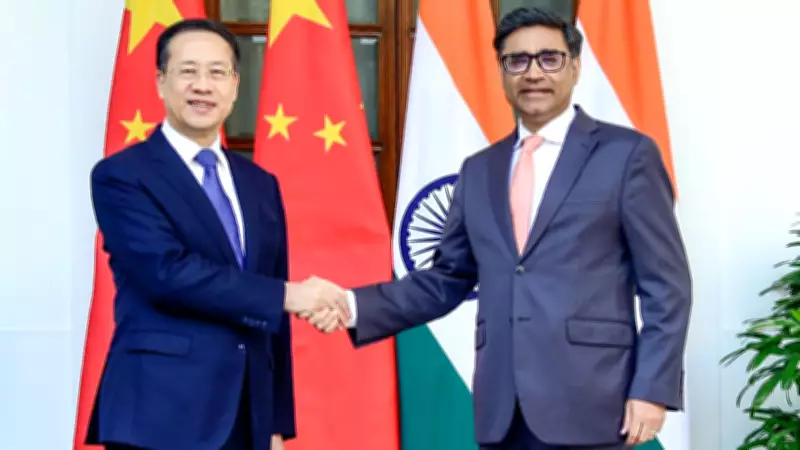
India and China Hold Strategic Dialogue in New Delhi, Emphasize Border Stability and Trade Progress
In a significant diplomatic engagement, Foreign Secretary Vikram Misri and China's Executive Vice Foreign Minister Ma Zhaoxu convened in New Delhi on Tuesday for the India-China Strategic Dialogue. The talks centered on bolstering peace along the Line of Actual Control and enhancing bilateral trade, marking a continued effort to rebuild ties strained by past military standoffs.
Key Discussions on Border Peace and Trade Relations
According to a statement from the Ministry of External Affairs, both officials underscored the critical importance of maintaining peace and tranquility in border areas for the overall advancement of India-China relations. They reiterated their commitment to implementing leadership guidance, which emphasizes a political and strategic approach to addressing trade-related issues and concerns.
The dialogue also highlighted practical steps toward improving bilateral cooperation. Misri and Ma recognized the urgent need to finalize an updated air services agreement and agreed to continue efforts for visa facilitation, aiming to promote greater people-to-people contacts between the two nations.

China's Support for India's UNSC Aspirations
A notable development from the meeting was China's acknowledgment of India's aspirations for a permanent seat on the United Nations Security Council. The MEA reported that Vice Foreign Minister Ma conveyed China's understanding and respect for India's UNSC membership goals, signaling a potential shift in diplomatic support.
Additionally, Misri noted the successful resumption of the Kailash Mansarovar Yatra and expressed hope for its continued expansion, reflecting ongoing cultural and religious exchanges between the countries.
Regional and International Cooperation
The discussions extended beyond bilateral matters to include various regional and international issues. Both sides engaged in what was described as friendly, candid, and in-depth communication on topics such as the international and regional situation, internal and external policies, and shared interests.
In a post on X, MEA spokesperson Randhir Jaiswal stated that the dialogue reviewed the positive momentum in bilateral relations and explored ways to further advance ties by enhancing people-to-people exchanges and addressing sensitive issues.
Chinese Perspective on Bilateral Relations
The Chinese readout from the meeting emphasized the need for China and India to work together amidst complex global changes. It called for implementing common understandings reached between President Xi Jinping and Prime Minister Narendra Modi, viewing the relationship from a strategic and long-term perspective. The statement advocated for deepening mutual trust, expanding cooperation, properly managing differences, and promoting steady development of ties.
Earlier in the day, Chinese Ambassador to India Xu Feihong, following Ma's participation in the BRICS Sherpa meeting, expressed China's readiness to collaborate with India and other BRICS members to enhance practical cooperation and uphold international fairness and justice.
This Strategic Dialogue underscores ongoing efforts to stabilize and strengthen India-China relations, with a focus on practical outcomes in trade, border management, and international diplomacy.






